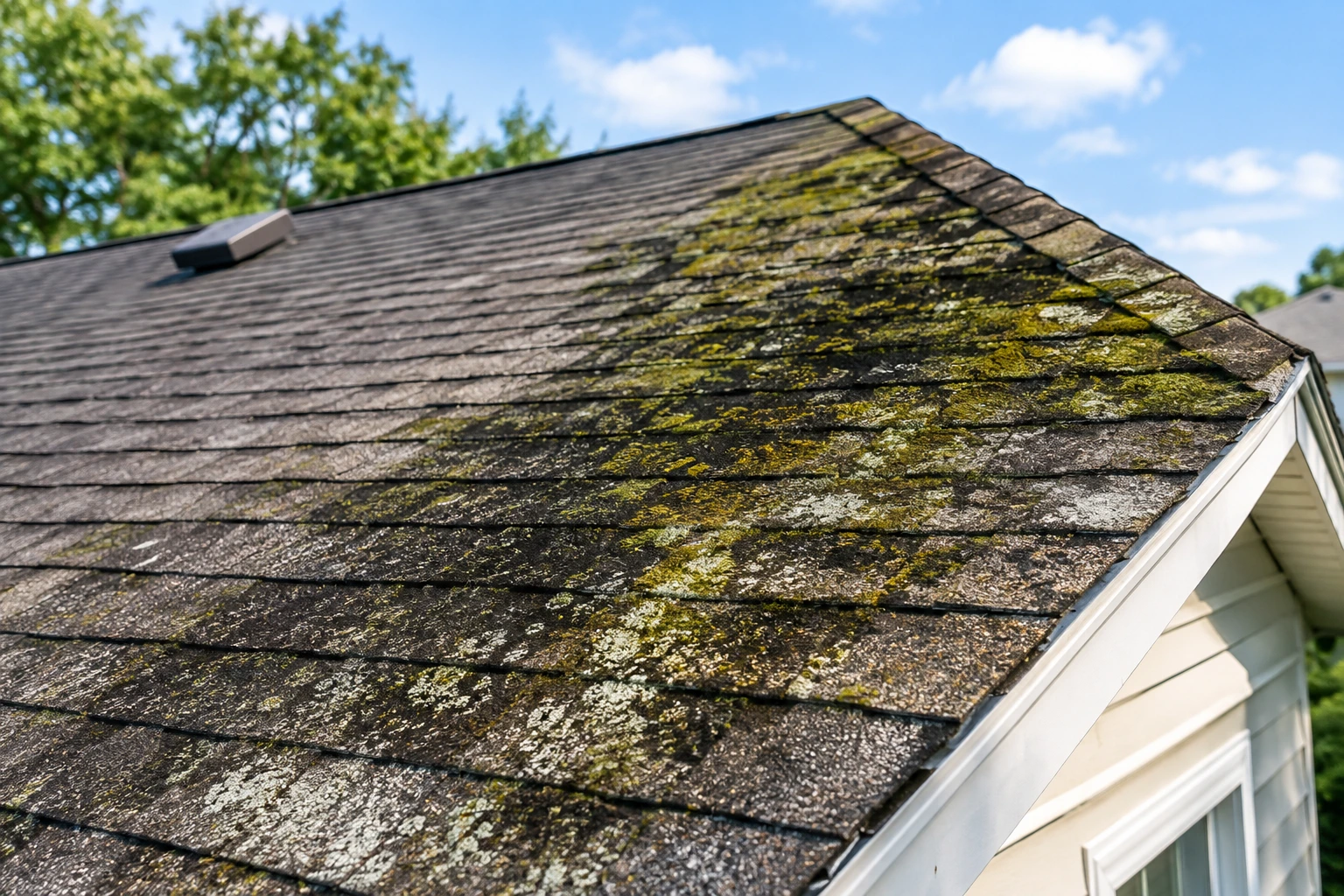
Mold on a roof is more than an unpleasant dark stain. Persistent moisture, limited sunlight, poor drainage, and organic debris can create conditions where mold and other biological growth thrive—understanding what kills mold on your roof? can help homeowners choose an appropriate cleaning approach while avoiding unnecessary damage to shingles or other roofing surfaces.
Why Does Mold Grow on Roofs?
Mold needs moisture and a suitable environment to develop. Roofs located beneath trees or beside taller structures may receive limited sunlight, allowing moisture to remain on the surface longer.
- Leaves, twigs, dirt, and other organic debris can also accumulate on a roof.
- These materials retain moisture and create a favorable environment for biological growth.
- Poor attic ventilation can contribute indirectly by allowing heat and moisture to build up beneath the roof system.
- While ventilation does not directly cause surface mold, moisture problems inside the roofing assembly can contribute to broader roof deterioration.
- Regular inspections can help identify these conditions before growth becomes extensive.
Are Mold, Algae, and Moss Not the Same?
You might use the word “mold” to describe every type of dark or green roof growth. However, mold, algae, and moss are different organisms and can behave differently.
Algae appears as dark streaks or discoloration, particularly on asphalt shingles.
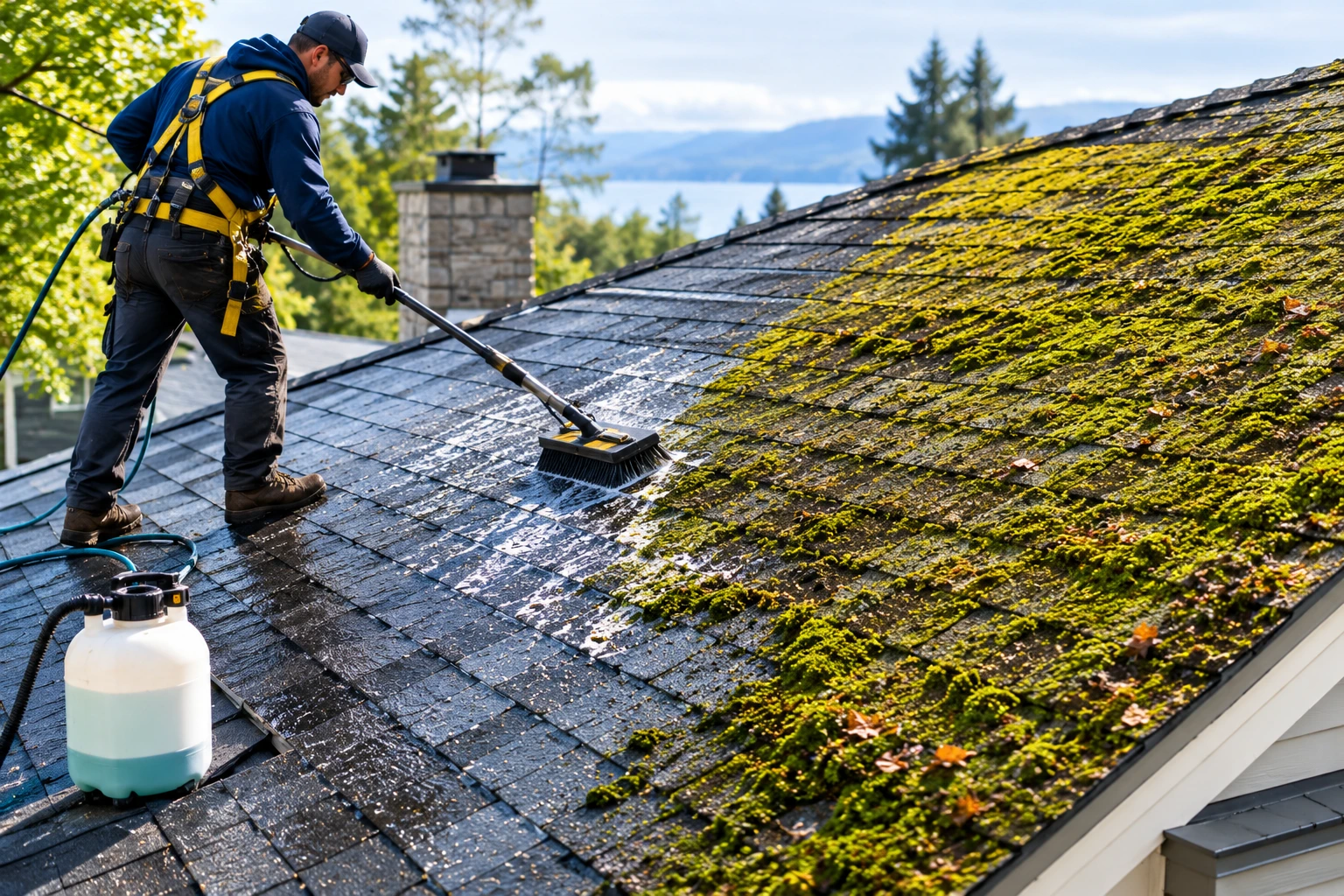
Moss has a thicker, more plant-like appearance and may grow in shaded, damp areas. Mold can appear in different colors and may be associated with persistent moisture and organic material.
This distinction matters because simply removing visible growth may not address the underlying problem. Our roof cleaning professional can examine the surface and recommend an appropriate treatment.
How Much Does Roof Cleaning Cost?
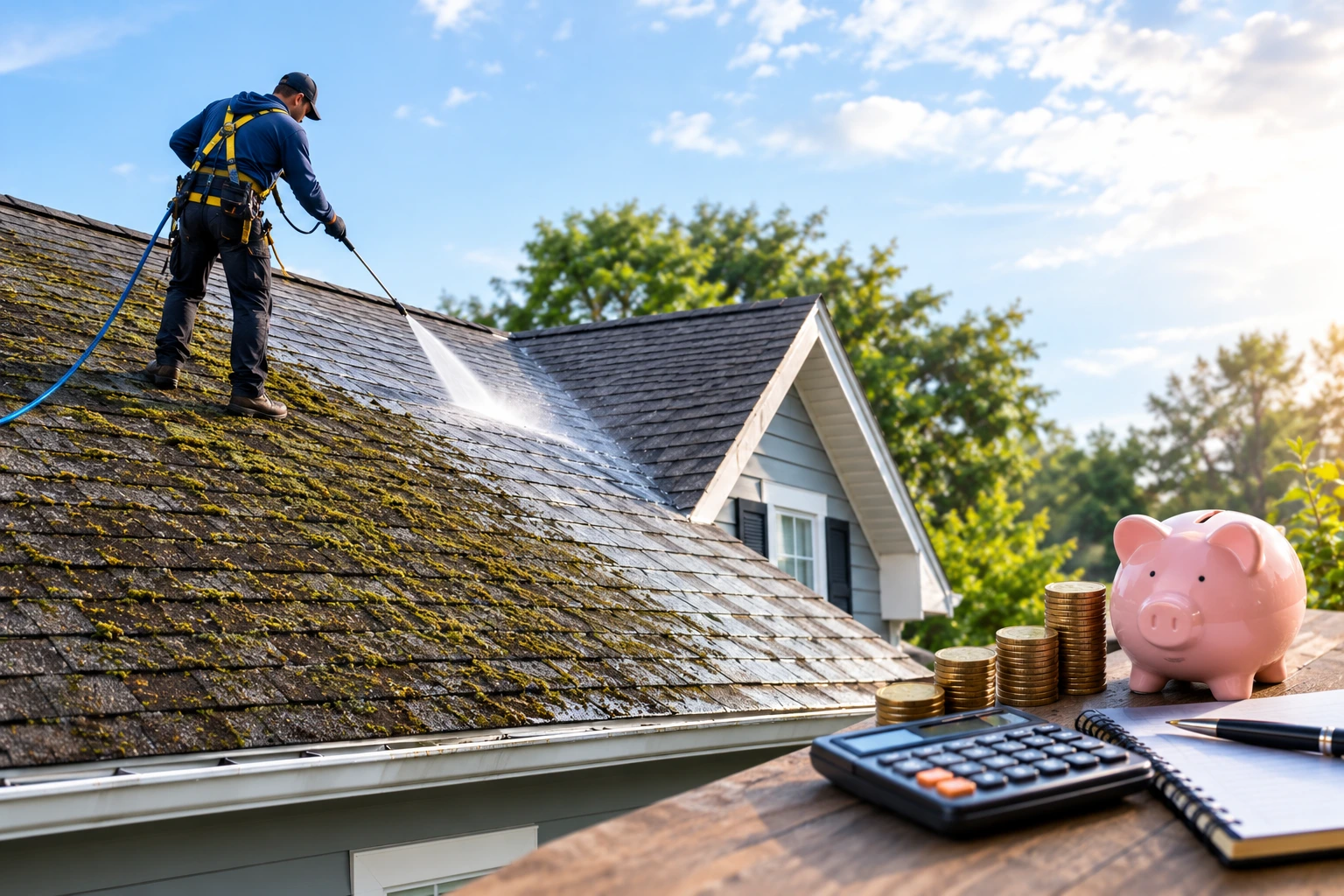
Many of you ask, How much does roof cleaning cost? There is no universal price because each roof has different cleaning requirements. The total expense may depend on roof size, pitch, accessibility, material, amount of biological growth, cleaning method, property location, and whether additional services are needed.
A small, easily accessible roof with limited surface growth may require less labor than a large roof with steep slopes and extensive moss or mold.
- Roof size and total surface area
- Type of roofing material
- Roof pitch and accessibility
- Severity of mold, algae, or moss
- Amount of accumulated debris
- Number of stories
- Required cleaning method
- Gutter cleaning or debris removal
- Need for minor repairs
- Protective treatments, where appropriate
The best way to determine how much does roof cleaning cost? For a particular property is to arrange an inspection and request a detailed estimate. This allows the service provider to evaluate the roof rather than relying on a generic price.
How Roof Cleaning Can Help Prevent Future Growth?
Cleaning removes existing contamination, but prevention is equally important. You can reduce the likelihood of recurring growth by keeping gutters clear, trimming branches that create excessive shade, and making sure water can drain properly.
Roof inspections can also identify damaged flashing, blocked drainage paths, deteriorated sealants, or other conditions that may contribute to moisture problems.
Adequate attic ventilation should also be considered when persistent moisture or condensation is suspected. A roofing professional can evaluate whether ventilation improvements may be appropriate for the structure.
Keeping the roof reasonably clear of leaves and other debris can further reduce moisture retention.
What Time of Year Is Best to Remove Moss From a Roof?
Another common question is, what time of year is best to remove moss from a roof? In many climates, moss removal is most practical during a period of mild, relatively dry weather. Conditions should allow the roof to dry properly after treatment and provide safe working conditions.
Spring and early fall can often be suitable periods because temperatures are generally moderate in many regions. However, the ideal timing depends on the local climate, weather conditions, roof exposure, and extent of moss growth.
Removing moss before it becomes thick and established is generally preferable. Mature moss can hold moisture against roofing materials and may lift or disturb shingles as it grows.
Why Moss and Mold Should Not Be Ignored?
Organic growth can create problems when it remains on a roof for long periods. Moss can retain moisture and may grow beneath or between shingles. Mold and algae can contribute to persistent staining and indicate that the roof surface remains damp.
Growth does not automatically mean the roof needs replacement. In many cases, proper cleaning and maintenance can improve the roof’s appearance and help protect the existing system.
We can determine whether the issue is primarily cosmetic or whether there are signs of moisture damage, deteriorated roofing components, or other concerns.
When Should a Roof Be Professionally Cleaned?
You must consider professional cleaning when dark streaks, moss patches, mold-like growth, or heavy organic debris become noticeable.
- It is especially important to seek professional assistance when the roof is steep, difficult to access, several stories high, or already showing signs of damage.
- Walking on a roof without suitable experience can create both safety and property risks.
- Professional assessment also helps prevent you from using unsuitable chemicals or cleaning techniques. Not every roof should be treated in the same way.
Frequently Asked Questions
Can mold damage roofing shingles?
Persistent mold and moisture can contribute to deterioration when the roof remains damp. An inspection can determine whether the growth has caused any visible damage.
Can sunlight help prevent mold from growing on a roof?
Regular sunlight can help roofing surfaces dry faster, making conditions less favorable for mold and other moisture-loving growth. Trimming excessive vegetation around the roof may improve sunlight and airflow.
How often should a roof be inspected for moss and mold?
A roof should be checked periodically, especially if the property is surrounded by trees or receives limited sunlight. Inspections can also be useful after severe weather or when unusual staining appears.
Is it safe to remove roof moss without professional help?
Walking on roofing materials or using improper cleaning equipment can cause damage or create a fall hazard, so professional assistance is often the safer option.
What should be done after mold is removed from a roof?
After cleaning, you should address conditions that encourage regrowth, such as clogged gutters, excessive shade, standing moisture, poor drainage, or nearby vegetation.