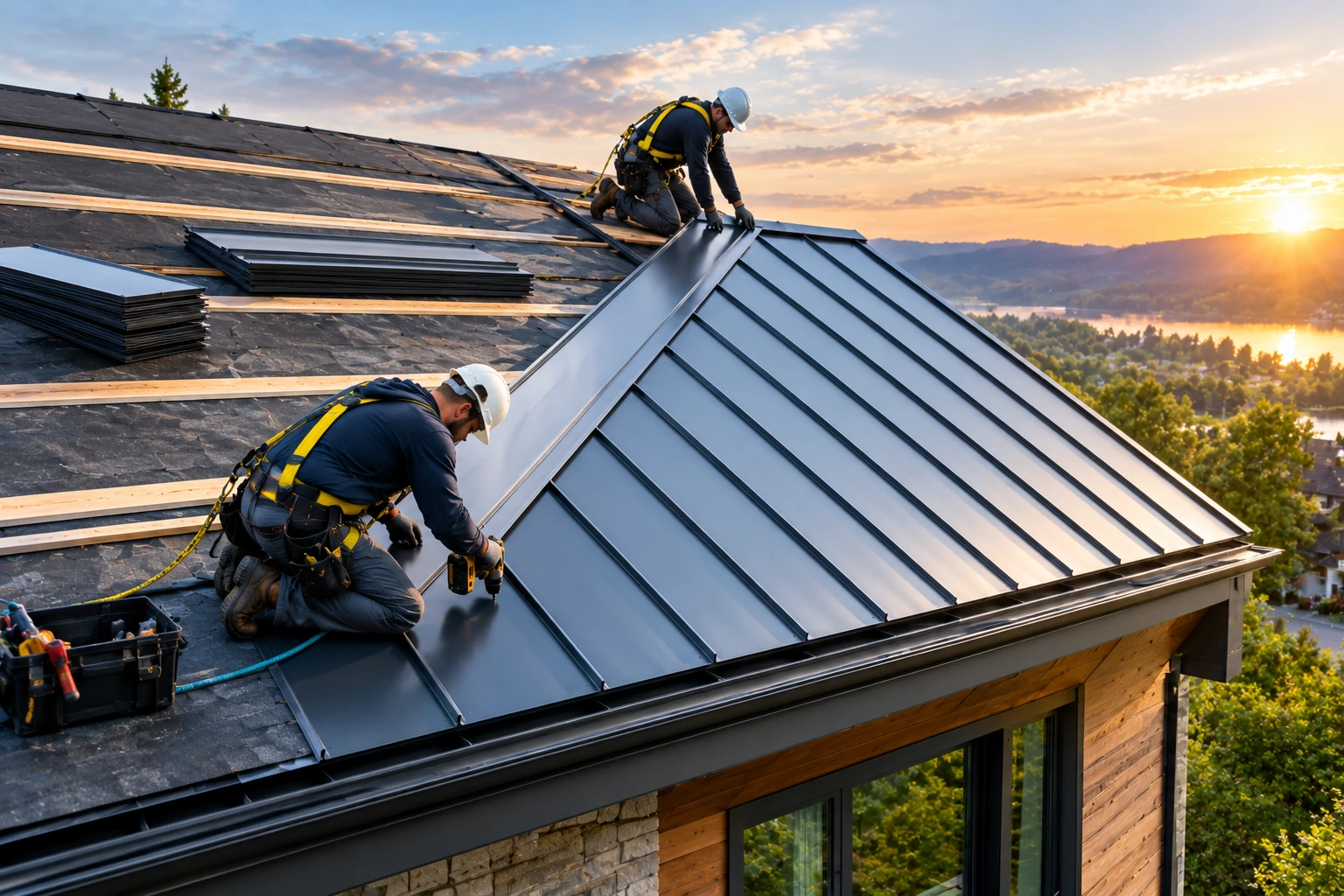
Metal roofing is a popular choice for homeowners seeking durability, weather resistance, and a modern appearance. If you are replacing an ageing roof or planning a new roofing project, selecting the right materials is essential for achieving a secure and long-lasting installation. Understanding what materials are required for metal roof installation? can help you prepare for the project, compare estimates, and make informed decisions about your roofing system. A complete metal roof installation includes more than metal panels. Underlayment, fasteners, flashing, edging, and ventilation components all contribute to the roof’s performance.
Metal Roofing Panels
Metal panels are the primary component of the roofing system. They are available in different profiles, finishes, thicknesses, and materials to suit various building styles and budgets.
- Steel roofing: A widely used option that often includes protective coatings to resist corrosion.
- Aluminum roofing: Lightweight and naturally resistant to corrosion, making it useful in certain environments.
- Standing seam panels: Feature raised seams that conceal many of the fasteners and provide a clean appearance.
- Corrugated metal panels: Have a ridged profile and are commonly used for residential and other roofing applications.
When selecting panels, consider the roof’s slope, local weather conditions, colour preferences, expected maintenance, and budget. Confirm that the panel profile is suitable for the building and roof pitch.
Roofing Underlayment
Underlayment is installed between the roof deck and the metal roofing panels. It provides an additional protective layer against moisture that may pass beneath the exterior roofing surface.
- Common underlayment options include synthetic materials and asphalt-saturated roofing felt.
- Self-adhered membrane products may also be required in vulnerable areas, such as eaves or valleys, depending on local code requirements and the roofing manufacturer’s specifications.
- The correct underlayment depends on the roof design, climate, and panel system.
- It must be installed with appropriate overlaps and fastening methods to help maintain a continuous moisture barrier.
Fasteners, Screws, and Clips
Metal roofing requires suitable fastening components to secure the panels to the roof structure.
- Exposed-fastener systems use roofing screws with sealing washers to reduce water penetration.
- Standing seam systems may use concealed clips that allow panels to attach securely while accommodating movement caused by temperature changes.
- Fasteners must be compatible with the roofing material to reduce the risk of corrosion. Their type, length, spacing, and installation position should follow the manufacturer’s specifications.
- Using incorrect screws or over-tightening fasteners can compromise the roofing system and increase the possibility of leaks.
Flashing and Roof Trim
Flashing protects vulnerable roof transitions and openings from water infiltration. It is an essential part of a properly installed metal roof.
- Eave and rake trim along roof edges.
- Ridge caps where roof slopes meet at the top.
- Valley flashing where two roof sections meet.
- Chimney and wall flashing around adjoining structures.
- Pipe boots and penetration flashing around plumbing vents.
- Drip edges that help direct water away from roof edges.
These components should be selected to suit the panel profile and roof design. Correct installation is especially important around chimneys, skylights, valleys, and other areas where water can collect or change direction.
Roof Decking and Structural Components
Metal roofing panels need an appropriate supporting structure. Roof decking provides the surface to which the roofing system is attached, either directly or through an approved support arrangement.
- During a roof replacement, the existing decking should be inspected for rot, water damage, delamination, and structural weakness.
- Damaged sections may need repair or replacement before installation begins.
- Depending on the selected roofing system, additional battens, purlins, or other supports may be necessary.
- These components must be designed and installed according to the roof system’s requirements and applicable building codes.
Sealants, Closures, and Ventilation Materials
Compatible sealants help protect joints, flashing transitions, and other vulnerable areas.
- Profile-matched foam or rubber closures may be used to close gaps beneath panels at the ridge or eaves, where specified by the manufacturer.
- Ventilation components can include ridge vents, soffit vents, and other approved products designed to support appropriate attic airflow.
- Proper ventilation helps manage heat and moisture, although the best arrangement depends on the building’s design.
- Sealants should not replace properly designed flashing or be used as the sole defence against water intrusion.
- Select products that are compatible with the metal panels and recommended for the intended application.
Why Is Metal Roof Installation More Expensive Than Asphalt?
You ask, why is metal roof installation more expensive than asphalt? The difference generally comes from material costs, installation requirements, labour, and the additional components needed for a complete roofing system.
- Metal panels and specialised accessories may cost more upfront than standard asphalt shingles.
- Some metal systems require trained installers, specialised cutting tools, concealed clips, and carefully fitted flashing.
- Roof complexity, steep slopes, removal of existing materials, and repairs to the roof deck can further increase the total price.
- However, the initial installation cost does not tell the entire story. A well-selected metal roofing system can offer a long service life and may require less frequent replacement than some lower-cost roofing options.
- To compare estimates accurately, check whether each quotation includes underlayment, trim, fasteners, flashing, old-roof removal, disposal, and necessary structural repairs.
Frequently Asked Questions
Which metal is used for residential roofing?
Steel and aluminum are common choices. The best option depends on the budget, environmental exposure, roof design, and desired durability.
Is underlayment necessary for metal roofing?
Underlayment is commonly required as an additional moisture-protection layer. The specific product and installation method depend on the roofing system and applicable requirements.
Do metal roofs require special screws?
Fasteners must be suitable for the roofing material and system. Incorrect fasteners or poorly installed sealing washers can contribute to leaks and corrosion.
How do I prevent leaks around metal roof penetrations?
Use compatible flashing, approved pipe boots, and manufacturer-recommended sealing methods. Correct installation is essential around vents, chimneys, and skylights.
How can I estimate the materials needed for a metal roof?
Our roofing contractor can measure the roof area, account for panel coverage and overlaps, and calculate the required quantities of underlayment, fasteners, flashing, trim, and accessories.