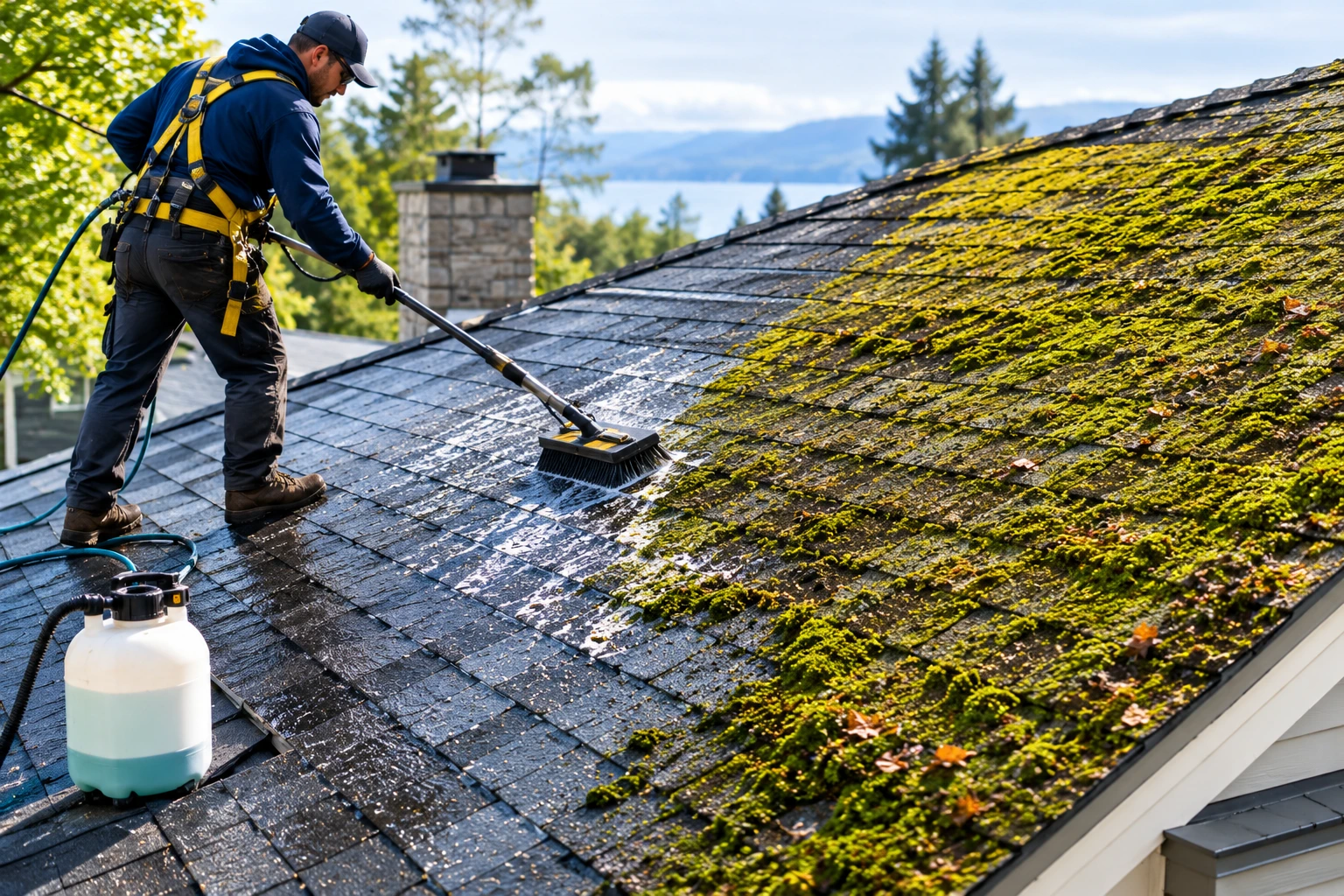
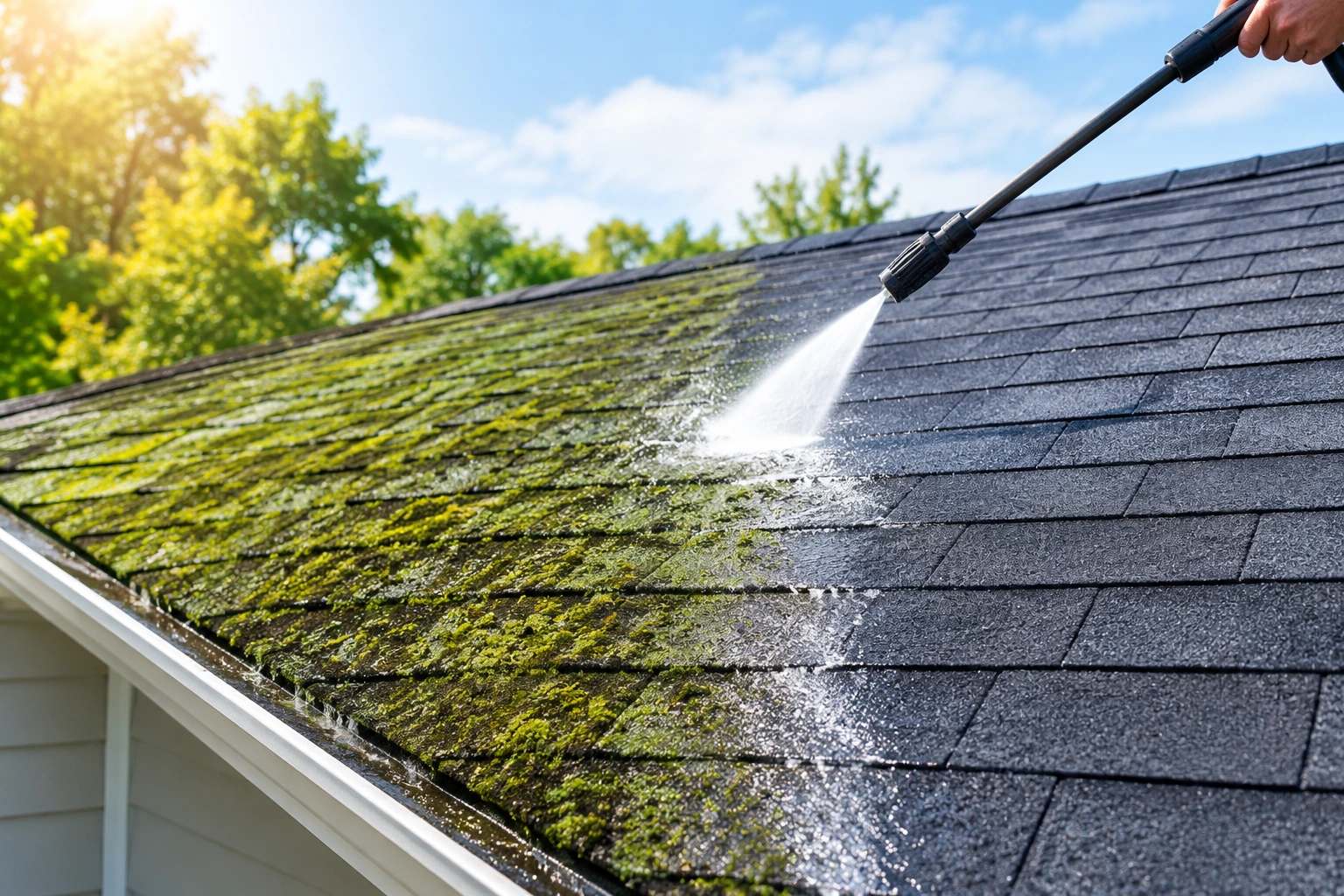
Roof algae can make shingles look dirty, stained, and aged. The dark green or black growth is more than a cosmetic concern because it can remain on the roof surface, hold moisture, and contribute to faster deterioration when left untreated. You want to know what is the best algae killer for roofs? The right treatment depends on the roofing material, severity of the growth, and whether the goal is quick removal or long-term prevention.
What Causes Algae to Grow on a Roof?
Algae develops where moisture remains on the roof for extended periods. Shaded areas, limited sunlight, poor ventilation, and nearby trees can create favorable conditions for growth. Roof sections facing less sunlight may stay damp longer after rain, which allows algae to spread.
Leaves, branches, and other debris can also retain moisture against shingles. Over time, this creates an environment where algae can establish itself and gradually spread across larger sections of the roof.
Regular inspection and maintenance can help identify early growth before it becomes widespread.
Which is the Best Algae Killer for Roofs?
When considering what is the best algae killer for roofs? You should look for a treatment that is specifically for roofing surfaces. Algae-killing solutions are formulated to break down organic growth while minimizing the risk of damaging shingles.
A roof-safe cleaning solution is preferable to harsh chemicals or abrasive methods. Our roof cleaners may apply an appropriate treatment and allow it to work rather than relying on aggressive scrubbing.
The best choice can depend on whether the roof has asphalt shingles, metal panels, tile, or another material. A treatment that works well on one surface may not be appropriate for another, so the roofing material should always be considered first.
How to Stop Algae Growth on Roof?
Understanding how to stop algae growth on a roof is just as important as removing existing stains. When algae is cleaned away, preventive maintenance can help reduce the chance of it returning.
Keeping the roof free from leaves and organic debris is one useful step. Tree branches should also be trimmed when they heavily shade the roof or drop large amounts of debris onto the shingles.
Proper attic ventilation can help regulate temperature and moisture beneath the roofing system. Gutters and downspouts should remain clear so rainwater can drain properly instead of creating additional moisture around the roof.
What Kills Green Algae Fast?
Many of you ask, What kills green algae fast? It depends on the type of treatment used and how established the growth has become. A suitable roof-cleaning solution can begin breaking down algae without the need for harsh pressure washing.
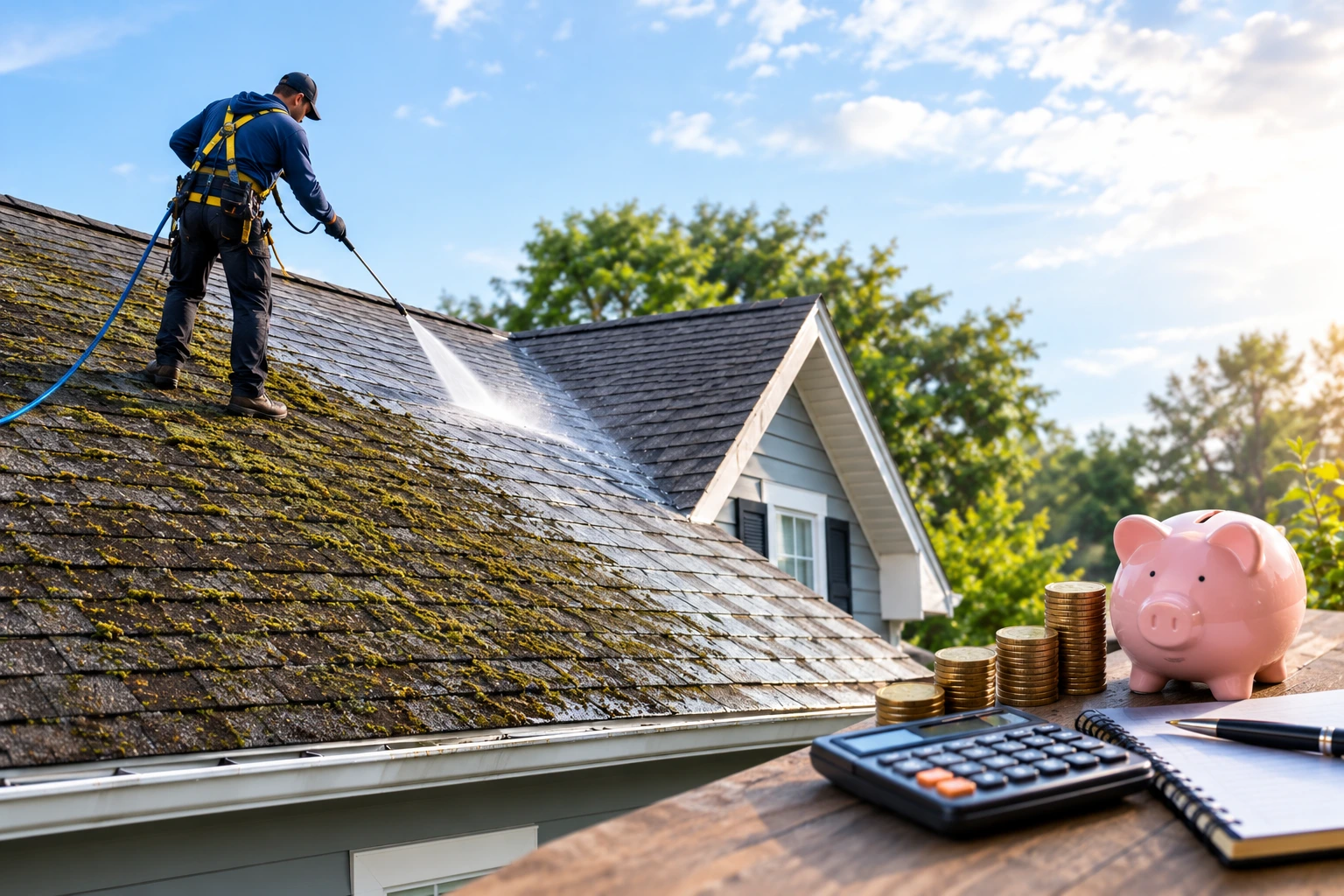
Although strong pressure may appear to provide immediate results, it can be damaging to certain roofing materials. Excessive pressure can loosen granules, lift shingles, or create areas where water can penetrate.
A controlled cleaning process is safer. The treatment is applied evenly, allowed sufficient time to work, and then rinsed or naturally weathered according to the product and roofing requirements.
Why You Should Avoid Harsh Roof Cleaning?
Using household bleach at excessive concentrations, abrasive brushes, or high-pressure equipment can create problems for roofing materials. Even when algae disappears, the roof may be left with damaged shingles.
Roof cleaning should focus on removing organic growth while protecting the underlying roofing system. A professional can evaluate the condition of the shingles before deciding which cleaning approach is appropriate.
This is particularly important for older roofs where shingles may already be brittle or have weakened protective surfaces.
Which Signs Show Your Roof Needs Algae Treatment?
- Green, blue-green, or dark discoloration
- Streaks running down shingles
- Algae concentrated on shaded roof sections
- Slippery or damp-looking areas
- Increasing discoloration after rainy periods
- Organic buildup around roof edges
Early treatment can make maintenance easier and may help prevent the growth from spreading across the entire roof.
Why Choose Professional Roof Algae Removal?
Our professional roof repair or cleaning service can start by inspecting the roof and identifying the type and extent of growth. The roofing material, age, slope, and existing damage should be considered before treatment begins.
The cleaning process may include removing loose debris, applying a roof-appropriate algae treatment, allowing the solution to work, and carefully rinsing or treating the surface without unnecessary pressure.
If damaged shingles, leaks, missing materials, or other problems are discovered during the inspection, repairs may also be recommended.
How to Keep Your Roof Cleaner for Longer?
Algae prevention works best as part of regular roof maintenance. Cleaning gutters, trimming overhanging branches, improving ventilation, and checking shaded areas can all help reduce moisture-related problems.
You should also schedule periodic roof inspections, especially after severe weather. Addressing small issues early can prevent them from becoming more expensive repairs later.
If algae has covered a portion of your roof, our assessment is a practical way to determine the safest cleaning method. Proper treatment can improve the roof’s appearance while helping protect the shingles and extend the useful life of the roofing system.
Frequently Asked Questions
Can roof algae damage shingles?
Algae can retain moisture on the roof surface and contribute to gradual shingle deterioration. Heavy or prolonged growth may also make the roof look older than it actually is.
Is roof algae removal safe for asphalt shingles?
When the appropriate cleaning solution and gentle application method are used. Harsh scrubbing and excessive pressure can damage asphalt shingles, so the cleaning method should be selected carefully.
How often should a roof be checked for algae?
A roof should be inspected at least once a year. Roofs surrounded by trees or located in damp, shaded conditions may benefit from more frequent inspections.
Does trimming trees help prevent roof algae?
Reducing excessive shade allows more sunlight to reach the roof and improves drying after rain. Removing branches can also reduce the leaves and debris that collect on shingles.
Can algae return after professional roof cleaning?
Cleaning removes existing growth, but algae can return when moisture, shade, and organic debris remain present. Regular maintenance can help keep the roof cleaner for longer.