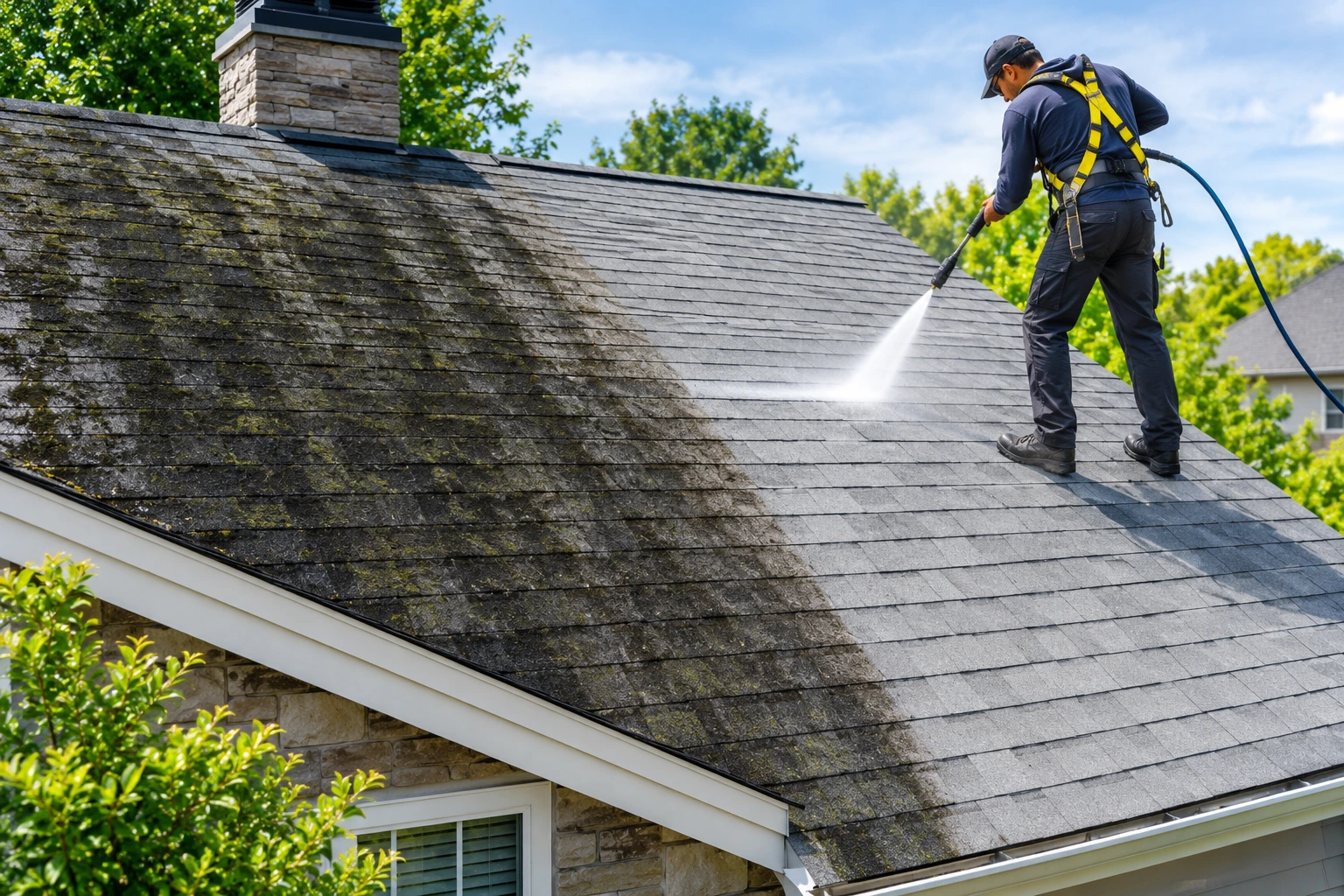
Black streaks on roof shingles can make a property look old, neglected, or poorly maintained. These dark marks are common on asphalt shingle roofs, especially in areas where moisture, humidity, and limited sunlight encourage algae growth. If you want to remove black streaks from roof shingles, it is important to identify the cause and select a cleaning method that protects the roofing materials.
What Causes Black Streaks on Roof Shingles?
Black streaks are commonly caused by a type of blue-green algae called Gloeocapsa magma. This organism can grow on roofing surfaces when moisture and environmental conditions are suitable. It spreads downward from the upper sections of the roof, creating long, dark streaks.
Several factors can contribute to roof discoloration.
- Humidity and moisture: Damp conditions encourage algae growth on shingles.
- Limited sunlight: Shaded roof sections may remain damp for longer periods.
- Organic debris: Leaves and other debris can retain moisture on roofing surfaces.
- Roof age: Older shingles may show more visible discoloration and accumulated dirt.
- Nearby trees: Overhanging branches can increase shade and deposit debris.
Black streaks are not always a sign of serious roof damage. However, persistent moisture, moss growth, damaged shingles, and blocked drainage should be inspected to determine whether maintenance or repairs are necessary.
How to Remove Black Streaks from Roof Shingles Safely
The correct cleaning approach depends on the roofing material, the severity of the staining, and the condition of the shingles. However, asphalt shingles contain protective granules that help shield the underlying material from weather exposure.
Inspect the Roof Before Cleaning
Start by identifying the affected areas and checking for cracked, loose, curling, or missing shingles. Look for moss, algae, debris, and signs of water accumulation. If the roof is steep, slippery, or difficult to access, arrange a professional inspection instead of climbing onto it yourself.
Use a Roof-Appropriate Cleaning Solution
A suitable cleaning solution may help loosen and remove algae stains without excessive scrubbing. The product must be compatible with the specific roofing material and used according to its label instructions.
Avoid High-Pressure Washing
Pressure washing can dislodge the protective granules from asphalt shingles, force water beneath roofing materials, and contribute to leaks. Meanwhile, a low-pressure treatment designed for the roof type is a safer approach when performed correctly.
Protect Surrounding Areas
Before cleaning begins, appropriate precautions should be taken to protect gutters, plants, exterior walls, and outdoor fixtures. Cleaning solutions and runoff should be controlled carefully to prevent unnecessary damage.
Consider Professional Cleaning
Professional roof cleaners can assess the stain type, select an appropriate treatment, and apply it using suitable equipment. They can also identify areas where cleaning alone will not resolve the problem, such as damaged shingles or persistent moisture issues.
When Should You Hire a Black Streak Removal Roof Service?
Moreover, a professional black streak removal roof service may be helpful when stains cover a large section of the roof, continue returning after cleaning, or appear alongside moss and other organic growth.
Professional service is particularly useful for roofs with steep slopes, multiple levels, delicate materials, or difficult access. Our technicians can evaluate the roofing condition before treatment and help avoid unnecessary damage.
- Initial roof condition assessment
- Identification of algae, moss, and surface stains
- Selection of an appropriate cleaning method
- Application of a compatible cleaning treatment
- Careful management of cleaning runoff
- Recommendations for preventing future staining
What Factors Affect Roof Moss and Stain Removal Cost?
The overall roof moss and stain removal cost varies according to the property’s roofing conditions and the work required. A roof with light algae staining may require less treatment than one covered with thick moss, widespread discoloration, and accumulated debris.
Important cost factors include the following.
Roof size: Larger roof surfaces generally require more labour, cleaning solution, and time.
Roof pitch and accessibility: Steep roofs and difficult-to-reach sections may require additional safety equipment and precautions.
Severity of staining: Light black streaks may be easier to treat than extensive algae growth combined with moss and lichen.
Roofing material: Asphalt shingles, tile, metal, and other materials have different cleaning requirements.
Additional maintenance: Gutter cleaning, debris removal, minor repairs, or other requested work can increase the final quotation.
Location and labour rates: Local service rates, travel requirements, and property access can influence the total price.
How to Prevent Black Streaks from Returning?
After cleaning, preventive maintenance can help keep your roof looking better for longer.
- Trim overhanging branches where appropriate to improve sunlight and airflow.
- Keep gutters clear so rainwater can drain properly.
- Remove accumulated leaves and debris using safe methods.
- Schedule periodic roof inspections to identify early signs of algae or moss.
- Consider professionally installed algae-resistant shingles when replacing an older roof.
- Ask a roofing professional whether a suitable preventive treatment is appropriate for your roofing material.
Frequently Asked Questions
What is the best way to remove black streaks from roof shingles?
The best approach is to use a roof-compatible cleaning treatment designed to remove algae without damaging the shingles. Avoid high-pressure washing and abrasive scrubbing, as these methods can remove protective granules.
How often should I schedule a black streak removal roof service?
The frequency depends on your roof’s exposure to moisture, shade, and algae growth. Regular inspections can help identify new stains early and determine when professional cleaning is necessary.
What is the average roof moss and stain removal cost?
The cost varies according to roof size, accessibility, staining severity, roofing material, and labour requirements. Request a property-specific estimate to understand the expected charges.
Can black streaks on shingles cause roof damage?
Black streaks caused by algae are primarily a cosmetic concern, but they can indicate conditions that support organic growth. Moss and persistent moisture may contribute to shingle deterioration, so a roof inspection is advisable if growth is extensive.
How can I prevent black streaks from returning after roof cleaning?
Keep gutters clear, trim overhanging branches where appropriate, remove debris safely, and arrange periodic roof inspections. Algae-resistant shingles or suitable preventive treatments may also help reduce future staining.