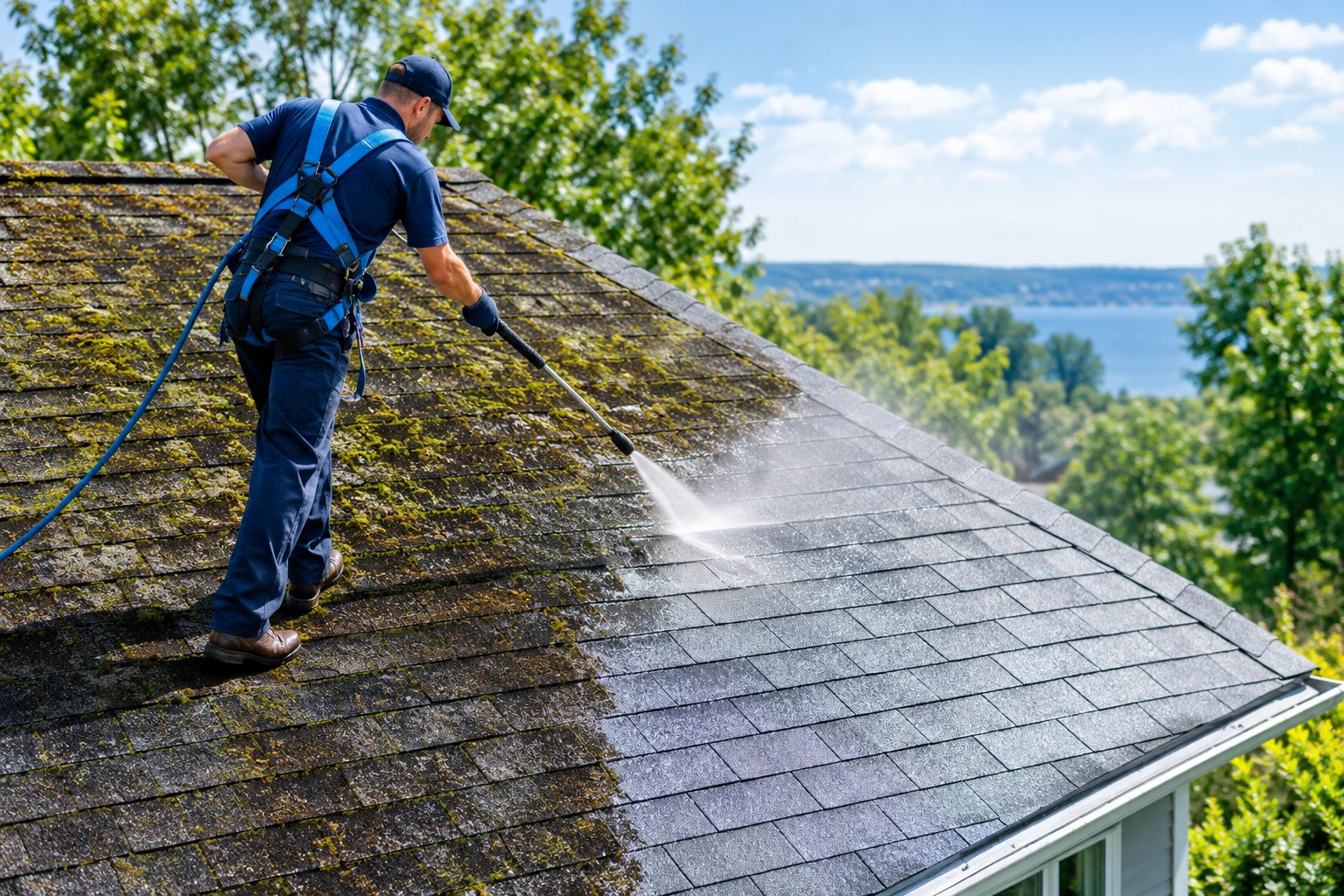
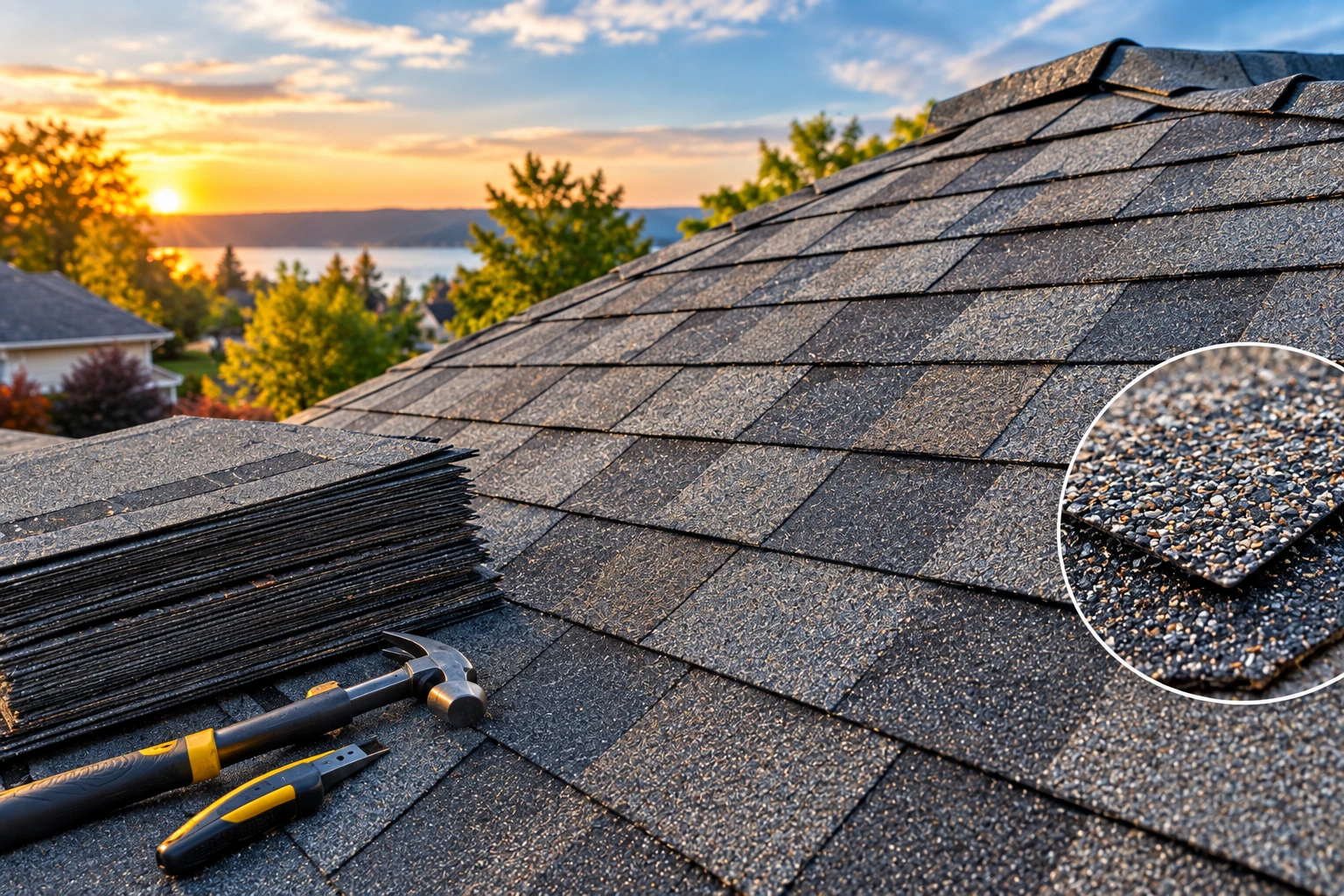
Asphalt shingles are the most common roofing material used on residential properties because they are affordable, durable, and available in many styles. Roofs can collect dirt, algae, moss, lichen, and other organic growth that can make the roof look old and neglected. A common question is, Is pressure washing bad for asphalt shingles? In most cases, using high-pressure water directly on asphalt shingles isn’t recommended. The force of pressure washing can disturb the protective granules on the shingles, damage the surface, loosen roofing materials, and potentially shorten the roof’s service life.
Why Pressure Washing Can Damage Asphalt Shingles
Is pressure washing bad for asphalt shingles? It starts with understanding how asphalt shingles are constructed. The surface of an asphalt shingle contains protective granules that help shield the underlying material from sunlight and weather.
- A powerful pressure washer can dislodge these granules.
- Once granules are lost, the exposed areas may become more vulnerable to ultraviolet radiation, rain, temperature changes, and general weathering.
- Pressure washing can also force water underneath shingles or into areas where it should not enter.
- If the roof already has loose, cracked, curling, or deteriorated shingles, high-pressure water may make the existing problem worse.
Other potential problems include:
- Loss of protective granules
- Damaged or lifted shingles
- Water intrusion
- Accelerated roof deterioration
- Damage around flashing or roof penetrations
- Increased risk of leaks
- Reduced overall roof appearance
What is the Safest Way to Clean a Residential Roof?
If you are wondering what is the safest way to clean a residential roof, it includes a low-pressure cleaning approach combined with an appropriate roof-safe cleaning solution.
The exact cleaning method depends on the roof’s condition, age, slope, type of growth, and severity of staining. However, our roof inspection can help determine the appropriate approach before cleaning begins.
Inspecting the Roof
Before any cleaning begins, the roof should be inspected for damaged, missing, loose, or deteriorated shingles. Existing problems should be identified before applying water or cleaning solutions.
Protecting Surrounding Areas
Plants, landscaping, siding, windows, outdoor furniture, and other areas around the property should be protected during the cleaning process.
Applying an Appropriate Cleaning Solution
A roof-safe solution may be applied to help break down algae, moss, dirt, and other organic growth. The solution should be selected according to the roofing material and type of contamination.
Using Low-Pressure Rinsing
Instead of blasting the shingles with high pressure, a controlled low-pressure rinse can help remove loosened contaminants while reducing the risk of damaging the roofing surface.
Checking the Finished Roof
After cleaning, the roof should be inspected again to ensure that visible contamination has been addressed and that no obvious damage has been created or overlooked.
Can Moss and Algae Be Removed Without Pressure Washing?
Moss and algae do not necessarily require aggressive pressure to be removed.
- Thus, it depends on the severity of the growth; appropriate cleaning solutions and gentle treatment methods can be used.
- Algae often appear as dark streaks or discoloration on asphalt shingles.
- Moss can be more concerning because its growth may retain moisture and develop around or underneath roofing materials.
- Our roof cleaning service can evaluate the growth and determine whether cleaning alone is appropriate or whether damaged sections also need repair.
- It is important not to scrape, brush, or aggressively scrub shingles because excessive physical force can also cause damage.
What is the Average Cost to Clean a 2,000 Sq Ft Roof?
If you want to know the average cost to clean a 2,000 sq ft roof before scheduling maintenance. The final price can considerably depend on several factors, so there is no single price that applies to every property.
Factors that can influence the average cost to clean a 2,000 sq ft roof.
- Roof size and configuration
- Roof pitch and accessibility
- Type of roofing material
- Amount of algae, moss, or staining
- Level of dirt and organic growth
- Cleaning method required
- Property location
- Safety requirements
- Condition of the roof
- Additional treatments or services
Why Professional Roof Cleaning Can Be Safer?
Roof cleaning includes more than making shingles look better. Workers must operate on an elevated and potentially slippery surface while avoiding damage to the roofing system.
Thus, our professionals can assess the roof before cleaning and identify potential problems.
- Missing shingles
- Curling edges
- Cracked shingles
- Exposed roofing material
- Damaged flashing
- Blocked gutters
- Moss growth
- Algae staining
- Signs of water intrusion
What You Should Avoid?
When maintaining asphalt shingles, aggressive cleaning methods can create more problems than they solve. Homeowners should avoid using high-pressure equipment directly against shingles.
- Walking unnecessarily on the roof
- Scraping shingles aggressively
- Using unsuitable chemicals
- Ignoring damaged shingles
- Allowing heavy moss to remain untreated
- Directing strong water streams beneath shingles
- Cleaning without appropriate safety equipment
If the roof is steep, damaged, or difficult to access, professional assistance is generally safer than attempting the work without suitable experience and equipment.
Frequently Asked Questions
Can pressure washing remove algae from asphalt shingles?
Pressure washing can remove algae, but the high pressure may also strip protective granules from asphalt shingles. A low-pressure cleaning method with an appropriate roof-safe solution is generally more suitable.
How often should an asphalt shingle roof be cleaned?
There is no fixed schedule for every roof. Cleaning may be needed when visible algae, moss, dirt, or dark staining develops. Shaded and moisture-prone roofs may require more frequent attention.
Can roof cleaning damage shingles?
Improper cleaning techniques can damage shingles. High pressure, aggressive scrubbing, unsuitable chemicals, and walking directly on fragile roofing materials can cause deterioration.
Is professional roof cleaning worth it?
Our cleaning can help remove organic growth while allowing the roof to be inspected for damaged or deteriorated shingles. It can also reduce the risks associated with working on a roof without appropriate equipment.
Does roof cleaning help extend the life of asphalt shingles?
Proper maintenance can help protect asphalt shingles from persistent algae, moss, and debris buildup. However, cleaning cannot reverse existing deterioration, and damaged shingles may still require repair or replacement.