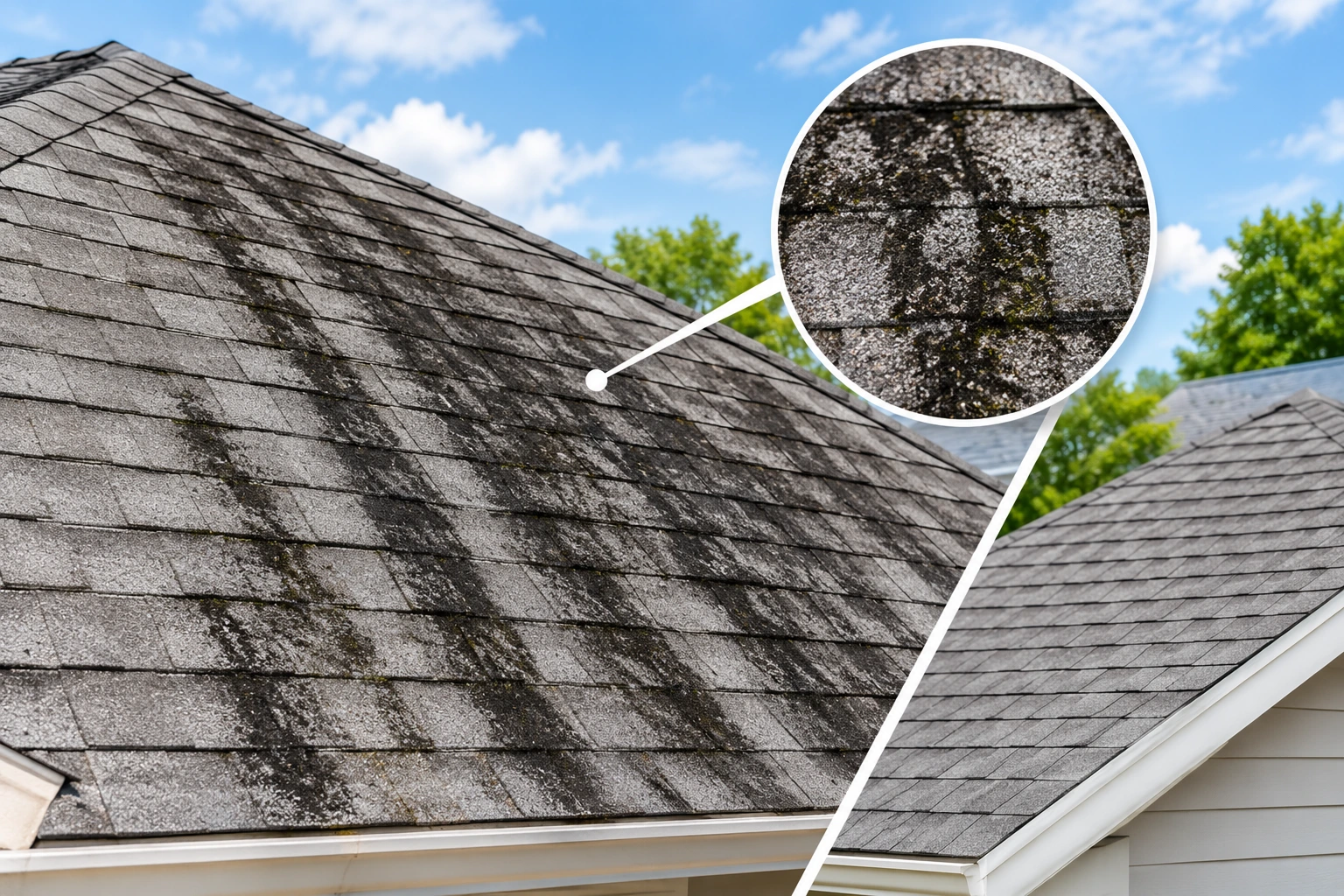
Black streaks on asphalt shingles are a common roofing concern. They can make a well-maintained home look older and may become more noticeable as time passes. These dark marks are associated with algae growth in areas where roofs receive limited sunlight or remain damp for extended periods. If you are searching for how to get rid of black streaks on shingles, you should understand that aggressive cleaning is not always the best solution.
What Causes Black Streaks on Roof Shingles?
The dark streaks seen on asphalt shingles are often caused by algae. One type of algae can spread across the surface and create dark or black-looking discoloration.
- High humidity
- Frequent rainfall
- Shaded sections of the roof
- Overhanging trees
- Poor sunlight exposure
- Moisture retained on shingles
- Accumulated organic debris
Black streaks do not necessarily mean the roof is failing. However, they can indicate that moisture and organic growth are present on the roof surface. Our roof inspection can help determine whether the problem is limited to cosmetic staining or whether there are other maintenance concerns.
How to Get Rid of Black Streaks on Shingles Safely?
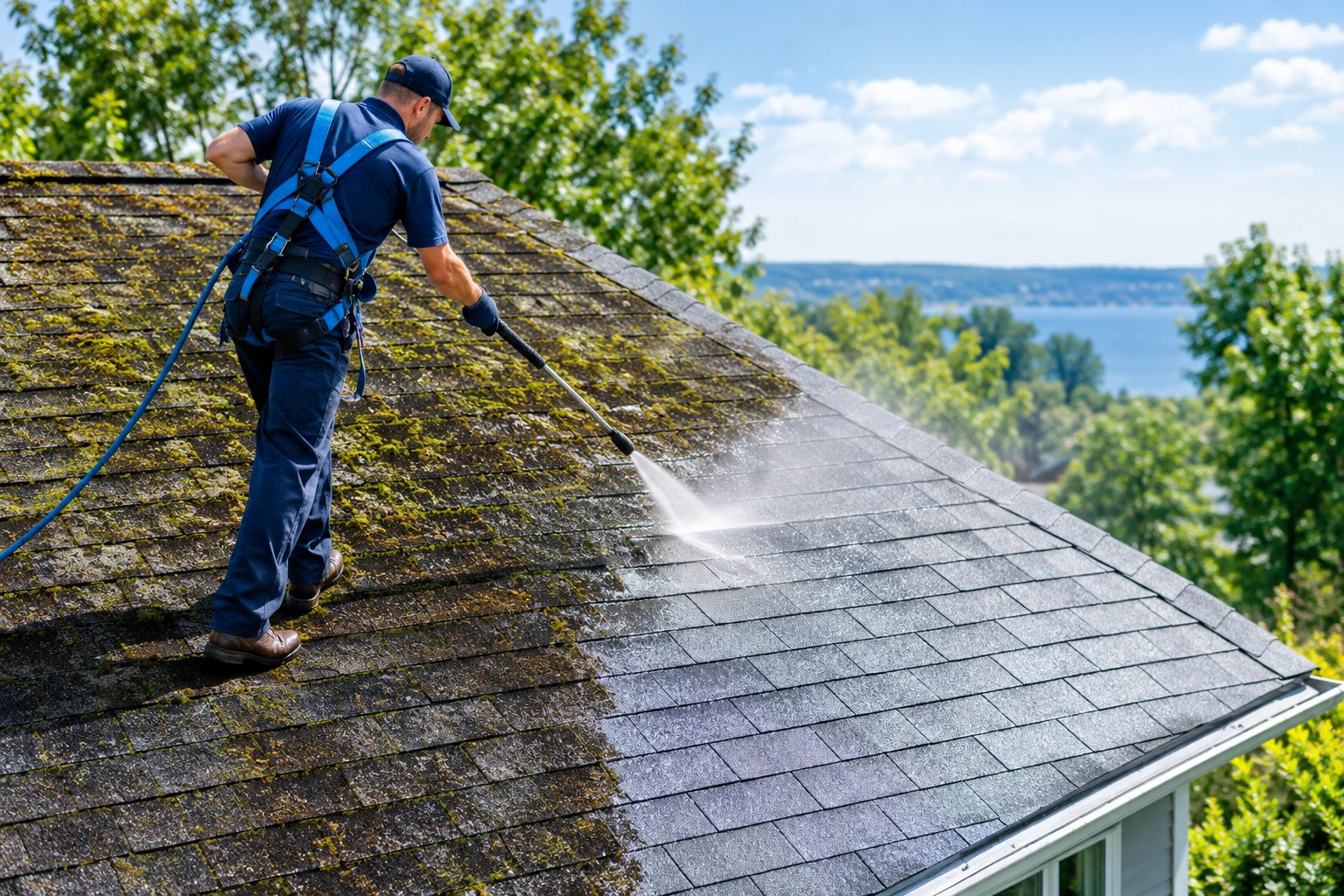
When considering how to get rid of black streaks on shingles, you should avoid immediately reaching for a high-pressure washer. High-pressure water can loosen protective granules, damage shingles, and potentially force water underneath the roofing material.
Inspect the Roof
Before cleaning begins, inspect the shingles for cracks, curling, missing sections, loose areas, or other visible damage. Cleaning damaged roofing without addressing the underlying problem may create additional issues.
Remove Loose Debris
Leaves, twigs, and other loose debris should be cleared carefully. Avoid aggressive brushing or scraping that could disturb the shingles.
Apply a Suitable Cleaning Solution
A roof-safe cleaning solution can help break down algae and other organic staining. The solution should be appropriate for asphalt shingles and applied according to product instructions.
Allow the Treatment to Work
Some cleaning solutions need time to loosen or kill algae before rinsing. Allowing the solution to work can reduce the need for aggressive physical cleaning.
Rinse Gently
Low-pressure rinsing can help remove loosened residue while reducing the risk of granule loss and shingle damage.
Is Pressure Washing Suitable for Black Streaks?
Pressure washing is not the preferred method for cleaning asphalt shingles.
- Although powerful water pressure can remove visible staining quickly, it can also remove the granules that protect shingles from sunlight and weather.
- A roof may look cleaner immediately after aggressive washing while being left more vulnerable to premature deterioration.
- If you are looking at how to get rid of black streaks on shingles, you should focus on the cleaning method rather than simply choosing the most powerful equipment.
How Often Should a Residential Roof Be Soft Washed?
Another common maintenance question is: How often should a residential roof be soft washed? There is no universal schedule because roof-cleaning needs depend on local weather, shade, tree coverage, humidity, roof age, and the amount of algae or organic growth.
- Some roofs may remain relatively clean for years, while homes surrounded by trees or exposed to persistent moisture may develop staining more quickly.
- Instead of automatically soft washing every year, you can monitor the roof and schedule an inspection when black streaks, algae, moss, or other buildup becomes visible.
- A professional can also assess whether cleaning is appropriate based on the condition of the shingles.
What Is Soft Washing?
Soft washing uses a cleaning solution and much lower water pressure than traditional power washing.
The objective is to allow the cleaning solution to address organic growth instead of relying on force to remove it.
For asphalt shingles, this approach can be useful because the roofing material does not need to be blasted with high-pressure water.
Soft washing may help address:
- Algae
- Moss
- Dirt
- Organic staining
- Some surface discoloration
- Certain forms of roof buildup
Can Moss on Roof Cause Leaks?
Moss itself does not automatically mean that a roof leaks, but heavy or persistent moss growth can contribute to roofing problems.
- Moss can retain moisture and grow around shingle edges.
- As it becomes thicker, it may interfere with the way water flows across the roof.
- In some circumstances, moss can also contribute to lifting or deterioration of shingles.
Other concerns associated with significant moss growth.
- Persistent moisture retention
- Shingle displacement
- Deterioration of roofing materials
- Blocked water pathways
- Increased difficulty inspecting the roof
How to Prevent Black Streaks and Moss?
Cleaning can improve the appearance of a roof, but prevention is also important. You can reduce conditions that encourage algae and moss growth by keeping the roof and surrounding areas properly maintained.
- Trees can reduce sunlight exposure and drop leaves and debris onto the roof. Trimming branches where appropriate can improve airflow and sunlight.
- Blocked gutters can contribute to poor drainage and moisture around the roof system. Regular gutter maintenance helps water move away from the property.
- Leaves, twigs, and other debris can retain moisture and create favorable conditions for algae and moss.
- Pay particular attention to roof sections that remain shaded for much of the day.
- These areas may develop organic growth sooner than areas receiving direct sunlight.
Frequently Asked Questions
Are black streaks on shingles harmful to the roof?
Black streaks are caused by algae and may initially be mostly cosmetic. However, persistent moisture and organic growth can contribute to roof deterioration, so inspection and proper cleaning can be helpful.
Can I remove black streaks from shingles myself?
Minor staining may be treatable with an appropriate roof-safe cleaning method, but homeowners should avoid high-pressure washing and aggressive scrubbing.
Does soft washing damage asphalt shingles?
When performed correctly with an appropriate cleaning solution and controlled pressure, soft washing is designed to minimize the physical stress placed on asphalt shingles.
What is the difference between algae and moss on a roof?
Algae appears as dark streaks or discoloration across shingles, while moss is a thicker green or brown growth that can form clumps.
Should moss be removed before it damages my roof?
Addressing moss growth early can help prevent moisture retention and potential shingle problems. Our professional can determine the safest way to remove it without damaging the roofing material.