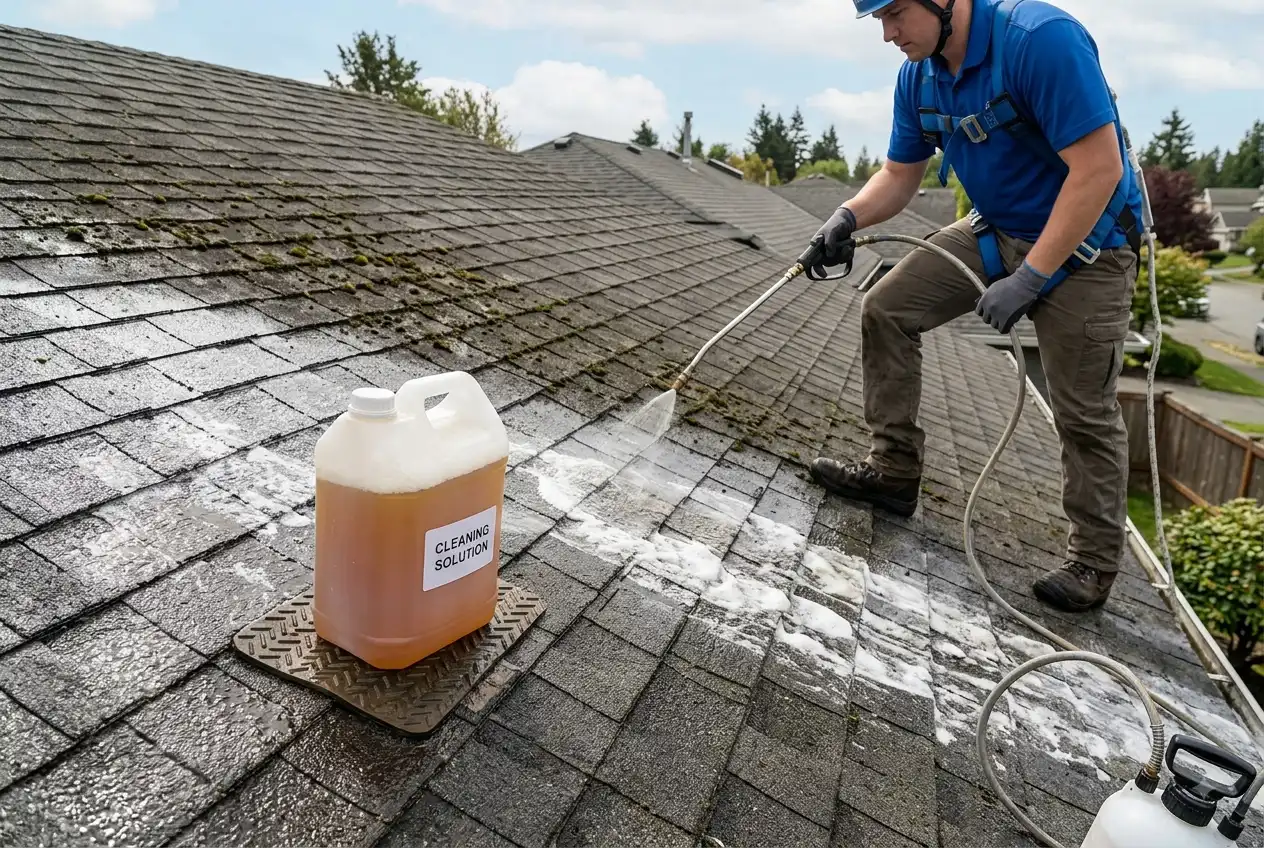
However, choosing the right cleaning solution is important because aggressive chemicals, excessive pressure, or improper application can damage roofing materials. If you are wondering what is the best cleaning solution for a roof? It depends on the roofing material, the type of growth present, the severity of staining, and the cleaning method being used. Our suitable roof-cleaning solution should effectively control organic growth, which minimizes the risk of damage to shingles, tiles, flashing, gutters, landscaping, and surrounding surfaces.
Why Does a Roof Need Cleaning?
Roofs are constantly exposed to rain, sunlight, wind, humidity, leaves, dust, and airborne pollutants. These conditions can encourage algae, moss, and lichen to grow.
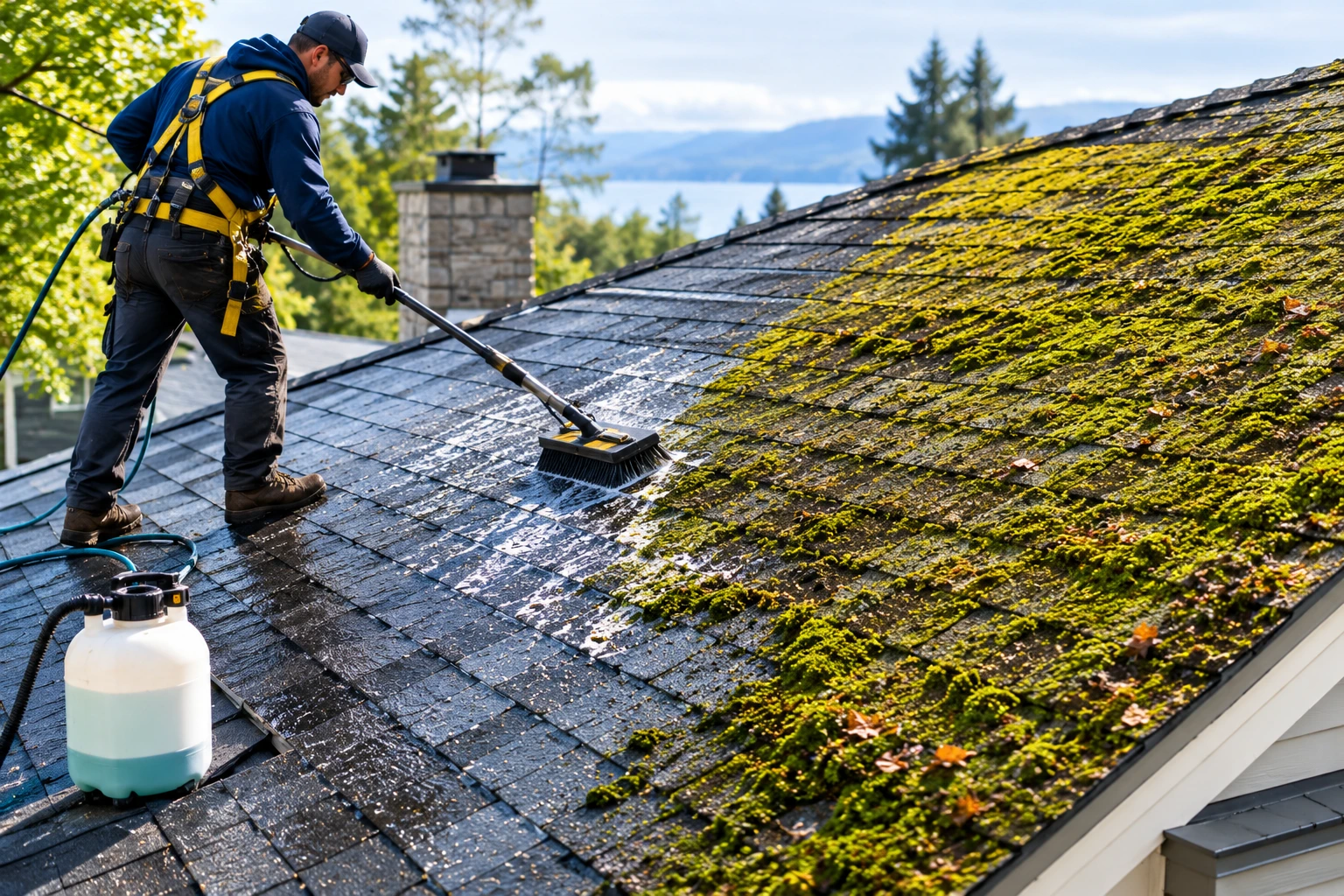
Dark streaks on asphalt shingles are often associated with algae. Moss may appear as green patches, particularly on shaded or damp areas of the roof. Lichen can attach firmly to roofing surfaces and may be more difficult to remove.
- Improve curb appeal
- Remove unsightly stains
- Control moss and algae
- Reduce organic buildup
- Maintain the appearance of roofing materials
- Identify damaged areas
- Support longer-term roof maintenance
Cleaning should be performed carefully because the wrong technique can cause more harm than the buildup itself.
What is a Biocide Roof Treatment?
A biocide is a substance designed to control or destroy living organisms such as algae, fungi, moss, and other microorganisms. In roof cleaning, biocidal treatments may be used to address biological growth that causes staining or buildup.
The advantage of a treatment-based approach is that it can address biological growth at its source instead of relying entirely on mechanical removal.
However, biocides must be handled responsibly. Application should follow the product label, safety requirements, dilution instructions, and environmental precautions.
What is the Best Biocide for Roof Cleaning?
One of the most common questions you ask is: What is the best biocide for roof cleaning?
There is no single product that is universally best for every roof. The appropriate treatment depends on the roofing material, the type of biological growth, the concentration required, environmental conditions, and the manufacturer’s recommendations.
Our roof-cleaning contractor should evaluate the roof before selecting a treatment. Asphalt shingles, concrete tiles, clay tiles, metal roofing, and other materials may have different cleaning requirements.
Compatible With the Roof
The treatment should not unnecessarily damage the roofing material, coatings, sealants, or other components.
Effective Against the Existing Growth
Algae, moss, and lichen can behave differently. A treatment should be selected according to the biological problem being addressed.
Applied at the Correct Concentration
Using too much chemical does not automatically produce better results. Over-application can increase risks to roofing materials, plants, pets, and surrounding surfaces.
Used With Proper Safety Measures
Roof treatments can involve chemical exposure and working at height. Our professionals should use appropriate personal protective equipment and follow safe application procedures.
What are Soft Washing and Roof Cleaning Solutions?
Soft washing is commonly associated with low-pressure application of cleaning or treatment solutions. Unlike high-pressure washing, soft washing focuses on chemical treatment and gentle rinsing.
This method can be useful for roofs where aggressive pressure could cause damage.
- Inspecting the roof.
- Identifying the roofing material.
- Assessing moss, algae, and lichen growth.
- Protecting plants and nearby surfaces.
- Applying an appropriate cleaning solution.
- Allowing the treatment to work for the recommended period.
- Performing controlled rinsing or allowing weathering to remove treated growth.
- Inspecting the finished roof.
Not every roof requires the same process, so cleaning methods should be adapted to the property’s specific conditions.
How Long Does Biocide Treatment Last?
Another important question is: How long does biocide treatment last?
There is no universal timeframe because treatment longevity depends on several environmental factors.
- Roof orientation
- Amount of sunlight
- Local humidity
- Rainfall
- Nearby trees
- Shade
- Existing organic growth
- Roof material
- Product formulation
- Application quality
- Ongoing roof maintenance
A roof surrounded by trees and exposed to frequent moisture may develop new biological growth faster than a roof that receives abundant sunlight and remains dry.
Biocide treatment is therefore not necessarily a permanent solution. It is part of an ongoing roof-maintenance strategy.
How to Make Roof Cleaning Last Longer?
You can take several steps to help keep your roof cleaner after treatment.
- Blocked gutters can contribute to moisture accumulation around roof edges. Cleaning gutters regularly helps maintain proper drainage.
- Trees can deposit leaves and other organic debris onto the roof, creating shaded, damp conditions that encourage moss and algae.
- Where practical, trimming vegetation can improve airflow and sunlight around the roof.
- Regular roof inspections identify early signs of moss, algae, damaged shingles, cracked tiles, or drainage problems.
- Scrubbing or pressure washing without understanding the roofing material can cause unnecessary damage. Our assessment can help determine the safest approach.
What are Roof Cleaning Mistakes?
Using the wrong solution is one of several mistakes you should avoid.
- High pressure can damage shingles, remove granules, crack tiles, and force water beneath roofing components.
- A chemical that works on one surface may damage another. Roof-specific cleaning requirements should always be considered.
- Cleaning solutions can affect plants and grass if they are not properly protected.
- More chemical does not necessarily mean better cleaning. Correct dilution and application are essential.
- A roof may have loose shingles, cracked tiles, deteriorated flashing, or other problems that should be identified before cleaning.
Frequently Asked Questions
What is the best biocide for roof cleaning?
There is no single biocide that is best for every roof. The treatment depends on the roofing material, type of biological growth, environmental conditions, and product instructions.
How long does biocide treatment last?
The effectiveness of a biocide treatment varies depending on factors such as moisture, shade, rainfall, nearby trees, roof condition, and the severity of biological growth. Regular roof inspections and maintenance can help determine when another treatment may be necessary.
Can I pressure wash my roof to remove moss and algae?
Pressure washing damages certain roofing materials, asphalt shingles, by removing protective granules or loosening materials. Low-pressure cleaning is a safer approach when appropriate for the roof.
How often should a roof be professionally cleaned?
Roof-cleaning frequency depends on the local climate, roof material, surrounding trees, shade, moisture, and amount of algae or moss growth. Our inspection help determine an appropriate cleaning schedule and identify potential roof problems early.