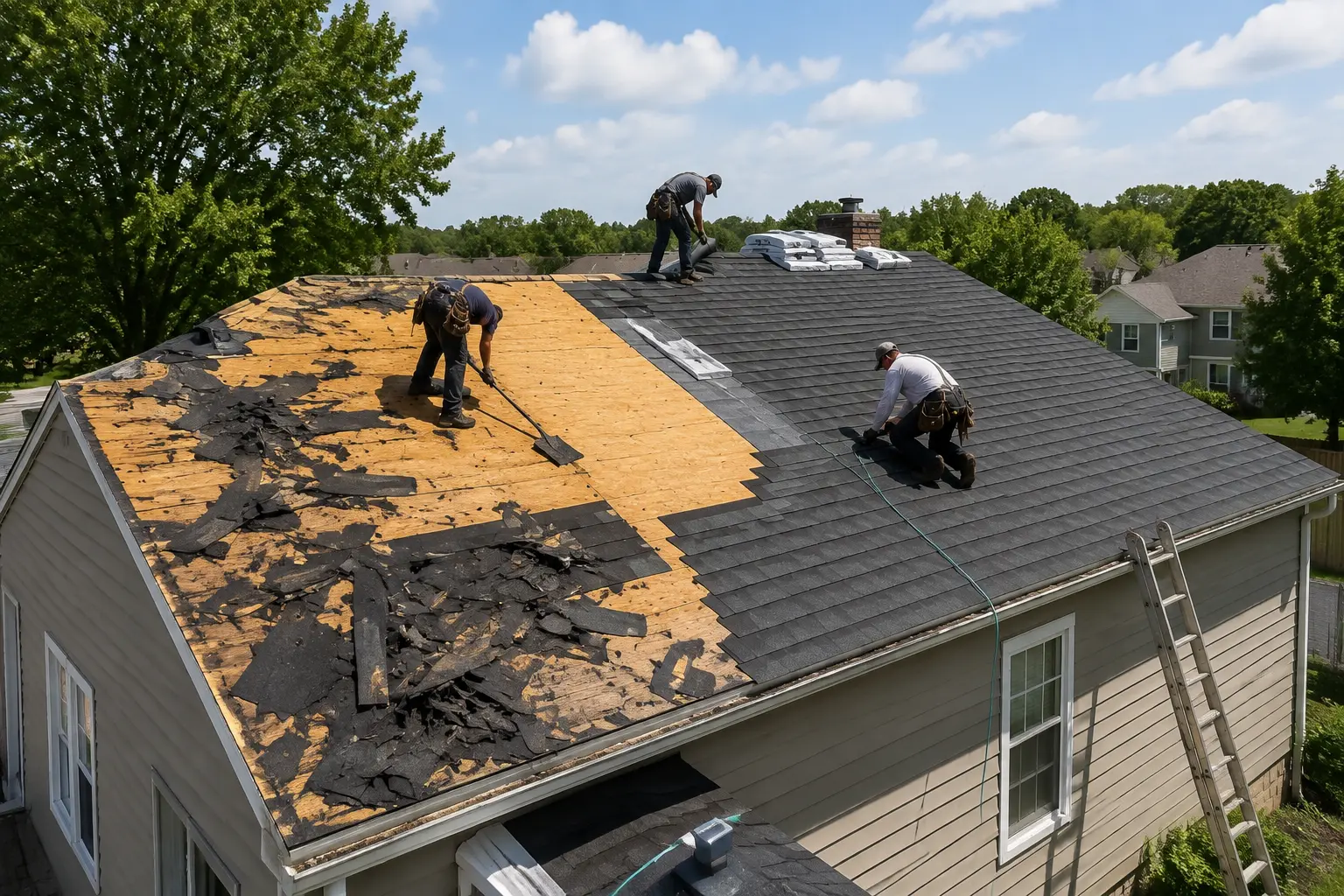
A roof is one of the most important components of any home or commercial building. It protects your property from rain, wind, heat, and other environmental elements while contributing to energy efficiency and curb appeal. However, every roof reaches the end of its lifespan. This leads many of you to ask, What is the best way to replace a roof?
Which Signs Show Your Roof Needs Replacement?
Before replacing a roof, it is essential to determine whether repairs are still sufficient or if a complete replacement is necessary.
- Missing or damaged shingles
- Frequent roof leaks
- Water stains on ceilings
- Sagging roof sections
- Moss or algae growth
- Excessive granules in gutters
- Aging roofing materials
- Storm or hail damage
If multiple issues are present, you should replace the roof, as it can be more cost-effective than repeated repairs.
Is There a Best Way to Replace a Roof?
Many of you wonder, What is the best way to replace a roof? The ideal approach starts with a professional roof inspection. A thorough assessment identifies structural concerns, hidden water damage, ventilation issues, and the condition of the roof deck.
- Removal of old roofing materials
- Inspect the roof decking
- Replace damaged wood
- Install waterproof underlayment
- Add flashing around roof penetrations
- Install high-quality roofing materials
- Improve attic ventilation
- Conduct a final quality inspection
If you follow these steps, it ensures your new roof performs efficiently and provides long-term protection.
How to Choose the Right Roofing Material?
The material you choose has a significant impact on durability, maintenance, and appearance. Popular roofing options include:
- Asphalt Shingles are a well-known option due to affordability, durability, and ease of installation.
- Metal Roofing is known for excellent longevity, weather resistance, and energy efficiency.
- Tile Roofing provides exceptional durability and improves architectural appeal.
- Slate Roofing is a premium option offering an elegant appearance and a lifespan of several decades.
- Synthetic Roofing Materials are designed to replicate natural materials while requiring less maintenance.
Selecting the right material depends on your home’s design, local climate, and long-term maintenance expectations.
What Should We Prepare Before to Replace a New Roof?
Preparation is a key part of any roofing project. Many of you ask, What should we prepare before replacing a new roof? Taking the right steps before installation helps the project run smoothly and protects your property.
- Our professional inspection identifies existing structural problems that should be addressed before installation begins.
- Roof replacement creates vibrations that may affect items hanging on walls. Secure or remove valuable belongings.
- Move vehicles, outdoor furniture, grills, and decorative items away from the work zone.
- Overhanging branches can interfere with roofing work and should be trimmed before installation.
- Roof replacement can be noisy. Plan accordingly, especially if you work from home or have small children or pets.
- Our roofing crews often use tarps and protective coverings, but moving delicate plants can provide additional protection.
Understanding What should we prepare before to replace a new roof? helps minimize disruptions and allows the installation team to work efficiently.
What is the Roof Replacement Process Step by Step?
A professional roof replacement generally follows these stages.
- Roofing experts inspect the roof structure, flashing, gutters, and ventilation system.
- Choose roofing materials based on your budget, climate, and aesthetic preferences.
- Old shingles, nails, and underlayment are carefully removed.
- The roof deck is checked for rot, mold, or structural damage.
- Waterproof underlayment and ice-and-water barriers are installed to improve moisture protection.
- The selected roofing material is installed following manufacturer specifications and industry standards.
- The work area is cleaned, debris is removed, and the completed roof undergoes a final inspection.
What is the Best Solution for Roof Leakage?
Leaks are one of the most common roofing problems. You often ask, What is the best solution for roof leakage? It depends on the source and severity of the leak.
Professional roofers first locate the exact point of water intrusion before recommending repairs or replacement.
- Replacing damaged shingles
- Repairing flashing around chimneys and vents
- Sealing roof penetrations
- Replacing damaged underlayment
- Repairing roof valleys
- Fixing damaged roof decking
- Improving roof drainage
- Replacing severely deteriorated roofing materials
When leaks are widespread or recurring, a complete roof replacement may provide the most reliable long-term solution. Addressing what is the best solution for roof leakage? early helps prevent costly structural damage and mold growth.
What is Importance of Proper Roof Ventilation?
Ventilation plays an important role in roof performance. Poor airflow can lead to:
- Excess attic heat
- Moisture buildup
- Mold growth
- Ice dam formation
- Reduced shingle lifespan
- Higher energy bills
During roof replacement, our contractors often inspect and upgrade ventilation systems to improve overall performance.
Benefits of Professional Roof Replacement
Hiring experienced roofing professionals offers several advantages, which reduces the future repairs caused by improper quality.
- Proper installation techniques
- Compliance with building codes
- High-quality quality
- Manufacturer-recommended installation
- Better weather protection
- Enhanced energy efficiency
- Improved property value
- Long-lasting roofing performance
How Long Does Roof Replacement Take?
Project duration depends on several factors. Moreover, our residential roof replacements is completed within a few days, although larger or more complex projects may require additional time.
- Roof size
- Roof complexity
- Weather conditions
- Roofing material
- Structural repairs
- Crew size
Which Tips to Follow for Maintaining Your New Roof?
After installation, proper maintenance helps maximize your roof’s lifespan, which helps protect your investment and reduces future repair costs.
- Schedule annual inspections
- Clean gutters regularly
- Remove debris from the roof
- Trim nearby tree branches
- Check flashing after storms
- Repair minor damage promptly
- Monitor attic ventilation
- Address leaks immediately
Frequently Asked Questions
What is the best way to replace a roof?
The best approach includes a professional inspection, removing old roofing materials, repairing the roof deck if needed, installing quality underlayment, and fitting new roofing materials according to industry standards.
Should I prepare before to replace a new roof?
To replace a new roof, prepare by clearing the work area, protecting valuables, trimming nearby trees, securing attic items, and ensure easy access for the roofing crew.
What is the best solution for roof leakage?
Repairs might include replacing damaged shingles, fixing flashing, sealing roof penetrations, or replacing the roof if damage is extensive.
How often should a roof be inspected?
Most roofing professionals recommend a roof inspection at least once a year or after heavy storms to identify potential problems early.
How can I make my new roof last longer?
Regular inspections, prompt repairs, clean gutters, proper ventilation, and removal of debris from the roof helps to extend its lifespan.