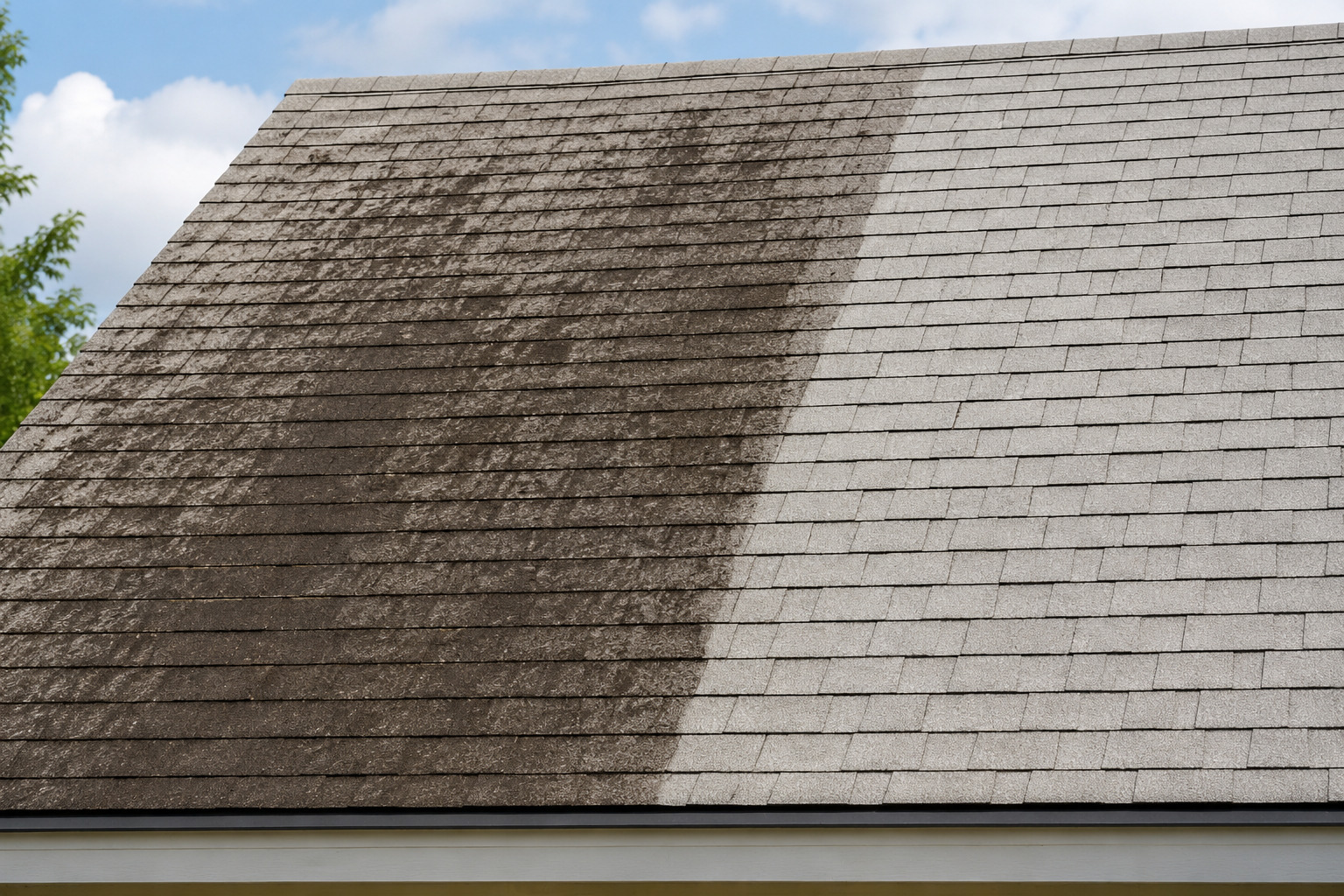
A roof is one of the most visible parts of any property, and its appearance significantly impacts curb appeal. With time, you may notice dark patches, streaks, stains, or uneven coloring across their roofing system. Have you ever wondered, “What Causes Roof Discoloration?” The answer often includes a combination of environmental conditions, biological growth, aging materials, and maintenance issues.
Different Causes of Roof Discoloration
Several factors contributes to changes in your roof’s appearance. You must identify the source towards choosing the right solution.
Algae Growth
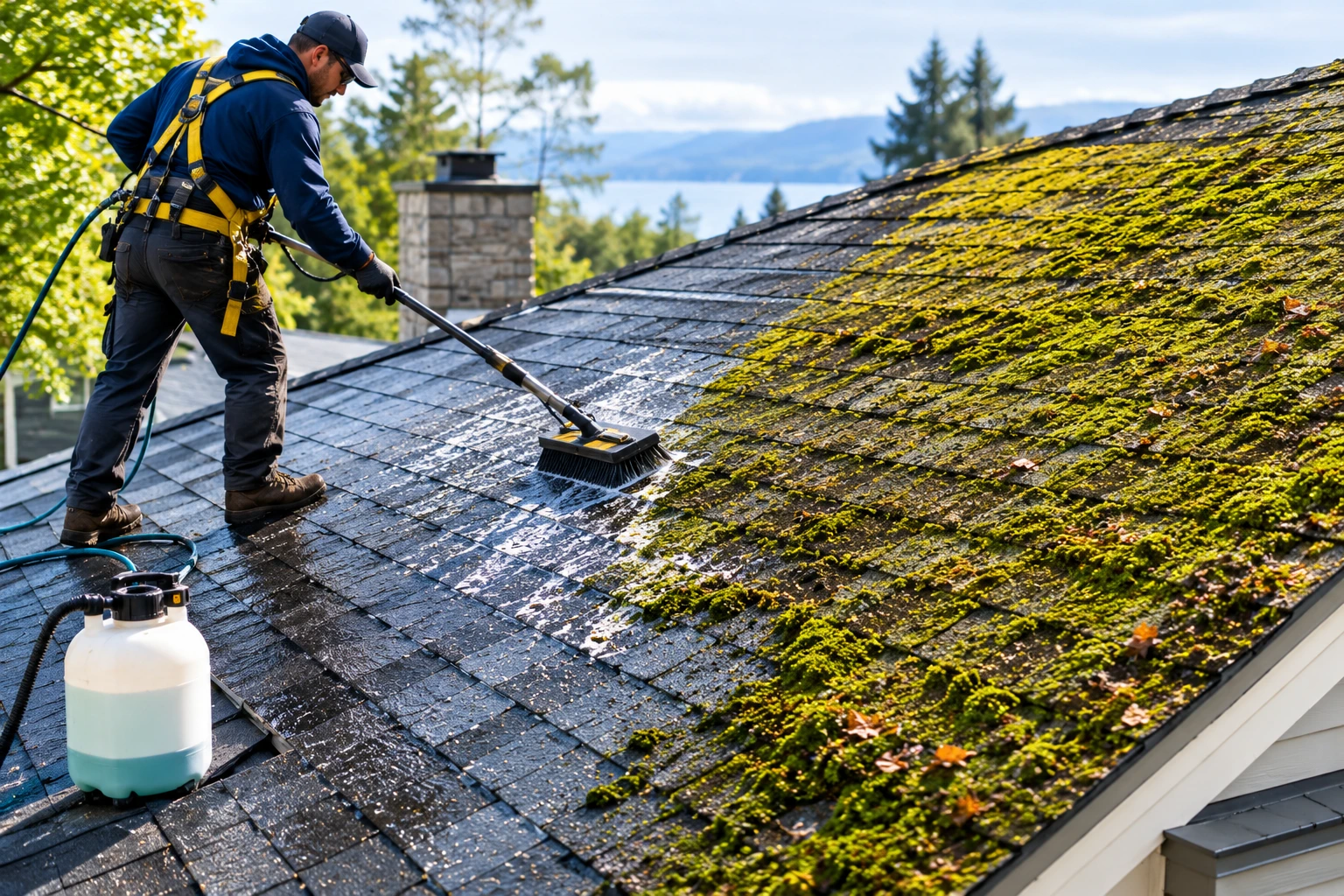
One of the most common answers to What Causes Roof Discoloration? is algae growth. A blue-green algae type known as Gloeocapsa magma often develops on roofing surfaces, especially in humid or shaded environments.
Algae feed on the limestone filler found in asphalt shingles. As the colonies spread, they create dark stains that become more noticeable over time.
Moss and Lichen Development
Moss thrives in damp, shaded areas where moisture remains on the roof for extended periods. Lichen is a mixture of algae and fungi, can also attach itself firmly to roofing materials.
Dirt and Airborne Pollutants
Dust, dirt, pollen, and environmental pollutants can accumulate on roofing surfaces over time. Moreover, homes located near busy roads, industrial areas, or construction sites may experience faster buildup, which results in noticeable discoloration.
Roof Aging
UV exposure, rain, wind, and temperature fluctuations gradually wear down protective granules and coatings, that causes uneven fading.
Tree Coverage and Shade
Trees provide valuable shade but can also contribute to roof discoloration. If the branches are overhanging, it can prevent sunlight from drying moisture quickly, which creates suitable conditions for algae, moss, and mold growth.
Leaves and debris trapped on the roof can further accelerate staining and discoloration.
Black Streaks on Roof: Causes and Solutions
Many of you notice dark lines running down their roofs and assume they are dirt or mold. However, Black Streaks on Roof: Causes and Solutions often point directly to algae growth.
These streaks typically begin as small dark spots and gradually spread across larger sections of the roof. The problem is especially common in regions with high humidity and frequent rainfall.
Causes of Black Roof Streaks
- Algae colonies feeding on roofing materials
- Excess moisture retention
- Poor roof ventilation
- Limited sunlight exposure
- Nearby tree coverage
- Humid climate conditions
Solutions for Black Roof Streaks
There are several effective methods to address black streaks.
Professional Roof Cleaning
Our professional roof cleaning services removes algae safely without damaging shingles. We are specialized cleaning solutions to eliminate biological growth with preserving roofing materials.
Improve Roof Ventilation
Thus, proper attic ventilation helps regulate moisture levels and reduces conditions that encourage algae development.
Trim Nearby Trees
Pruning overhanging branches enables more sunlight to reach the roof and promotes faster drying after rain.
Install Algae-Resistant Materials
When replacing a roof, consider algae-resistant shingles designed to prevent future staining.
You must understand Black Streaks on Roof: Causes and Solutions which can help you take early action before discoloration becomes widespread.
How to Remove Algae from Your Roof Safely?
When you see dark stains on their roofs, many immediately search for How to Remove Algae from Your Roof Safely. While algae removal is important, using improper methods can cause more harm than good.
Avoid Pressure Washing
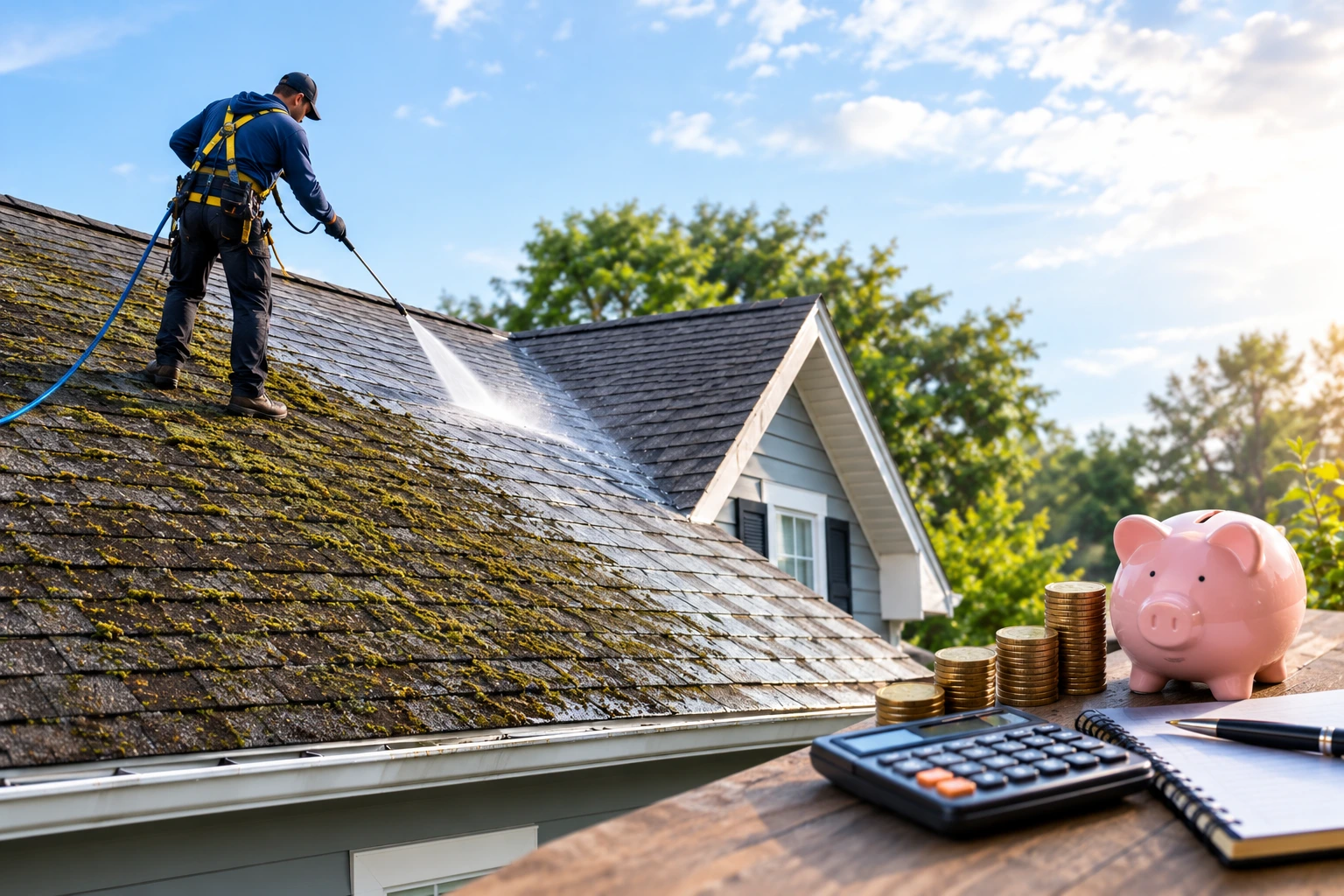
Pressure washing might seem like a quick solution, but high-pressure water can strip protective granules from shingles and shorten the roof’s lifespan.
Use Approved Roof Cleaning Solutions
We have professional-grade roof cleaning treatments to eliminate algae which minimizes damage to roofing materials. These solutions break down biological growth and help restore the roof’s appearance.
Schedule Professional Roof Cleaning
Our experienced roofing professionals understand How to Remove Algae from Your Roof Safely and use techniques that protect shingles, flashing, and gutters during the cleaning process.
Maintain Gutters and Drainage
Clogged gutters can contribute to excess moisture retention on the roof. Keeping drainage systems clear helps prevent algae growth and staining.
How to Prevent Future Roof Discoloration?
While some discoloration is inevitable as roofing materials age, you must follow preventive maintenance which can significantly reduce its impact.
Conduct Regular Roof Inspections
Routine inspections allow homeowners to identify early signs of algae, moss, and staining before they become major issues.
Remove Debris Promptly
Leaves, twigs, and organic debris can trap moisture and encourage biological growth. With regular roof maintenance helps to keep surfaces clean and dry.
Improve Sunlight Exposure
Where possible, trim surrounding vegetation to increase airflow and sunlight exposure on the roof.
Address Water Drainage Issues
Proper drainage prevents standing water and moisture buildup that can contribute to discoloration.
Schedule Preventive Maintenance
Professional roof maintenance services can identify risk factors and provide cleaning or minor repairs before more serious problems develop.
When Roof Discoloration May Indicate Damage?
Although many stains are caused by algae or dirt, discoloration can sometimes signal deeper roofing issues.
- Missing shingles
- Soft spots on the roof
- Water stains inside the home
- Excessive granule loss
- Visible mold growth
- Persistent moisture problems
If discoloration is accompanied by these warning signs, a professional roof inspection is recommended.
Frequently Asked Questions
What Causes Roof Discoloration?
Roof discoloration is caused by algae growth, mold, mildew, lichen, dirt buildup, pollution, tree debris, moisture, and prolonged exposure to sunlight. Identifying the exact cause helps determine the most effective cleaning or repair solution.
Are black streaks on a roof a sign of damage?
Black streaks on roof can causes algae growth, particularly in humid environments. While the streaks may not immediately damage the roof, leaving them untreated can trap moisture and reduce the roof’s lifespan over time.
How to Remove Algae from Your Roof Safely?
You must avoid using high-pressure washing, as it can damage roofing materials. Instead, use roof-safe cleaning solutions, gentle soft washing techniques, or hire professionals to clean the roof without causing harm.
Can roof discoloration be prevented?
You can prevent with regular roof inspections, trimming overhanging tree branches, keeping gutters clean, improving roof ventilation, and scheduling routine roof cleaning to prevent algae, mold, and debris.
When should I contact a roof repair professional for discoloration?
You should contact a roof repair professional if discoloration spreads quickly, black streaks return after cleaning, shingles become damaged, moss or algae growth is extensive, or you notice leaks or other signs of roof deterioration.