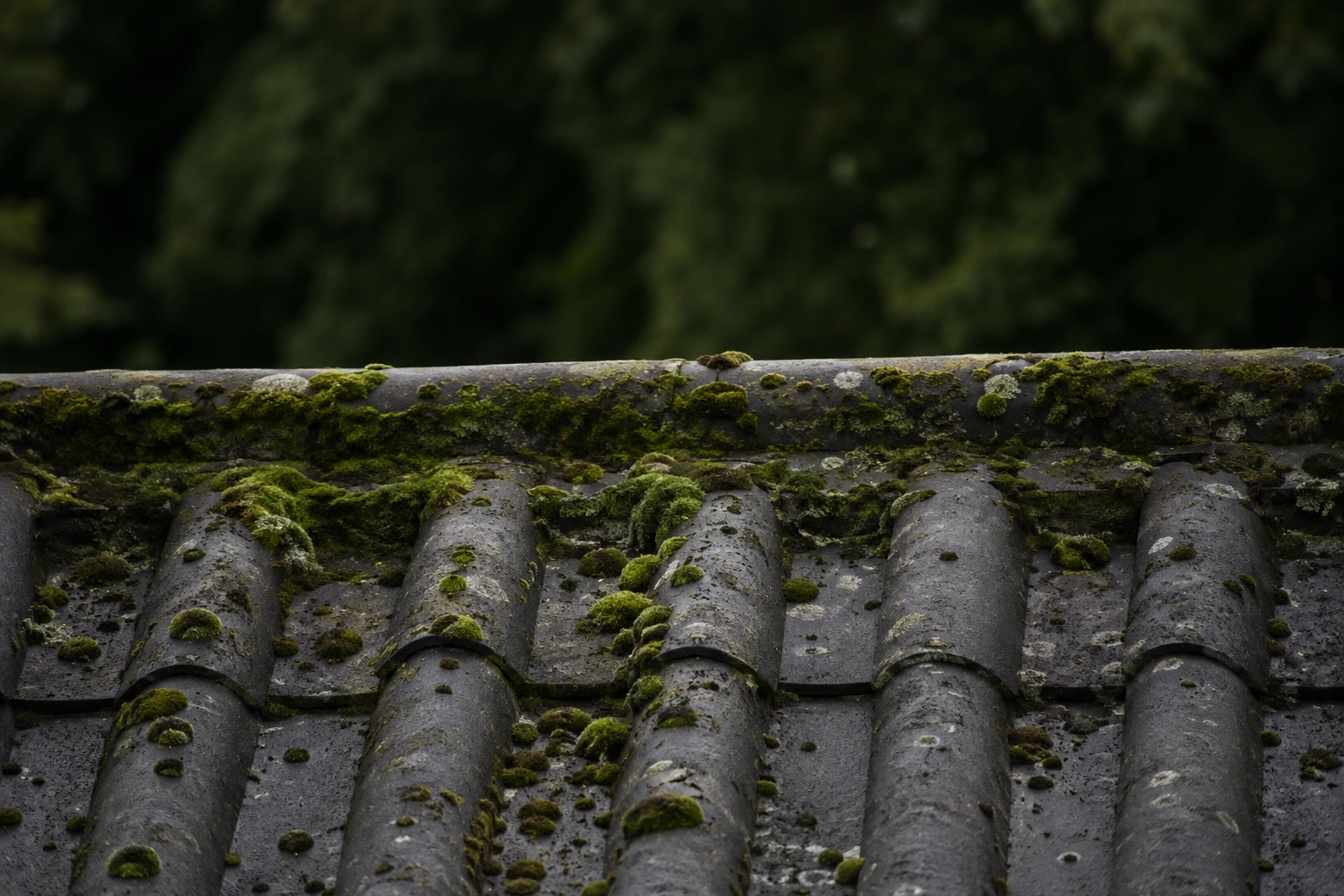
Dark streaks, green patches, and black stains on a roof make a well-maintained home look old and neglected. Many of you assume these marks are simply dirt, but they may be caused by algae, mold, moisture-related growth, or accumulated debris. Moreover, removing algae from roof shingles is an important part of roof maintenance because organic growth can affect the appearance of your roof and may contribute to moisture-related problems if ignored.
What Causes Algae and Dark Stains on Roof Shingles?
Algae develops in areas where moisture remains on the roof for extended periods. Roof sections that receive less sunlight may dry more slowly, which creates conditions that encourage organic growth.
- High humidity and frequent rainfall
- Shade from trees or nearby structures
- Leaves and debris that trap moisture
- Poor roof drainage
- Limited sunlight exposure
- Moisture accumulation around the roof features
Black or dark streaks may spread across shingles, especially in damp or shaded areas. Regular inspections can help you identify these issues before the stains become more noticeable.
What are the Safe Methods for Removing Algae from Roof Shingles?
Removing algae from roof shingles should begin with a careful assessment of the roof’s condition. If shingles are cracked, loose, severely worn, or already damaged, aggressive cleaning may create additional problems.
Inspect the Roof First
Before applying any cleaning solution, inspect the roof from the ground or have a roofing professional examine it.
- Missing or damaged shingles
- Loose flashing
- Excessive granule loss
- Moss buildup
- Clogged gutters
- Water stains near roof edges
Remove Loose Debris
Leaves, branches, and other debris can hold moisture against the roof surface. Carefully clearing loose debris from accessible areas can improve drainage and help the roof dry more efficiently.
Avoid aggressive scraping or brushing, as shingles can lose protective granules when treated too roughly.
Use an Appropriate Cleaning Solution
A roof cleaning solution designed for shingles may help treat algae and surface staining. You must follow the product instructions and confirm that the cleaning method is suitable for your specific roofing material.
It is also important to protect nearby landscaping and avoid allowing cleaning products to damage plants, exterior surfaces, or drainage areas.
Allow the Treatment to Work
Roof stains may not disappear immediately. Some treatments require time to break down organic growth, and weather conditions can influence the final results.
The goal of removing algae from roof shingles should be to treat the underlying growth without unnecessarily damaging the roofing material.
Why You Should Avoid High-Pressure Washing?
One of the biggest mistakes you can make is using high-pressure washing equipment directly on asphalt shingles. Strong water pressure can loosen granules, lift shingle edges, and potentially force water beneath the roofing materials.
- Granule loss
- Damaged shingles
- Water intrusion
- Shortened roof lifespan
- Damage to flashing and roof components
However, you should be cautious when searching for quick solutions for removing roof stains. A cleaning method that works well on concrete or siding may not be suitable for roofing materials.
How to Remove Mold from Roof Shingles?
Removing mold from roof shingles requires special attention because mold and moisture-related growth may indicate an underlying issue.
Before cleaning the visible growth, identify possible moisture sources. For example, accumulated leaves may trap water, while nearby tree branches can prevent sunlight from reaching the roof.
A careful approach to removing mold from roof shingles may include cleaning the affected area with a suitable roof-safe treatment and correcting the conditions that encourage recurring growth.
Our roofing professional can assess if the issue is limited to surface staining or connected to a broader moisture problem.
How to Remove Roof Stains Safely?
Removing roof stains is not about making the roof look new immediately. The safest approach focuses on protecting the shingles while gradually addressing algae, mold, dirt, and other buildup.
- Walking on a roof can be dangerous and may also damage shingles, especially during hot weather or when the surface is wet.
- Wire brushes and aggressive scrubbing can remove protective granules from asphalt shingles.
- Clogged gutters can allow water to accumulate near roof edges. Regular gutter cleaning helps improve drainage and reduce unnecessary moisture exposure.
- Tree branches can create shade and drop leaves onto the roof. Trimming them back may increase sunlight exposure and reduce debris buildup.
- Water should flow away from the roof efficiently. Standing water, blocked drainage paths, and damaged gutters should be repaired as soon as possible.
How to Prevent Algae from Returning?
After removing algae from roof shingles, prevention should become part of your regular roof maintenance plan. Algae may eventually return if the same damp conditions remain.
- Schedule regular roof inspections.
- Keep gutters and downspouts clear.
- Remove leaves and branches from the roof.
- Trim trees that create excessive shade.
- Repair damaged shingles promptly.
- Maintain proper roof drainage.
- Consider algae-resistant roofing materials during roof replacement.
With regular maintenance, you can help reduce the frequency of removing roof stains and make it easier to identify roofing concerns before they become more serious.
Frequently Asked Questions
What is the best way of removing algae from roof shingles?
Removing algae from roof shingles should be done using a roof-safe cleaning method suitable for the specific roofing material. Avoid aggressive scrubbing and high-pressure washing, as these can damage shingles.
Can I pressure wash my roof to remove algae and stains?
High-pressure washing is not recommended for asphalt shingles because it can loosen granules, damage shingles, and force water beneath the roofing materials.
How do I remove mold from roof shingles?
Removing mold from roof shingles includes treating the affected area with an appropriate roof-safe cleaning solution and addressing the moisture conditions that encourage growth.
What causes black stains on roof shingles?
Black stains are often caused by algae or other organic growth that develops in damp or shaded areas. Moisture, debris accumulation, poor drainage, and limited sunlight can contribute to roof discoloration.
How can I prevent roof stains from coming back?
To reduce the need for removing roof stains repeatedly, keep gutters clear, remove leaves and debris, trim overhanging branches, maintain proper drainage, repair damaged shingles, and schedule regular roof inspections.