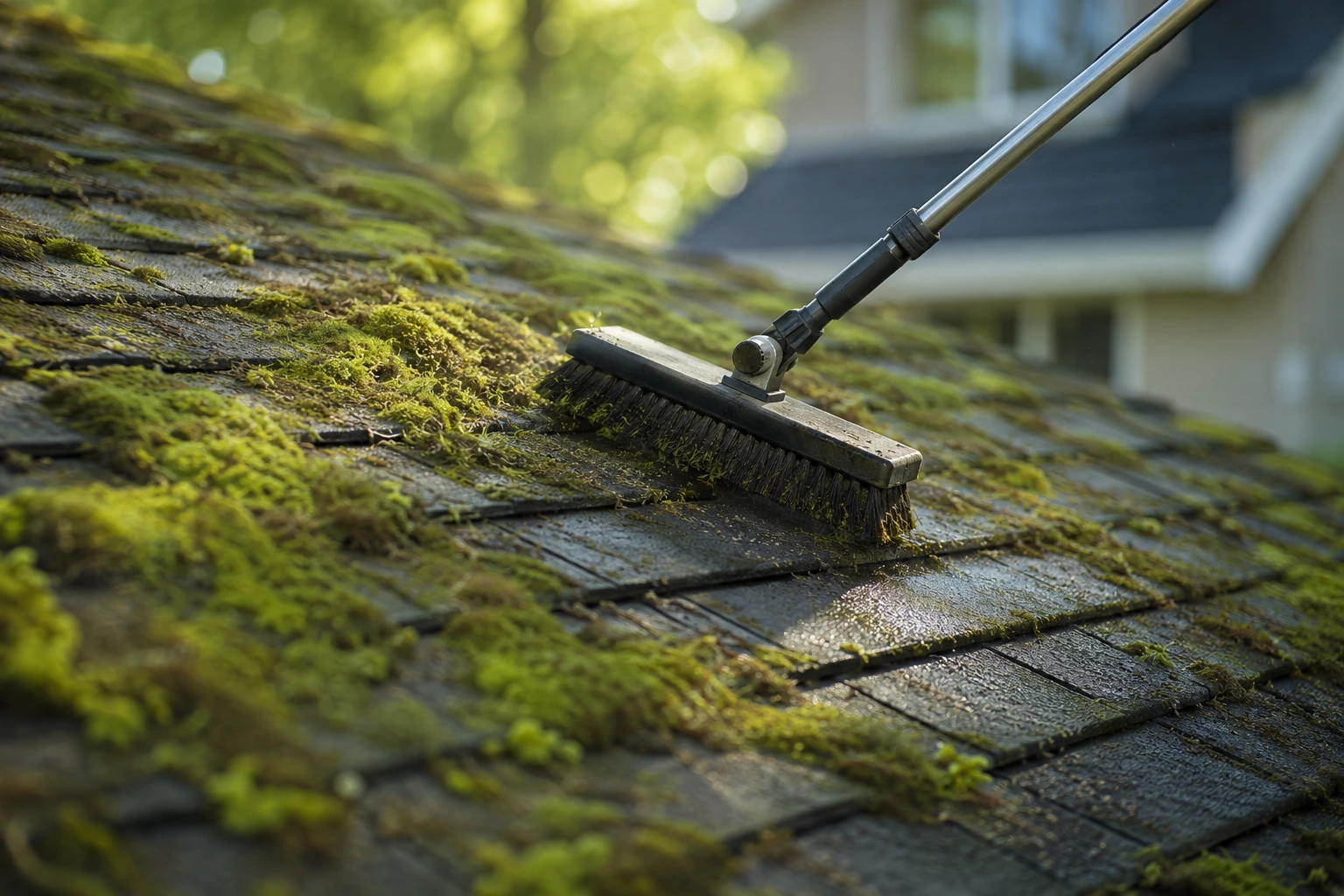
Moss on a roof may look harmless at first, but a thick layer of moss can hold moisture against roofing materials and contribute to deterioration over time. It can also spread across shingles, block drainage paths, and make a roof look neglected. Understanding how to remove moss off a roof can help you address the problem before it becomes more difficult or expensive to repair. While light growth may be manageable, widespread moss should be handled carefully because improper cleaning can damage shingles and create safety risks.
Why Does Moss Grow on a Roof?
Before learning how to remove moss roof, it helps to understand why moss develops. Moss thrives in damp, shaded environments. However, roof sections underneath trees or buildings may receive little direct sunlight, which allows moisture to remain on the surface.
- Excessive shade
- Frequent rainfall
- High humidity
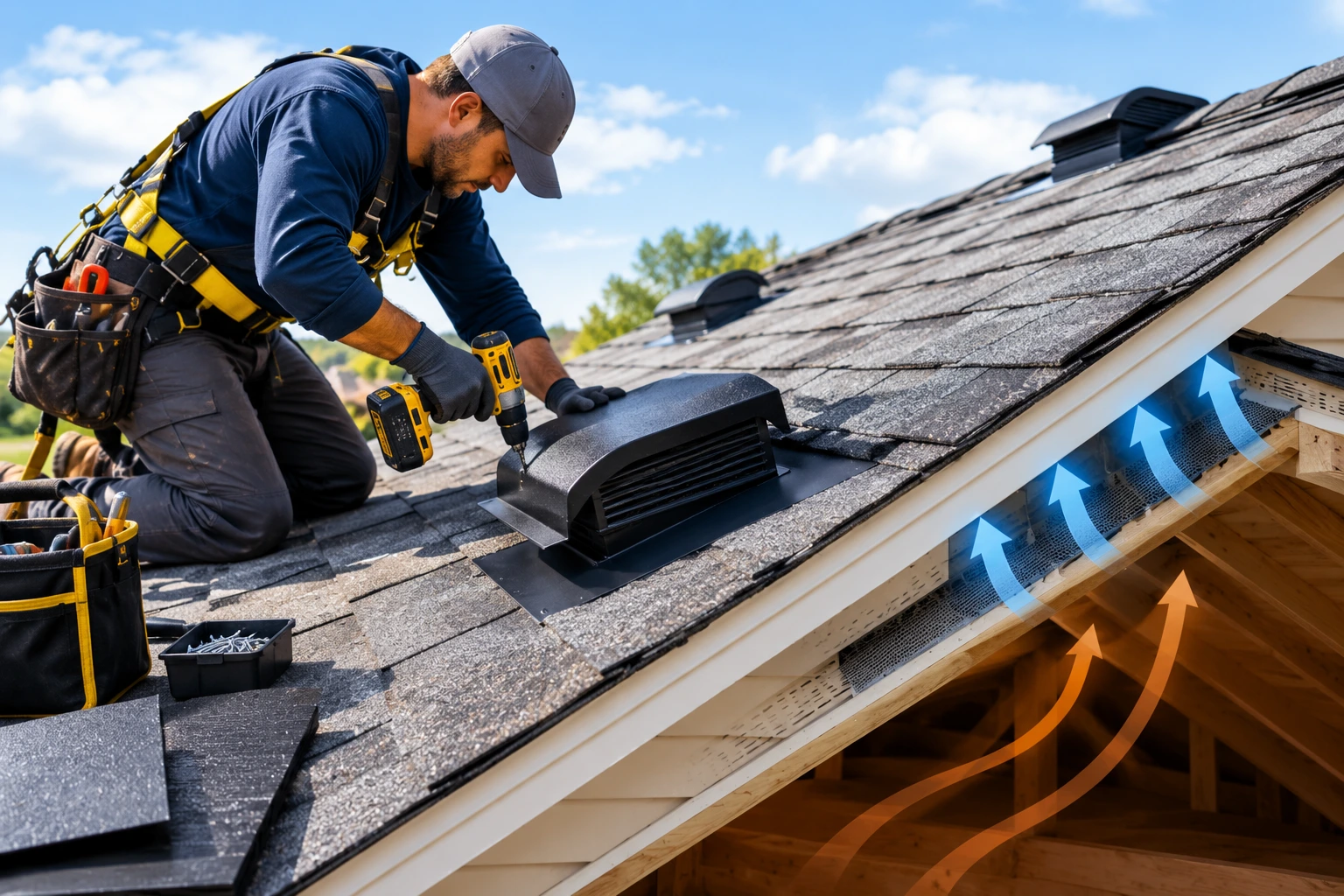
- Poor roof ventilation
- Accumulated leaves and organic debris
- Slow-drying roof surfaces
- Nearby trees dropping debris onto the roof
Regular roof inspections can help identify early growth before it covers a large portion of the roof.
How to Remove Moss Off a Roof Safely?
If you are wondering how to remove moss off a roof, safety should be the first consideration. Roof surfaces can become extremely slippery when covered with moss, algae, or moisture. Walking on a wet or steep roof can result in serious falls.
Moreover, you should avoid climbing onto roofs that are steep, difficult to access, or visibly deteriorated. Our oof repair specialists have appropriate safety equipment and experience working at height.
For accessible, low-slope areas where cleaning can be performed safely, the general process involves several steps.
Inspect the Roof
Look for moss growth, missing shingles, lifted edges, cracked materials, blocked gutters, and areas where water may collect.
If moss is widespread or the roof appears damaged, professional inspection is recommended before cleaning.
Remove Loose Organic Debris
Leaves, twigs, and other debris can trap moisture and encourage additional moss growth. Carefully clearing debris from accessible areas can help the roof dry more effectively.
Avoid aggressive scraping because roofing materials can be damaged easily.
Treat the Moss
Always follow the manufacturer’s instructions and verify that the product is suitable for your roofing material.
Avoid using harsh chemicals without understanding their effect on shingles, metal, flashing, plants, gutters, and surrounding surfaces.
Allow the Treatment to Work
Some treatments require time before the moss can be removed. Allowing the product to work according to its instructions can reduce the need for aggressive physical cleaning.
Gently Remove Remaining Moss
Avoid forcefully pulling or scraping moss from shingles because this may lift protective granules or damage the roofing surface.
A gentle approach is especially important with older shingles.
How to Get Moss Off Roof Without Damaging Shingles?
A common concern is how to get moss off roof without causing additional damage. The key is to avoid aggressive cleaning techniques.
High-pressure washing is generally not a good choice for asphalt shingles because excessive water pressure can dislodge granules, damage the surface, and force water beneath roofing components.
Instead, use appropriate roof-safe cleaning methods and follow the recommendations for your specific roofing material.
If the roof is already old, brittle, cracked, or missing shingles, professional service is particularly important. Attempting to clean a deteriorated roof may turn a minor maintenance issue into a larger repair problem.
Can Moss Damage a Roof?
Moss itself does not destroy a roof immediately, but persistent growth can contribute to roofing problems. Moss retains moisture and can create a continuously damp environment.
- Shingle deterioration
- Moisture intrusion
- Reduced roof lifespan
- Damaged flashing
- Clogged gutters
- Increased organic growth
- Potential leaks
Moss can also grow underneath or between roofing materials in some situations. When this happens, it may cause shingles to lift or become displaced.
What Should You Avoid When Removing Roof Moss?
It is essential to know what not to do as important as understanding how to remove moss roof.
- Strong water pressure can damage asphalt shingles and remove protective granules.
- Moss-covered roofing can be extremely slippery. A fall can cause serious injury, while foot traffic can also damage shingles.
- Some chemicals can damage roofing materials, gutters, landscaping, or nearby plants.
- If you notice missing shingles, cracks, leaks, sagging areas, or exposed underlayment, cleaning should not be the only priority. The roof may require repair.
How to Prevent Moss From Returning?
After learning how to get moss off roof, you should also consider prevention. Thus, removing moss without addressing the conditions that encourage it can allow growth to return.
- Trim branches that create excessive roof shade
- Keep gutters clear of leaves and debris
- Remove organic debris from accessible roof areas
- Maintain proper roof ventilation
- Schedule periodic roof inspections
- Address moisture and drainage issues
- Consider appropriate moss-resistant roofing solutions when replacement is eventually needed.
Frequently Asked Questions
Can I remove moss off a roof safely?
To remove moss off a roof safely, first inspect the roof for damage and avoid walking on steep or slippery surfaces. Use a roof-safe moss treatment and gently remove loosened moss without scraping or damaging shingles.
How to remove moss from a roof without damaging shingles?
Use a suitable roof-safe treatment and allow it to loosen the moss before gently removing it. Avoid pressure washing, aggressive scraping, and harsh chemicals that may damage shingles or remove protective granules.
How to get moss off roof without pressure washing?
You can use an appropriate moss treatment for your roofing material and allow the moss to loosen naturally. After treatment, remaining moss can be carefully removed using a gentle method.
Can moss permanently damage a roof?
Persistent moss growth can contribute to roof deterioration because it retains moisture against roofing materials. This may contribute to damaged or lifted shingles, moisture intrusion, and a shorter roof lifespan.
How can I prevent moss from growing back on my roof?
Keep gutters and roof areas free of leaves and organic debris, trim branches that create excessive shade, and maintain proper roof ventilation. Regular roof inspections can help identify and treat moss growth before it becomes extensive.