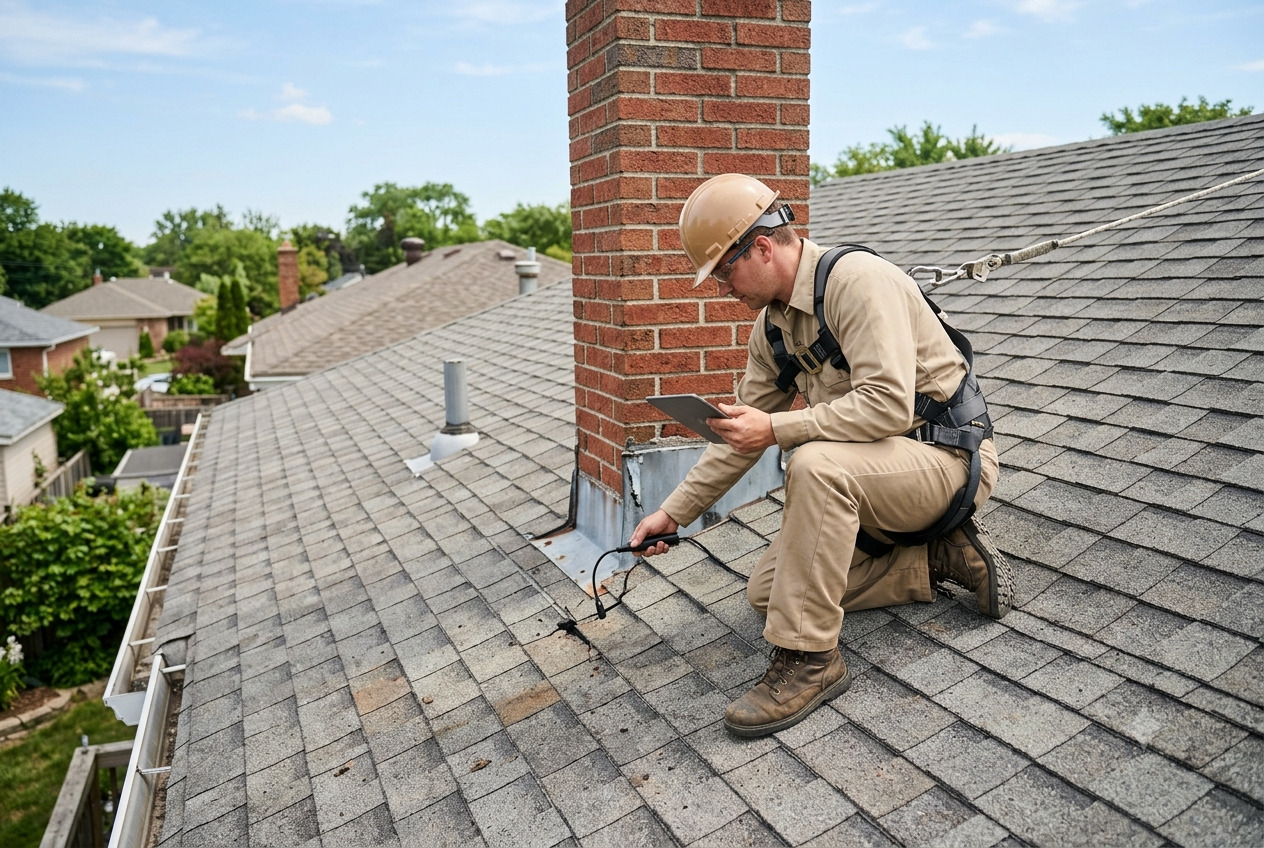
Moisture is one of the most common causes of roof deterioration and interior property damage. Even a small amount of trapped moisture can weaken roofing materials, damage insulation, encourage mold growth, and shorten your roof’s lifespan. Therefore, Moisture Detection During Roof Inspection is essential to maintain a durable roofing system.
How Moisture Detection Matters?
Water doesn’t always enter a home through obvious roof leaks. Tiny openings around flashing, vents, skylights, or damaged shingles can allow moisture to slowly penetrate the roofing system.
- Early identification of hidden leaks
- Prevention of mold and mildew growth
- Protection of attic insulation
- Reduced structural damage
- Longer roof lifespan
- Improved indoor air quality
- Lower repair costs over time
Regular inspections help you maintain the overall condition of both the roof and the home’s interior.
What are the Sources of Roof Moisture?
Meanwhile, moisture can develop from several different causes, which includes weather conditions and construction issues.
- Damaged shingles
- Cracked flashing
- Worn roof sealants
- Ice dam formation
- Poor roof drainage
- Clogged gutters
- Improper roof installation
- Condensation inside the attic
- Blocked roof vents
- Aging roofing materials
A detailed Moisture Detection During Roof Inspection helps identify these problems before significant damage occurs.
Which Signs Show Hidden Moisture Problems?
Many moisture issues remain hidden until visible damage appears inside the home. You should watch for warning signs.
- If you see water stains on ceilings
- Damp attic insulation
- Mold or mildew odors
- Peeling interior paint
- Soft roof decking
- Sagging ceiling areas
- Increased indoor humidity
- Dark spots on wood framing
- Visible mold growth
- Condensation around roof penetrations
These symptoms often indicate the need for a professional roof inspection.
What is the Moisture Detection During Roof Inspection Process?
Professional inspectors follow a systematic process to locate hidden moisture.
Exterior Roof Evaluation
The inspection begins by examining roofing materials for damage that may allow water infiltration.
- Missing shingles
- Cracked tiles
- Loose flashing
- Roof penetrations
- Valleys
- Ridge caps
- Chimneys
- Skylights
Interior Roof Assessment
For moisture-related issues, the attic and upper interior spaces are carefully inspected.
- Wet insulation
- Water stains
- Mold growth
- Wood discoloration
- Rotting framing
- Condensation
When you combine interior and exterior inspections, it provides a complete picture of roof health.
Attic Inspection and Roof Ventilation Analysis
One of the most important components of roof maintenance is Attic Inspection and Roof Ventilation Analysis. Poor attic ventilation often contributes to excessive moisture buildup even when the roof itself remains intact.
- During Attic Inspection and Roof Ventilation Analysis, professionals evaluate different factors.
- Proper airflow removes excess humidity and prevents condensation.
- Wet insulation loses efficiency and may require replacement.
- Inspectors verify that soffit, ridge, and roof vents remain unobstructed.
- Moist environments encourage mold, which can affect indoor air quality.
- Structural wood components are checked for signs of moisture damage.
Regular attic inspection and roof ventilation analysis help maintain a balanced attic environment while protecting roofing materials.
How Poor Ventilation Causes Roof Problems?
Inadequate ventilation allows warm, humid air to become trapped inside the attic.
- Mold growth
- Wood rot
- Insulation damage
- Roof deck deterioration
- Ice dams during winter
- Increased energy costs
- Premature roof aging
Proper attic ventilation supports the overall performance of the roofing system throughout every season.
Roof Inspection for New Construction Homes
Even newly built homes benefit from a professional Roof Inspection for New Construction Homes. While new roofs are designed to meet building standards, construction defects or installation issues can still occur.
- Improper flashing installation
- Missing fasteners
- Inadequate ventilation
- Poor drainage design
- Damaged shingles
- Incomplete sealing
- Construction debris
- Installation defects
Which Areas are Most Vulnerable to Moisture?
Certain roof components require closer inspection because they are more susceptible to water intrusion.
- Roof valleys
- Skylights
- Chimneys
- Pipe boots
- Flashing joints
- Roof vents
- Dormers
- Gutters
- Eaves
- Ridge caps
Routine inspections help ensure these vulnerable areas remain properly sealed and functional.
Benefits of Regular Roof Inspections
You must schedule routine inspections which offers long-term advantages for you.
- Early leak detection
- Improved roof longevity
- Reduced repair expenses
- Better energy efficiency
- Improved attic performance
- Increased property value
- Greater homeowner confidence
Meanwhile, with the preventive maintenance you can save more than repairing extensive water damage.
Which Moisture Prevention Tips to Follow?
You can reduce the risk of moisture-related roof problems by following a few maintenance practices. However, consistent maintenance significantly reduces the likelihood of hidden moisture damage.
- Clean gutters regularly.
- Trim overhanging tree branches.
- Replace damaged shingles promptly.
- Keep roof vents unobstructed.
- Schedule professional roof inspections.
- Repair flashing when necessary.
- Monitor ceilings for water stains.
- Ensure proper roof drainage.
- Address small leaks immediately.
When Should You Schedule an Inspection?
A professional roof inspection is recommended, which allow moisture issues to be identified before extensive repairs become necessary.
- After severe storms
- Before purchasing a home
- After installing a new roof
- If mold develops
- As part of annual maintenance
- Following heavy snowfall
- After hail events
Frequently Asked Questions
Why is moisture detection important during a roof inspection?
Moisture detection during roof inspection helps identify hidden water intrusion before it leads to growth of mold, wood rot, damaged insulation, or costly structural repairs. Early detection extends the life of your roof.
What is included in an attic inspection and roof ventilation analysis?
An Attic Inspection and Roof Ventilation Analysis includes checking insulation, airflow, roof vents, moisture levels, signs of condensation, mold growth, and the condition of the roof decking.
Should a new home have a roof inspection?
A Roof Inspection for New Construction Homes can identify installation issues such as improperly installed flashing, missing shingles, inadequate ventilation, or drainage problems.
When should I book a professional roof inspection?
Our roofing professionals recommend scheduling a roof inspection at least once a year and after severe weather events. Thus, regular inspections help detect problems early and reduce repair costs.
What are the common signs of hidden roof moisture?
There are warning signs, like water stains on ceilings or walls, damp attic insulation, musty odors, peeling paint, mold or mildew growth, warped wood, and increased indoor humidity. If you notice any of these issues, a professional roof inspection is recommended.