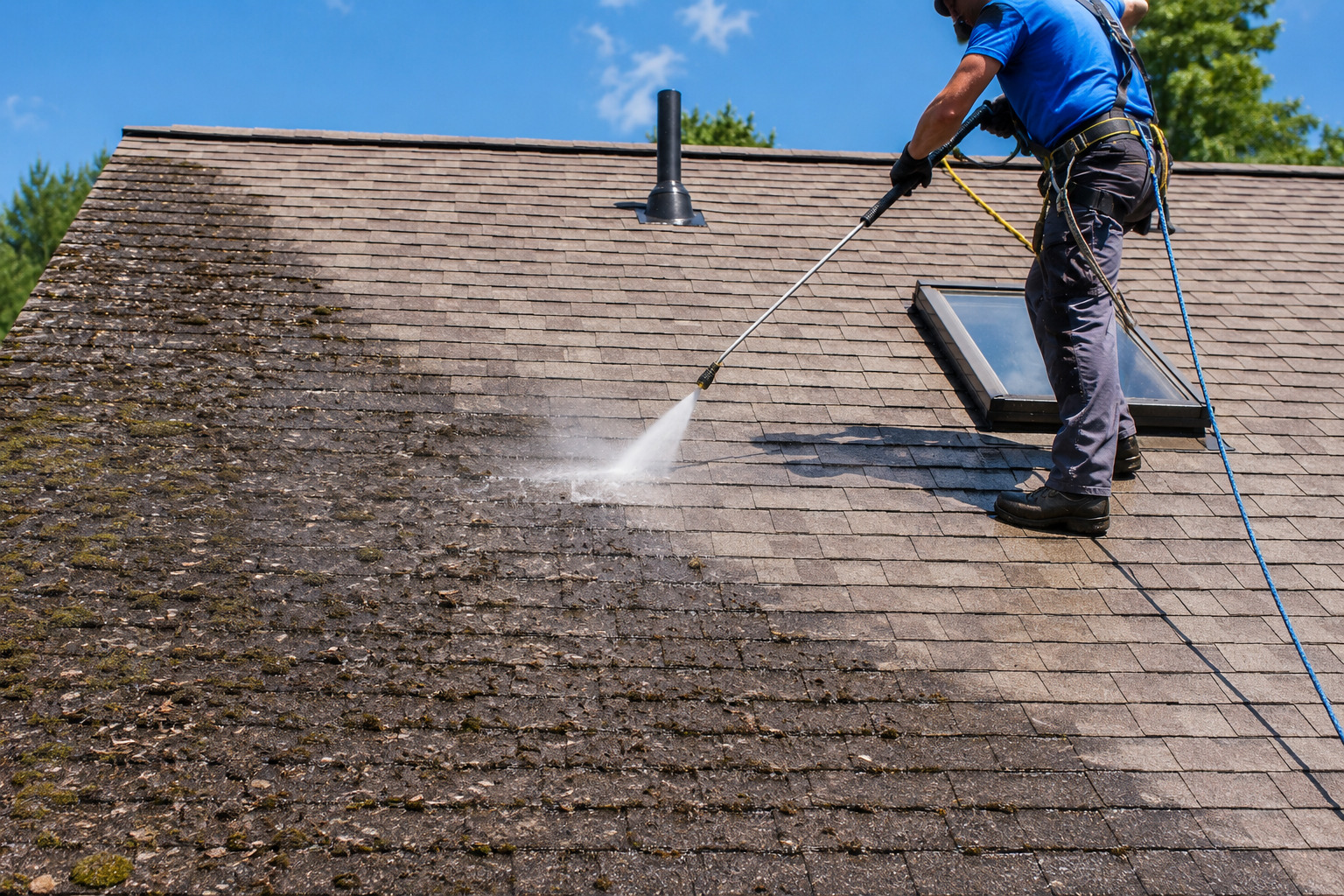
A roof is one of the most valuable parts of any home, protecting your family and belongings from harsh weather year-round. However, dirt, algae, moss, leaves, and debris can gradually accumulate on roofing materials, affecting both appearance and performance. Following proper Roof cleaning guidelines helps you maintain a clean, durable, and long-lasting roof while reducing the risk of costly repairs. The Homeowner’s Guide To Roof Cleaning provides practical advice on safe cleaning methods, maintenance routines, and preventive measures. If you own an asphalt shingle, tile, metal, or slate roof, understanding the right cleaning practices can help preserve your investment for years to come.
Why Roof Cleaning Is Important?
Many of you overlook roof maintenance until you see visible stains or leaks appear. Unfortunately, waiting too long can allow contaminants to damage roofing materials and shorten the roof’s lifespan.
If you follow proper Roof cleaning guidelines, you get several important benefits.
- Removes dirt, algae, moss, and mildew
- Prevents moisture retention
- Improves curb appeal
- Extends roof lifespan
- Supports proper drainage
- Reduces the risk of structural damage
Regular maintenance is a major part of The Homeowner’s Guide to Roof Cleaning, which ensures your roof remains both attractive and functional.
What are the Causes of Roof Dirt and Stains?
It is essential to understand what causes roof discoloration to help you choose the right cleaning approach.
- Algae Growth often results from algae thriving in humid environments. These stains may spread quickly if not addressed.
- Moss grows in damp, shaded areas and can trap moisture against roofing materials, which leads to deterioration.
- Lichen combines algae and fungi and attaches firmly to roof surfaces, which makes it difficult to remove without proper techniques.
- Fallen leaves, pine needles, and small branches accumulate with time, blocking water flow and creating damp conditions.
- Dust, pollen, and environmental pollutants gradually settle on the roof, which reduces its clean appearance.
Following Roof cleaning guidelines helps you address these issues before they develop into larger maintenance concerns.
What are the Signs That Show Your Roof Needs Cleaning?
Not every roof requires immediate cleaning, but several warning signs indicate it is time for maintenance.
- Black streaks
- Green moss patches
- White lichen spots
- Clogged valleys
- Overflowing gutters
- Accumulated leaves
- Water pooling
- Visible dirt buildup
You must recognize these indicators early to get essential tips and best practices for cleaning a roof, which help prevent avoidable damage.
How to Choose the Right Time for Roof Cleaning?
Timing has an important role in roof maintenance. Cleaning during suitable weather conditions makes the process safer and more effective.
- Mild temperatures
- Dry weather
- Calm wind conditions
- Good daylight visibility
You must avoid cleaning during heavy rain, extreme heat, icy conditions, or strong winds, as these increase the risk of slips and reduce cleaning efficiency.
Why Safety Comes First?
Before starting any roof maintenance project, prioritize safety. Moreover, working at height always involves potential hazards.
- Wear non-slip footwear.
- Use a sturdy ladder placed on stable ground.
- Wear gloves and eye protection.
- Avoid walking on wet roofing materials.
- Never work alone.
- Inspect equipment before use.
These precautions form the foundation of every 7-Step Safe Roof Cleaning Guide, which helps you reduce unnecessary risks while maintaining your roof safely.
Different Roof Cleaning Methods
Every roofing material requires a suitable cleaning approach. Using the wrong technique can damage shingles, tiles, flashing, or protective coatings. If you follow these proper roof cleaning guidelines, begin by selecting the safest cleaning method for your specific roof.
Soft Washing
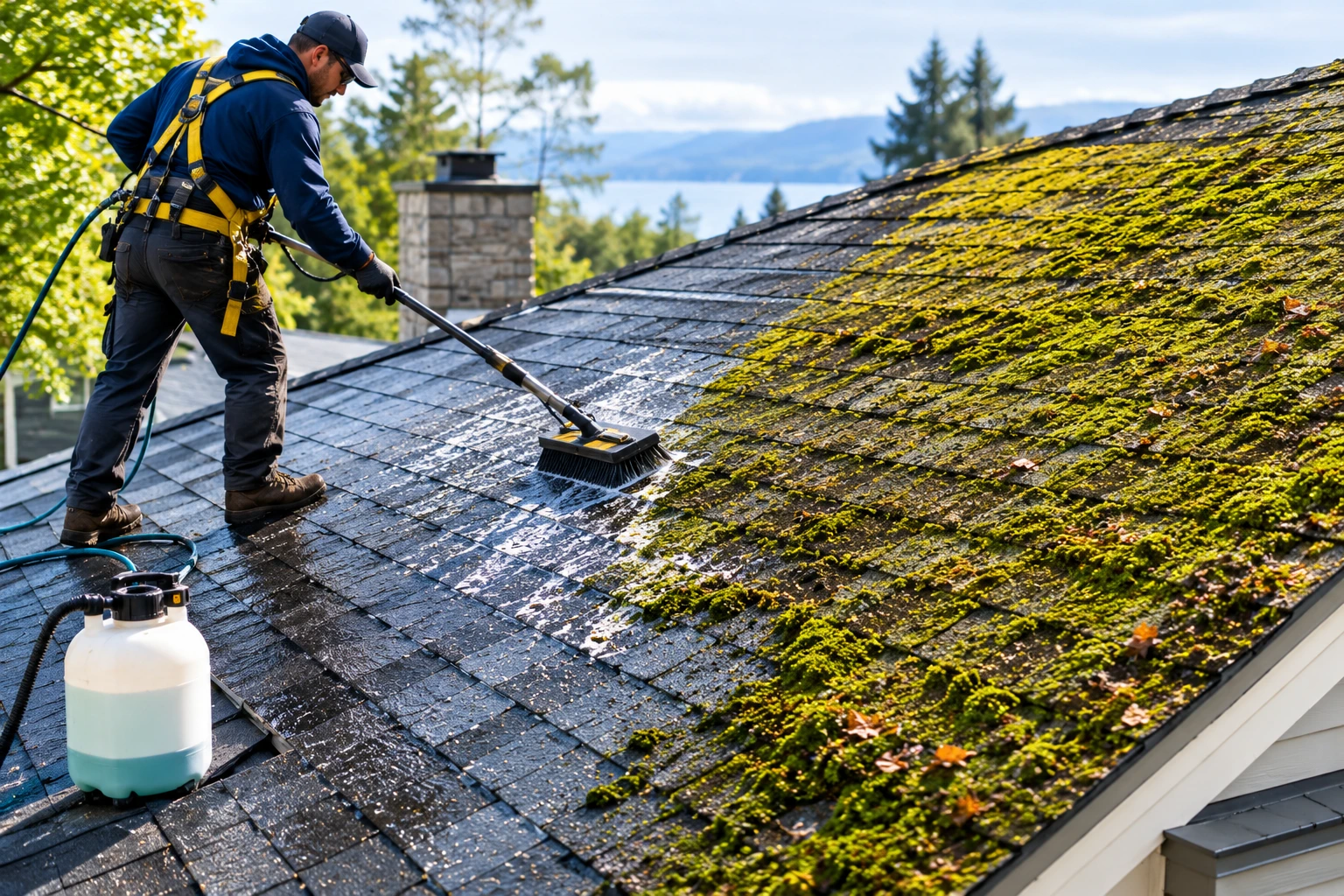
Soft washing uses low-pressure water combined with roof-safe cleaning solutions to remove algae, moss, mildew, and dirt. Meanwhile, soft washing is recommended in The Homeowners Guide to Roof Cleaning because it minimizes the risk of damaging roofing materials while delivering long-lasting results.
Manual Cleaning
Some roofs benefit from gentle manual cleaning using soft-bristle brushes or specialized roof tools. It works well to remove leaves, twigs, and light debris without disturbing the roofing surface.
Low-Pressure Rinsing
When you apply a cleaning solution, a low-pressure rinse helps wash away loosened dirt and organic growth. This approach reduces stress on the roof while leaving a cleaner finish.
What is the 7-Step Safe Roof Cleaning Guide?
Following a structured cleaning process helps improve results while reducing the chance of accidents or roof damage. This 7-Step Safe Roof Cleaning Guide is suitable for routine roof maintenance.
Inspection
Start with examining the roof from the ground or a safe ladder position. Look for cracked shingles, loose flashing, moss growth, blocked valleys, or damaged gutters.
Removal of Loose Debris
You should use a roof rake or soft broom to carefully clear leaves, branches, pine needles, and accumulated dirt. If you remove debris first, it allows cleaning solutions to work more effectively.
Protect Nearby Landscaping
Cover plants, flowers, and outdoor furniture before applying any cleaning solution. When you rinse nearby vegetation with water before and after cleaning can provide additional protection.
Apply a Roof-Safe Cleaning Solution
Use a cleaner specifically for roofing materials. Apply it evenly across affected areas and allow it to work according to your manufacturer’s instructions.
Gently Rinse the Surface
Use low-pressure water to rinse away loosened algae, dirt, and cleaning residue. It is crucial to avoid direct water upward beneath shingles, as this can force moisture into the roofing system.
Inspect the Results
After cleaning, check for any remaining stains, damaged shingles, clogged gutters, or areas requiring further attention.
Schedule Regular Maintenance
With consistent inspections and routine cleaning you can help prevent heavy buildup. When you follow this 7-Step Safe Roof Cleaning Guide year-round can significantly extend your roof’s service life.
What are the Essential Tools for Roof Cleaning?
It is important to have the proper equipment makes roof maintenance safer and more efficient.
- Extension ladder
- Safety harness
- Non-slip footwear
- Soft-bristle brush
- Roof rake
- Garden hose
- Low-pressure sprayer
- Protective gloves
- Safety goggles
- Leaf blower for dry debris
These tools support many of the Essential Tips and Best Practices to Clean a Roof, which helps you complete routine maintenance with greater confidence.
Which Mistakes to Avoid During Roof Cleaning?
Even if you are well-intentioned, you can make mistakes that lead to unnecessary repairs. It is best to avoid these mistakes for following effective roof cleaning guidelines and preserving your roof’s condition for years to come.
- Use an excessive water pressure
- Walk on fragile roofing materials
- Ignore safety equipment
- Allow moss to grow unchecked
- Clean during poor weather conditions
- Use harsh chemicals not intended for roofing
- Delay maintenance until stains become severe
What are the Roof Cleaning Tips for Different Roofing Materials?
Different roofing systems require different cleaning techniques. Using the correct approach helps preserve the roof’s appearance and structural integrity.
- Asphalt shingles should be cleaned using gentle methods. Low-pressure washing and roof-safe cleaning solutions help remove algae without loosening protective granules.
- Metal roofs are durable but should still be cleaned carefully to avoid scratching protective coatings. Soft brushes and mild cleaning solutions are generally suitable.
- Clay and concrete tiles require extra care because they can crack if walked on improperly. While minimizing foot traffic, cleaning should focus on removing moss and debris.
- Slate is a long-lasting roofing material but can be fragile under impact. Therefore, it is essential to use soft cleaning methods and careful movement across the roof.
Following these Roof cleaning guidelines ensures every roofing material receives appropriate care.
How to Prevent Moss and Algae Growth?
Prevention is often easier and more affordable than removing heavy organic growth. Several simple maintenance practices can help keep your roof cleaner throughout the year.
- You must trim overhanging tree branches.
- You can improve roof ventilation.
- Keep gutters free of debris.
- Regularly remove leaves.
- Address standing water promptly.
- Schedule periodic roof inspections.
- Clean shaded areas before moss spreads.
Why Don’t Forget Your Gutters?
Roof cleaning and gutter maintenance go hand in hand. Even a clean roof can experience drainage problems in case gutters are blocked with leaves, dirt, or twigs.
- Improves water flow
- Reduces foundation risks
- Prevents roof edge damage
- Minimizes standing water
- Protects landscaping
- Helps prevent mold and mildew
For the results, you should inspect gutters after major storms and during seasonal roof maintenance.
Which Care Tips to Follow for Long-Term Roof?
Roof maintenance doesn’t end after cleaning. Long-term care is essential for maximizing the life of your roofing system.
- Schedule annual roof inspections.
- Repair damaged shingles promptly.
- Replace deteriorated flashing.
- Keep nearby trees trimmed.
- Check attic ventilation.
- Remove debris after storms.
- Monitor areas around chimneys and skylights.
If you follow roof cleaning guidelines consistently, you can improve roof performance and reduces the likelihood of unexpected repair costs. Preventive maintenance is the smartest investments to protect any home’s exterior.
Frequently Asked Questions
When should I clean my roof?
You should clean roofs every 1–3 years, which depends on the local climate, surrounding trees, and the presence of algae, moss, or debris. When you follow proper roof cleaning guidelines and schedule regular inspections, it help extend your roof’s lifespan.
Is pressure washing safe for all types of roofs?
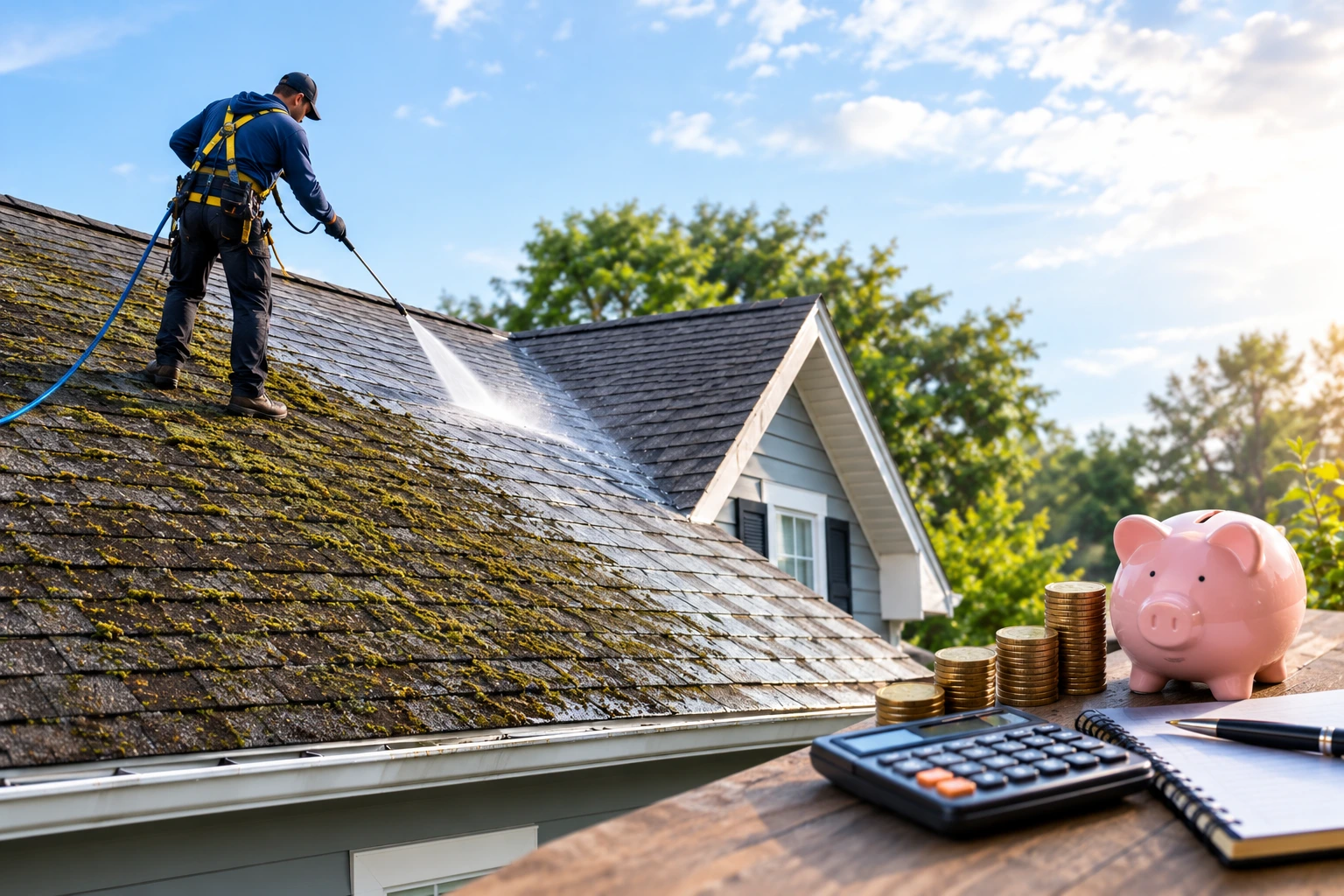
High-pressure washing can damage roofing materials such as asphalt shingles and remove their protective granules. In many cases, low-pressure or soft washing methods are recommended as part of The Homeowners Guide To Roof Cleaning to clean the roof safely.
What are the signs that my roof needs cleaning?
The signs which show are black streaks, moss or algae growth, accumulated leaves, clogged gutters, water pooling, and visible dirt buildup. Addressing these issues early is one of the essential tips and best practices for cleaning a roof.
What is the safest way to clean a roof?
The safest method is to inspect the roof first, remove loose debris, apply a roof-safe cleaning solution, and rinse using low-pressure water. You should wear proper safety equipment and follow a 7-Step Safe Roof Cleaning Guide.
Can regular roof cleaning help prevent costly repairs?
With routine roof cleaning, it removes harmful debris, moss, and algae that traps moisture and deteriorate roofing materials over time. Following Roof cleaning guidelines and performing regular maintenance can help identify minor issues early.