A roof is one of the most important components of any home, protecting the structure from weather, moisture, and temperature changes. However, every roofing system eventually reaches the end of its lifespan, necessitating replacement. Many of you ask, How Does Roof Replacement Work? Understanding the process reduces the uncertainty and makes planning easier.
Which Signs Indicate a Roof May Need Replacement?
Before understanding How Does Roof Replacement Work?, it is important to recognize the signs that indicate a new roof may be required.
- Missing or damaged shingles
- Frequent leaks
- Sagging roof sections
- Water stains on ceilings
- Mold or moisture issues
- Excessive granule loss
- Aging roofing materials
When repairs become less cost-effective than replacement, a complete roofing upgrade may provide better long-term value.
Initial Roof Inspection and Assessment
The first step in answering “How Does Roof Replacement Work?” is the inspection process. Roofing professionals evaluate with different factors.
- Existing roofing materials
- Structural integrity
- Ventilation systems
- Flashing conditions
- Water damage
- Underlayment condition
The inspection helps determine the scope of work and identifies any hidden issues that may need attention during the replacement process.
What is the Step-by-Step Roof Replacement Process?
Understanding the Step-by-Step Roof Replacement Process helps you know what to expect throughout the project.
Project Planning and Material Selection
The first stage of the Step-by-Step Roof Replacement Process involves selecting roofing materials, colors, and styles that match the home’s appearance and performance requirements.
- Asphalt shingles
- Metal roofing
- Tile roofing
- Composite materials
- Architectural shingles
Prepare the Property
Before work begins, crews protect landscaping, outdoor furniture, and nearby structures from debris.
- Covering plants
- Moving vehicles
- Setting up disposal containers
- Installing protective barriers
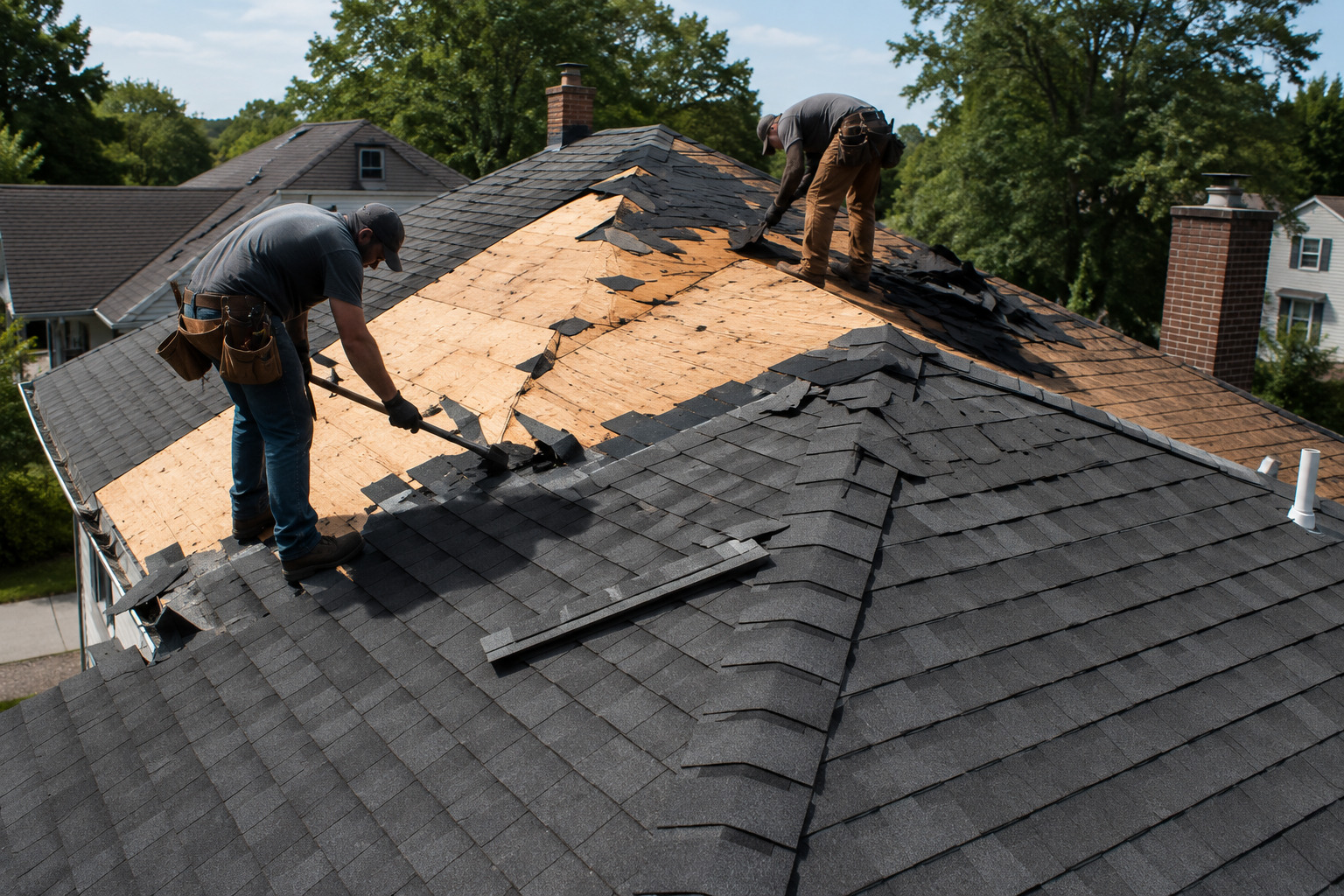
Remove Existing Roofing Materials
Old shingles, underlayment, and damaged components are removed to expose the roof deck.
This stage of the Step-by-Step Roof Replacement Process allows technicians to inspect the underlying structure for hidden damage.
Deck Inspection and Repairs
The exposed roof deck is carefully examined for:
- Rot
- Moisture damage
- Weak sections
- Structural issues
Damaged areas are repaired before installation continues.
Installing Protective Components
Waterproof barriers and underlayment are installed to provide additional protection against moisture infiltration. Flashing around chimneys, vents, and skylights may also be replaced during this stage.
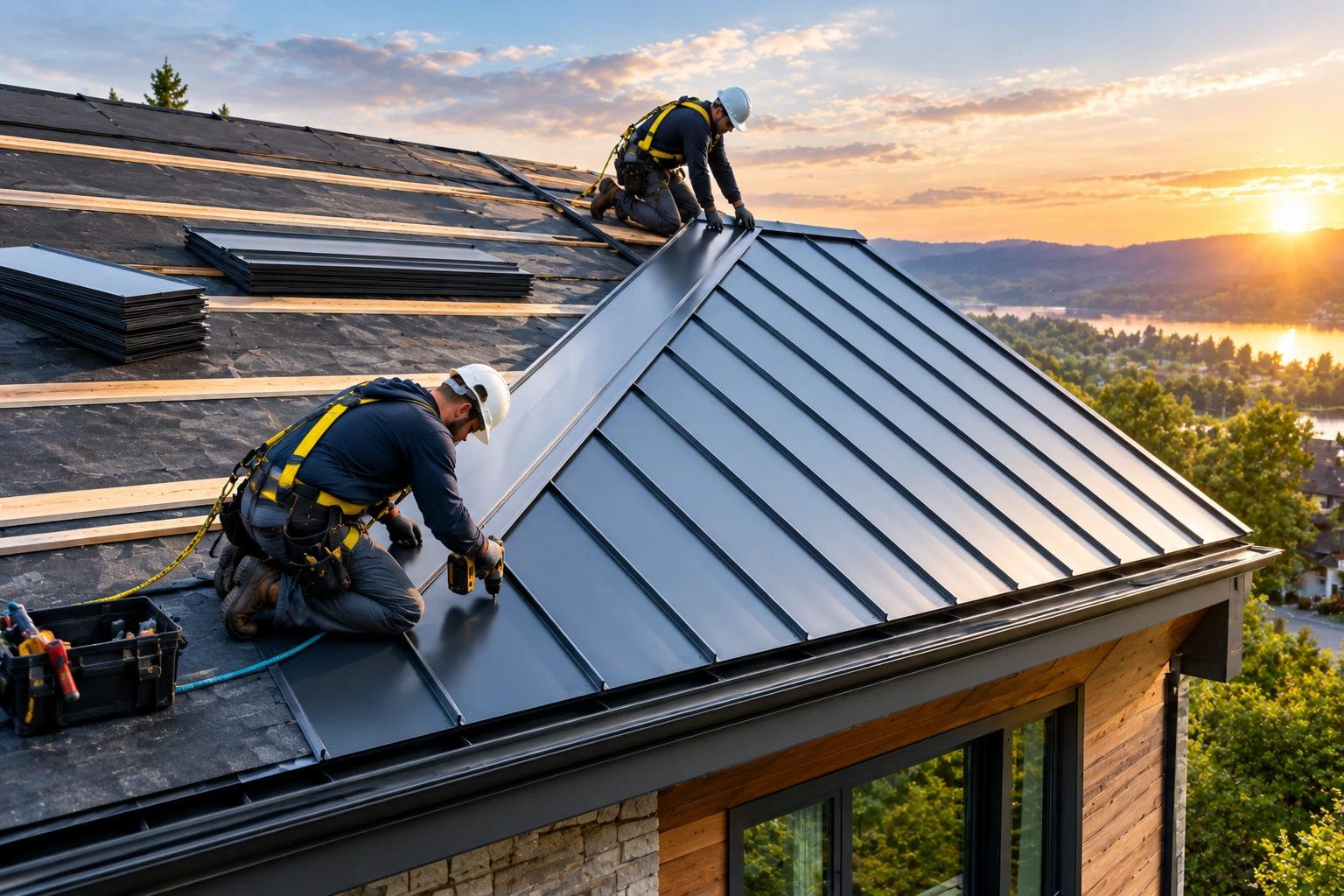
Installing New Roofing Materials
The new roofing system is installed under the manufacturer guidelines and local building codes.
This phase is often the most visible part of the Step-by-Step Roof Replacement Process.
Final Inspection and Cleanup
Once installation is complete, the property is cleaned, and the roof undergoes a final quality inspection.
The final stage of the Step-by-Step Roof Replacement Process ensures that all work meets performance and safety standards.
How Long Does a Roof Replacement Take?
One of the most common concerns is, How Long Does a Roof Replacement Take? The answer depends on several factors.
- Roof size
- Roofing material
- Weather conditions
- Roof complexity
- Structural repairs required
For many residential properties, the answer to How Long Does a Roof Replacement Take? may be only a few days, while more complex projects can require additional time.
Weather interruptions can also affect how long a roof replacement takes, as rain and high winds may temporarily pause installation.
Homeowners often ask How Long Does a Roof Replacement Take? when coordinating schedules, deliveries, and temporary accommodations during construction.
Which Materials are Used During Roof Replacement?
Several roofing materials are selected according to your budget, appearance, and durability. Moreover, the selected material can influence both project cost and installation time.
- Asphalt shingles are popular for the affordability and wide range of design options.
- Metal Roofing is popular for durability and energy efficiency.
- Tile Roofing offers long service life and distinctive appearance.
- Composite Roofing provides a balance between aesthetics and performance.
Benefits of Roof Replacement
Understanding How Does Roof Replacement Work? also means understanding the advantages of investing in a new roof.
Major benefits include:
- Improved weather protection
- Better energy efficiency
- Increased property value
- Enhanced curb appeal
- Reduced maintenance costs
Modern roofing materials can also improve insulation and reduce energy consumption year-round.
How to Prepare for Roof Replacement Day?
Homeowners can take several steps to make the project run smoothly.
Helpful preparations include:
- Removing fragile wall decorations
- Securing pets indoors
- Clearing driveways
- Inform neighbors about construction activity
- Protect attic belongings from dust
These preparations can improve safety and reduce inconvenience during installation.
What are the Challenges During Roof Replacement?
Occasionally, roofing projects reveal unexpected issues. When you address these concerns during replacement, it often prevents larger problems in the future.
- Hidden water damage
- Structural deterioration
- Poor ventilation
- Improper previous installations
When is the Best Time for Roof Replacement?
Although roof replacement can occur throughout much of the year, moderate weather conditions often provide ideal installation environments.
Scheduling projects during favorable weather can help improve efficiency and reduce delays.
Frequently Asked Questions
How does roof replacement work?
The process involves inspecting the existing roof, removing old materials, repairing the roof deck if needed, installing underlayment and waterproof barriers, and finally installing the new roofing materials followed by a final inspection and cleanup.
What is included in the roof replacement process?
The roof replacement process starts with roof inspection, material selection, property preparation, removal of old roofing materials, deck repairs, installation of protective layers, new roof installation, and quality checks.
How much time does a roof replacement take?
Mostly residential roof replacements completes within a few days. Although larger roofs, complex designs, weather conditions, and structural repairs might extend the timeline.
Can I stay in my home during a roof replacement?
In most cases you can remain in your homes during the project. However, there may be noise, vibrations, and limited access to certain outdoor areas while work is being completed.
What are the signs that I need a roof replacement instead of repairs?
There are signs, which includes frequent leaks, missing shingles, sagging roof sections, water damage, excessive wear, and an aging roof that has reached the end of its expected lifespan.