Roof damage can happen without warning. A severe storm, falling tree branch, heavy rain, strong winds, or aging roofing materials can suddenly leave your home vulnerable to water intrusion. When you notice an active leak or roof damage, waiting for a routine appointment may allow the problem to become more serious. Searching for emergency roof repair services near me can help you find professional assistance when immediate attention is needed.
When Do You Need Emergency Roof Repair?
Not every roofing issue requires immediate service, but some problems should be addressed as quickly as possible. While you recognize the warning signs, it can help you take action before minor damage develops into a larger repair.
You may need emergency roof repair if you notice certain issues.
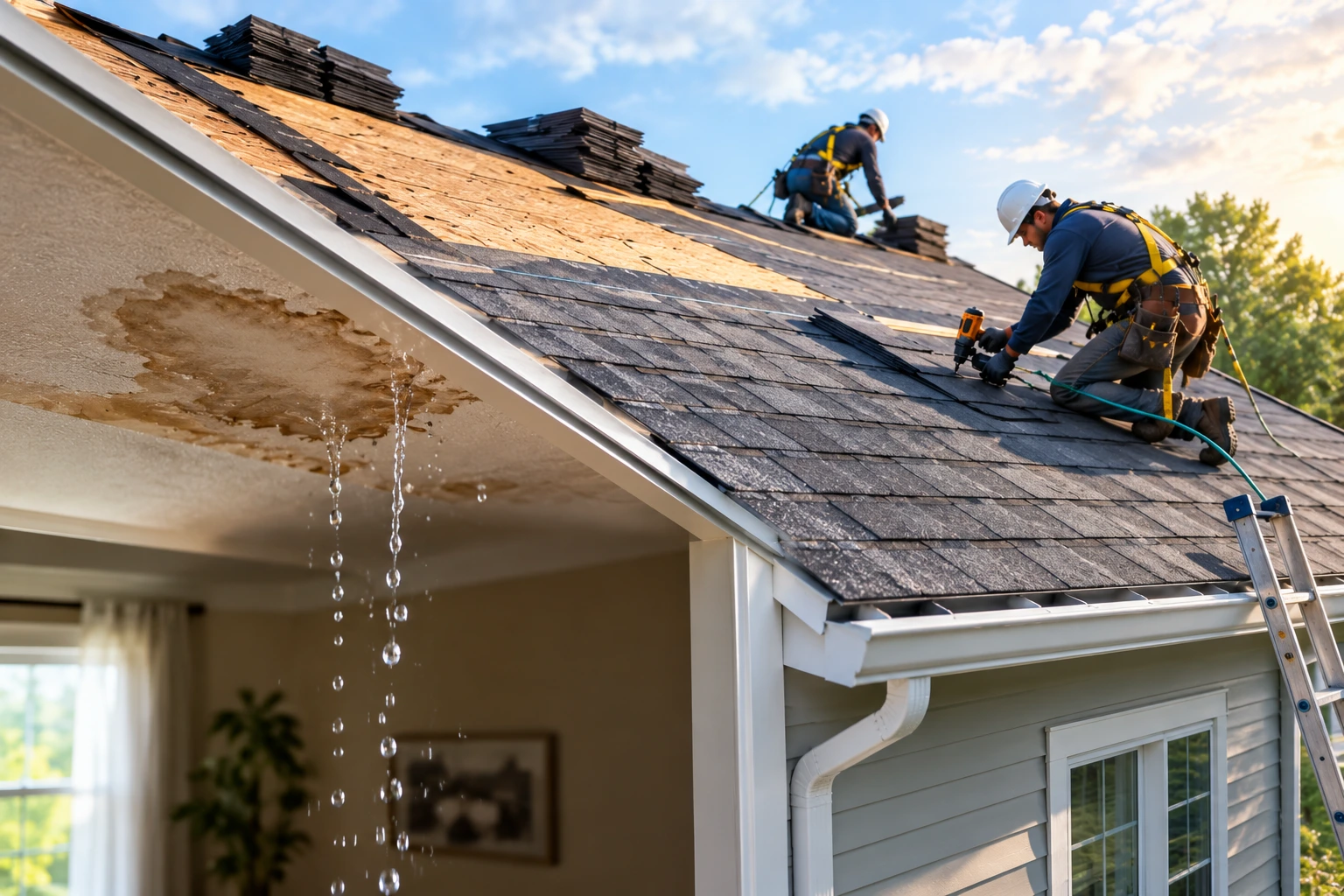
- Water entering through the ceiling
- Large areas of missing or damaged shingles
- A tree or large branch impacting the roof
- Significant storm or wind damage
- A section of the roof that has collapsed
- Exposed roofing materials
- Large holes or punctures
- Severe flashing damage
- Water collecting inside the attic
- Sagging areas of the roof
An active leak is particularly important because water can travel through insulation, ceilings, walls, and other building materials.
What Should You Do Before a Roofer Arrives?
Your priority should be protecting people and preventing additional property damage. If water is entering the home, place containers beneath active drips and move furniture or valuables away from affected areas.
If it is safe to do so, document the visible damage with photographs. These images may be useful for insurance purposes and can help a roofing professional understand what happened.
Avoid climbing onto the roof yourself, particularly after a storm. Wet surfaces, loose materials, structural damage, and electrical hazards can make roof access dangerous.
Instead, contact an emergency roof repair company and explain the problem clearly. Tell our contractor if the damage resulted from wind, rain, falling debris, or another event and whether water is currently entering the building.
What Does Emergency Roof Repair Include?
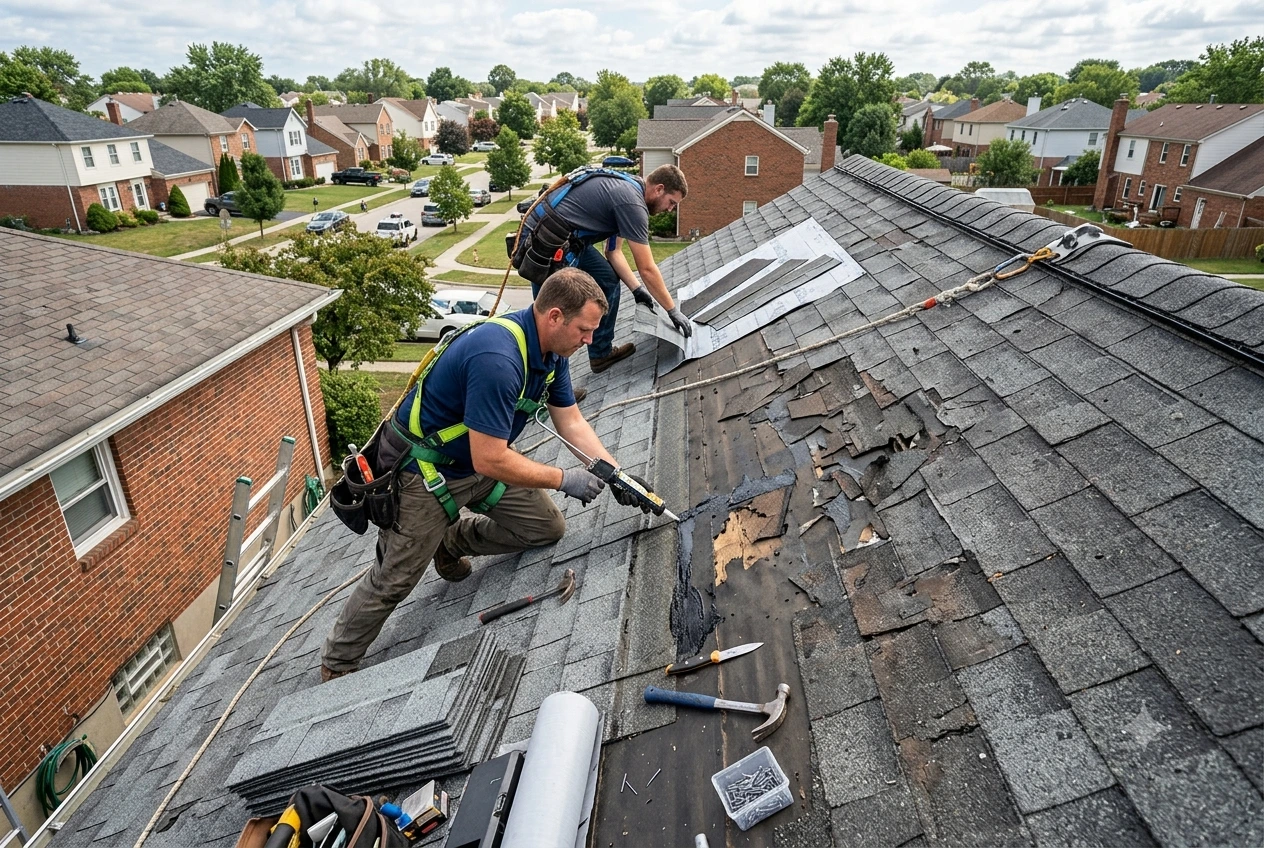
Emergency roofing work focuses on stabilizing the immediate problem. The exact service depends on the type and severity of damage.
- The roofer examines accessible areas of the roof to identify the likely source and extent of the problem.
- If permanent repairs cannot be completed immediately, temporary protection may be installed to reduce additional water exposure.
- Our contractor identifies potential entry points and takes appropriate steps to limit ongoing water intrusion.
- Loose or severely damaged roofing materials may need to be removed when necessary for safe repair work.
- Once conditions allow, the contractor can replace damaged roofing materials, repair flashing, address underlying problems, or recommend a larger roofing project when appropriate.
How to Choose a Contractor Roof Warranty?
When hiring a roofing professional, you may want to know if future problems will be covered. A contractor roof warranty may provide protection related to the contractor’s work, which depends on the terms and duration of the agreement.
Warranty coverage can vary significantly. Before approving repairs, ask what the warranty covers, how long it lasts, and what exclusions apply.
A contractor warranty may address workmanship issues, while coverage for roofing materials can be governed separately by the material manufacturer’s warranty.
You should keep copies of contracts, invoices, warranty documents, and repair records. These documents can be useful if a warranty question arises later.
What Is a Roof Workmanship Warranty?
A roof workmanship warranty relates to the quality of installation or repair work performed by the roofing contractor. If a problem develops because the work was improperly performed, the warranty may provide coverage according to its specific terms.
However, warranties are not necessarily identical between contractors. Some may cover specific workmanship issues for a defined period, while others may have different exclusions or requirements.
- How long is the workmanship warranty?
- What types of repairs are covered?
- Are emergency repairs included?
- Are there exclusions?
- What maintenance requirements apply?
- How are warranty claims handled?
How to Choose an Emergency Roofing Contractor?
When searching for emergency roof repair services near me, consider more than how quickly a contractor can respond. Experience, communication, safety practices, insurance, licensing requirements, written estimates, and warranty terms can all be important.
- Clearly explains the problem
- Provides a written scope of work
- Discusses temporary and permanent repair options
- Uses appropriate safety procedures
- Explains warranty coverage
- Communicates expected costs
- Has experience handling storm-related damage
- Can explain whether a repair or replacement is appropriate
What to Choose? Emergency Repair or Roof Replacement
Emergency repairs do not always mean that the entire roof needs to be replaced. In some situations, replacing a small damaged section, repairing flashing, or fixing a localized leak may be sufficient.
However, extensive storm damage, widespread deterioration, repeated leaks, structural problems, or an aging roofing system may indicate that replacement is more practical.
Our professional inspection can help determine if the issue is isolated or part of a larger roofing problem.
Frequently Asked Questions
How quickly should I address a leaking roof?
A roof leak should be addressed as soon as possible, especially if water is actively entering the home. Prompt repairs can help reduce the risk of damage to ceilings, insulation, walls, and other interior materials.
Can a small roof leak cause major damage?
Even a small leak can allow moisture to spread beneath roofing materials and into the structure. This may contribute to wood deterioration, mold growth, damaged insulation, and interior staining.
Will homeowners insurance cover emergency roof repairs?
Coverage depends on your insurance policy and the cause of the damage. Storm or accidental damage may be covered in some situations, while normal aging and lack of maintenance may not be covered.
Should I repair or replace my damaged roof?
The right option depends on the roof’s age, condition, extent of damage, and number of existing problems. Localized damage may be repairable, while widespread deterioration may make replacement more practical.
How can I prevent future roof emergencies?
Regular inspections, cleaning gutters, trimming nearby branches, checking flashing, replacing damaged roofing materials, and addressing small leaks promptly can help reduce the likelihood of major roofing problems.