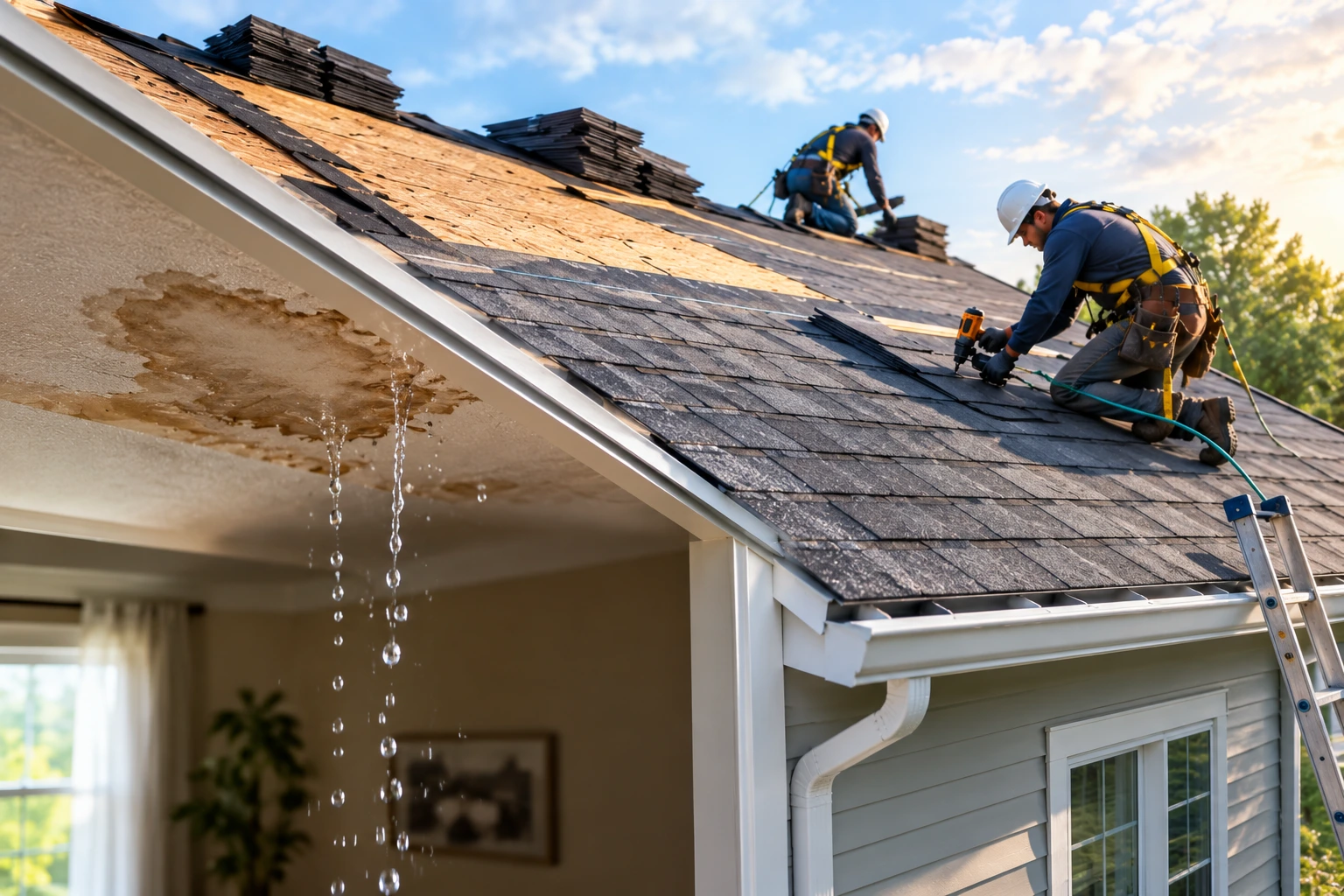
A leaking roof can cause more than an occasional water stain. If left untreated, moisture can damage ceilings, weaken roof decking, encourage mold growth, and affect insulation. If you are looking for leaking roof replacement options in Northeast Los Angeles, choosing the right solution depends on the roof’s age, material, condition, and exposure to the area’s warm, sunny climate.
What are the Causes of Roof Leaks in Northeast Los Angeles?
Roofs in Northeast Los Angeles experience prolonged sunshine, seasonal temperature changes, and periods of heavy rain. These conditions can weaken roofing materials and expose vulnerable areas.
- Damaged or missing shingles: Wind, aging, and heat exposure can cause shingles to crack, curl, or loosen.
- Deteriorated flashing: Metal flashing around chimneys, vents, skylights, and roof edges can separate or corrode.
- Worn roofing underlayment: Older underlayment may lose its ability to protect the roof deck from moisture.
- Cracked roof tiles: Broken tiles can expose the underlying waterproofing layer to damage.
- Poor drainage: Debris or improperly designed drainage areas can allow water to collect and penetrate vulnerable roof sections.
- Aging roof components: Sealants, fasteners, and other materials can deteriorate over time.
When Should You Replace a Leaking Roof?
If the damage is limited to a small area and the surrounding roofing system remains in good condition, a targeted repair may be sufficient.
- However, replacement may be worth considering when leaks occur repeatedly in different locations, large sections of shingles or tiles have deteriorated, or the roof deck shows signs of moisture damage.
- An aging roof that requires frequent repairs may also cost more to maintain over time than replacing it with a suitable modern system.
- You should consider the roof’s overall condition rather than relying on a single leak as the deciding factor.
- A detailed inspection can identify damaged materials, assess the underlayment, and determine whether the existing structure can support the selected replacement option.
Which is the Best Roofing Material for Hot Weather in Los Angeles NELA?
Choosing the best roofing material for hot weather in Los Angeles NELA includes balancing heat resistance, durability, appearance, maintenance, and installation cost. Since roofs receive substantial sun exposure, materials that reflect more sunlight and reduce heat absorption can improve indoor comfort.
Cool Asphalt Shingles
Cool-rated asphalt shingles are available in different colors and styles. Certain products are designed to reflect more sunlight than conventional shingles, making them a practical option for homeowners who want a familiar roofing appearance.
Clay and Concrete Roof Tiles
Clay and concrete tiles are popular choices for many Southern California homes. They are durable and can complement Spanish, Mediterranean, and traditional architectural styles.
Metal Roofing
Metal roofing can provide long-term durability and may offer strong solar reflectance when finished with an appropriate coating. It is available in several profiles and colors, allowing homeowners to choose a style that fits their property.
Flat and Low-Slope Roofing Systems
Some homes and additions have flat or low-slope roofs that require specialized waterproofing systems. Depending on the roof design, options may include modified bitumen, single-ply membranes, or suitable fluid-applied systems.
What is Energy Efficient Cool Roof Installation in Los Angeles?
An Energy efficient cool roof installation in Los Angeles can help reduce the amount of solar heat absorbed by a building.
- Cool roofing materials reflect more sunlight and release absorbed heat more effectively than conventional alternatives.
- Potential benefits include reduced roof surface temperatures, improved indoor comfort, and lower air-conditioning demand under suitable conditions.
- Actual energy savings depend on factors such as insulation, ventilation, building orientation, cooling habits, and the existing roof’s performance.
When planning a cool roof, you should consider:
- Solar reflectance: How much sunlight the roofing surface reflects.
- Thermal emittance: How effectively the surface releases absorbed heat.
- Insulation: Whether the existing insulation provides adequate thermal protection.
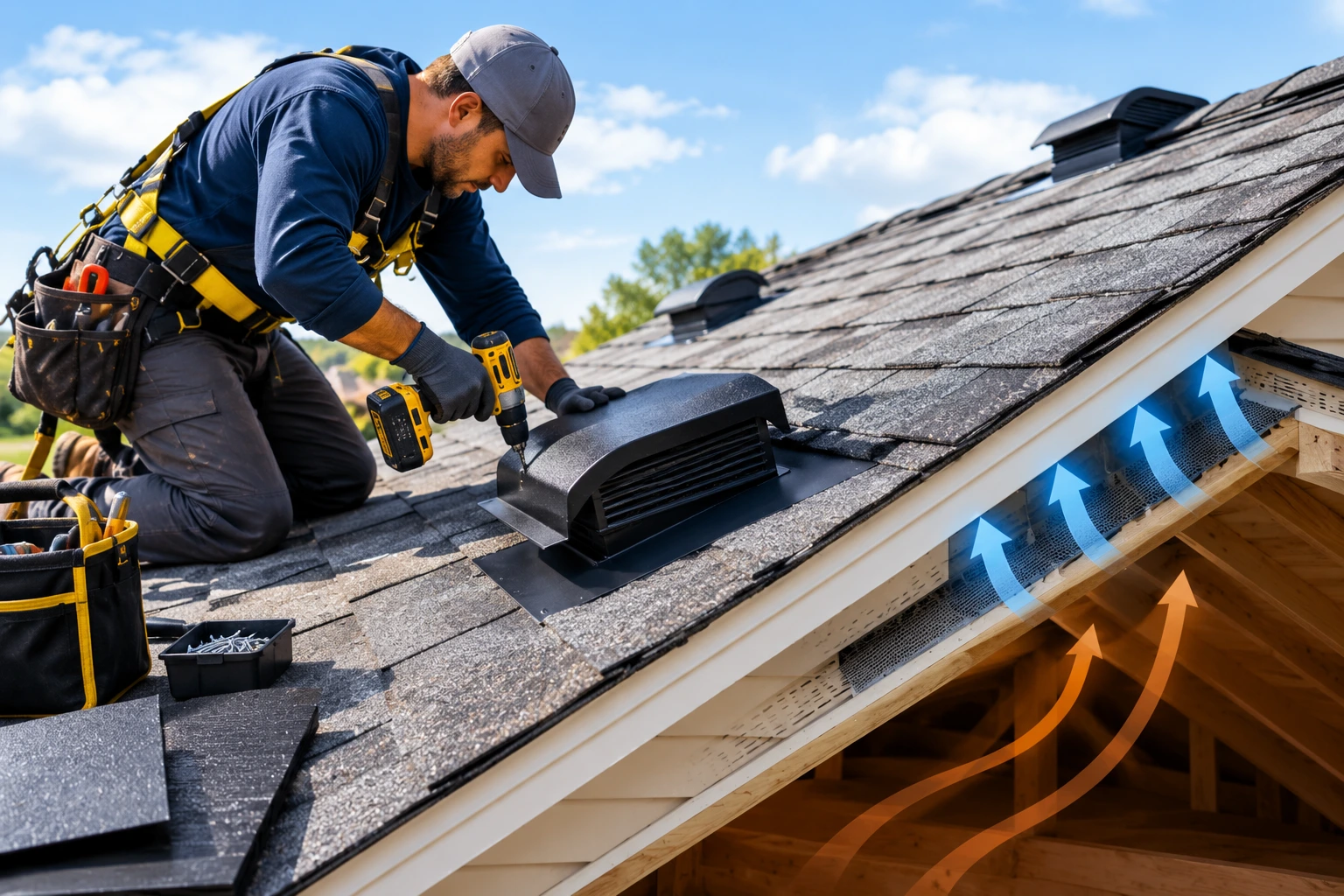
- Ventilation: Whether attic airflow is appropriate for the building.
- Roof compatibility: Whether the product suits the roof slope and structure.
- Local requirements: Applicable building codes, permits, and any relevant energy-efficiency standards.
What is Included in a Roof Replacement Project?
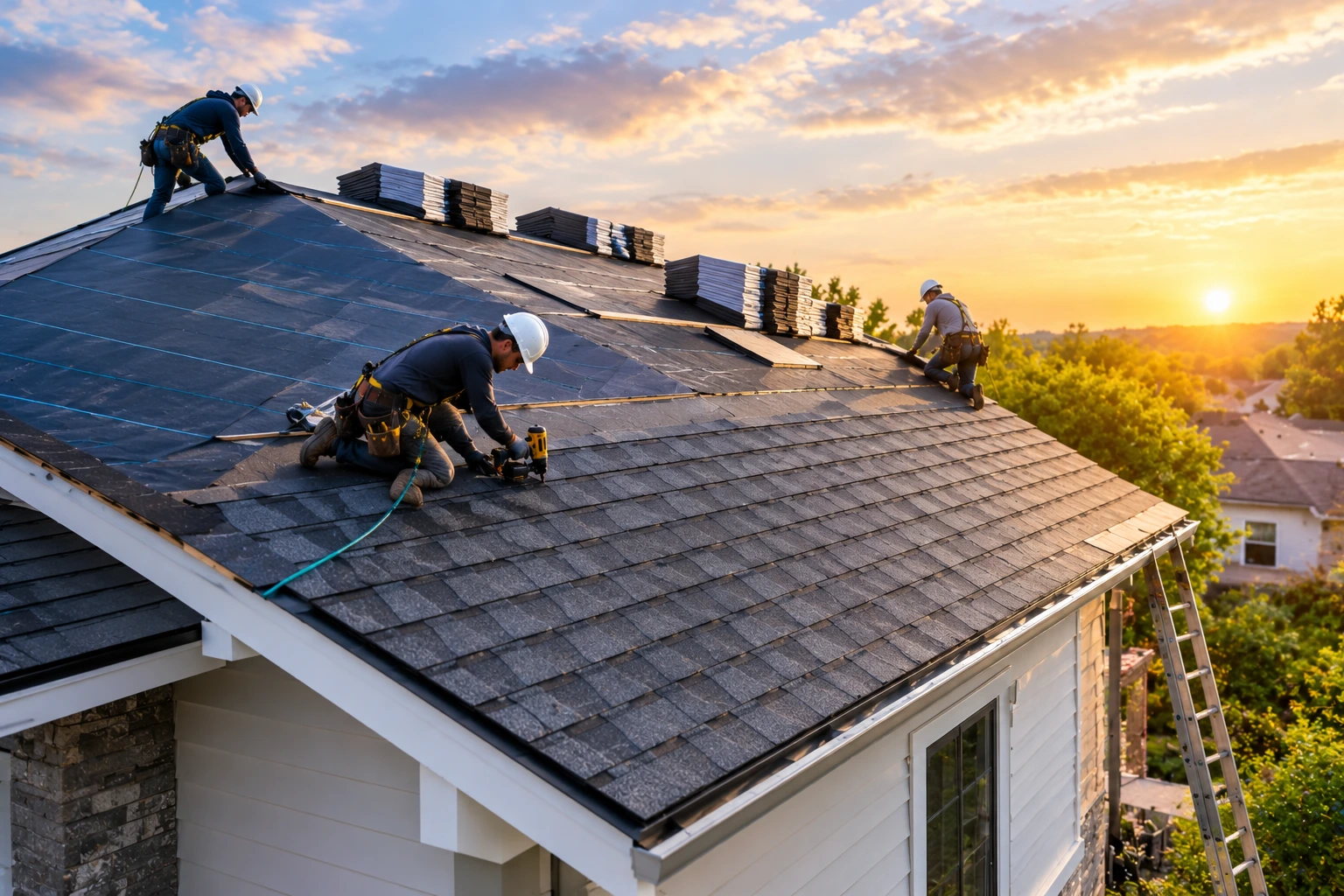
A complete roof replacement starts with an inspection and removal of the existing roofing materials where necessary.
- Our contractor then checks the roof decking for damaged sections and makes approved repairs before installing the new roofing system.
- Depending on the property, the project may include underlayment, flashing, drip edges, ventilation improvements, waterproofing details, and new roofing materials.
- We also address vulnerable areas around chimneys, vents, skylights, and valleys.
- Before work begins, request a written estimate that explains material specifications, labor, removal and disposal costs, anticipated repairs, project timelines, and warranty coverage.
- Confirm who will handle permits and how unexpected structural damage will be priced.
How to Prevent Future Roof Leaks?
Even a newly replaced roof needs routine care.
- Schedule inspections after significant storms and have damaged shingles, cracked tiles, loose flashing, or deteriorating sealants assessed promptly.
- Keep gutters and drainage paths clear, trim branches that may damage roofing materials, and make sure water can flow away from the roof efficiently.
- Attic inspections can also help reveal moisture problems before they become visible inside the home.
- Avoid walking on roof tiles or attempting repairs without suitable safety equipment.
- Professional maintenance can identify developing issues while they are still manageable.
Frequently Asked Questions
How do I know if my leaking roof needs replacement instead of repair?
A roof may need replacement if it has recurring leaks, widespread shingle or tile damage, deteriorated underlayment, or damaged roof decking.
What is the best roofing material for hot weather in Los Angeles NELA?
Cool-rated asphalt shingles, clay tiles, concrete tiles, and reflective metal roofing can all be suitable options. The best choice depends on your home’s structure, roof slope, and budget.
How does energy efficient cool roof installation in Los Angeles help?
Cool roofing materials reflect more sunlight and release absorbed heat more effectively. This can reduce roof temperatures, improve indoor comfort, and lower the air-conditioning costs.
How long does a leaking roof replacement take in Northeast Los Angeles?
Many residential roof replacements take a few days, although larger roofs, complex designs, structural repairs, weather conditions, and permit requirements can extend the timeline.
Can I replace my roof if the damage is limited to one section?
If the surrounding roofing materials and underlayment remain in good condition, repairing the damaged section may be sufficient. An inspection can help determine the best solution.