Mildew on a roof is more than an unwanted stain. If moisture remains trapped on roofing materials for long periods, mildew, algae, moss, and other organic growth can develop and gradually affect the appearance and condition of the roof. Finding the best mildew treatment in roof depends on the roofing material, severity of growth, moisture conditions, and the cleaning method being used.
What Causes Mildew to Grow on a Roof?
Mildew develops in damp areas where moisture remains for extended periods. Roof sections that receive limited sunlight can be susceptible because they may dry more slowly after rain or humidity.
- Frequent rainfall
- High humidity
- Poor roof drainage
- Shaded roof sections
- Accumulated leaves and debris
- Clogged gutters
- Limited airflow
- Persistent moisture
- Nearby trees creating shade
What Is the Best Mildew Treatment in Roof?
The best mildew treatment in roof is one that is appropriate for the roofing material and removes organic growth without unnecessarily damaging the surface.
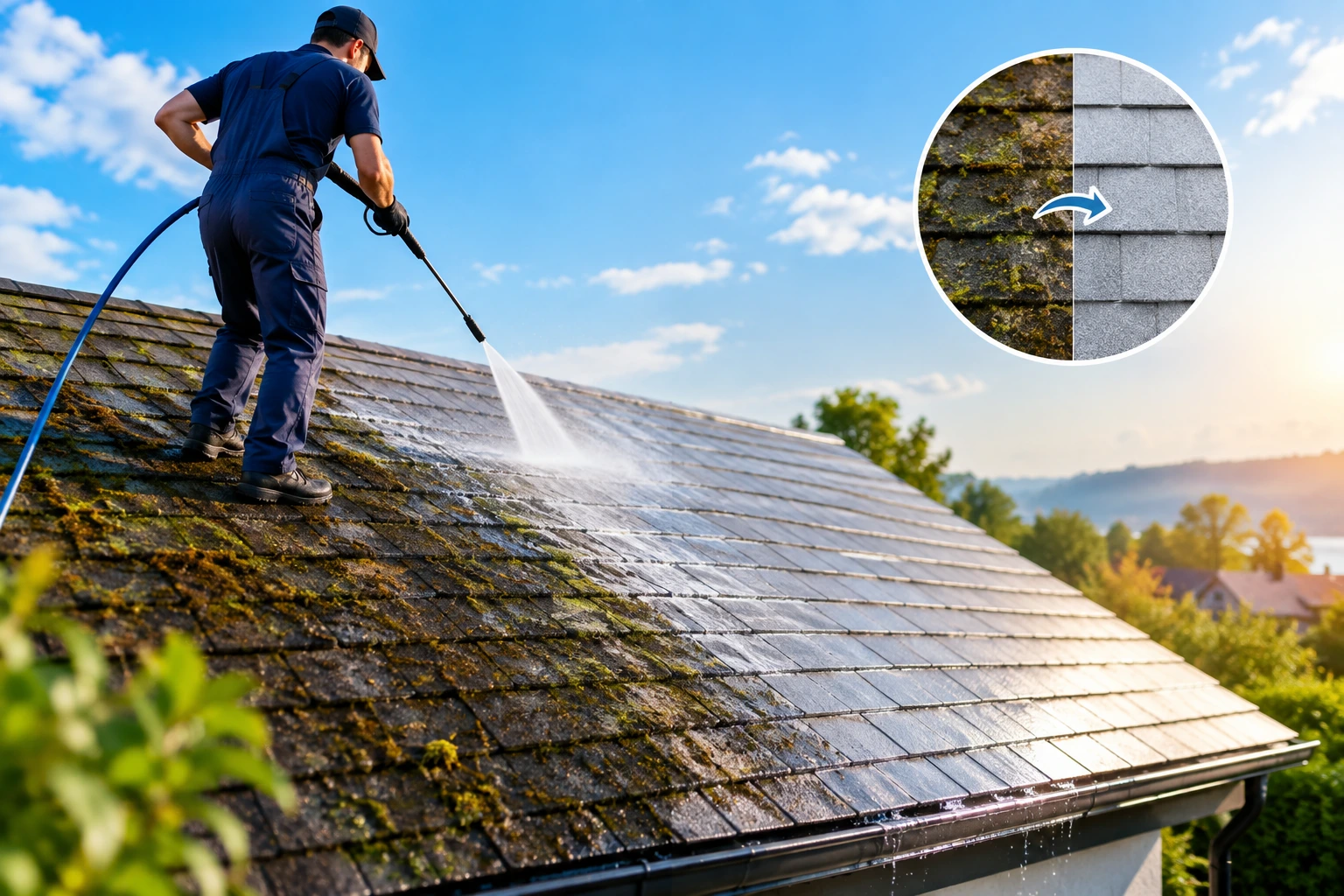
A professional roof cleaning approach may include an inspection followed by a suitable treatment to loosen or eliminate mildew.
- The roof should first be checked for mildew, moss, algae, damaged shingles, cracked tiles, deteriorated flashing, blocked drainage, and other problems.
- Leaves, twigs, and loose debris can retain moisture. Removing them can help expose affected areas and improve drainage.
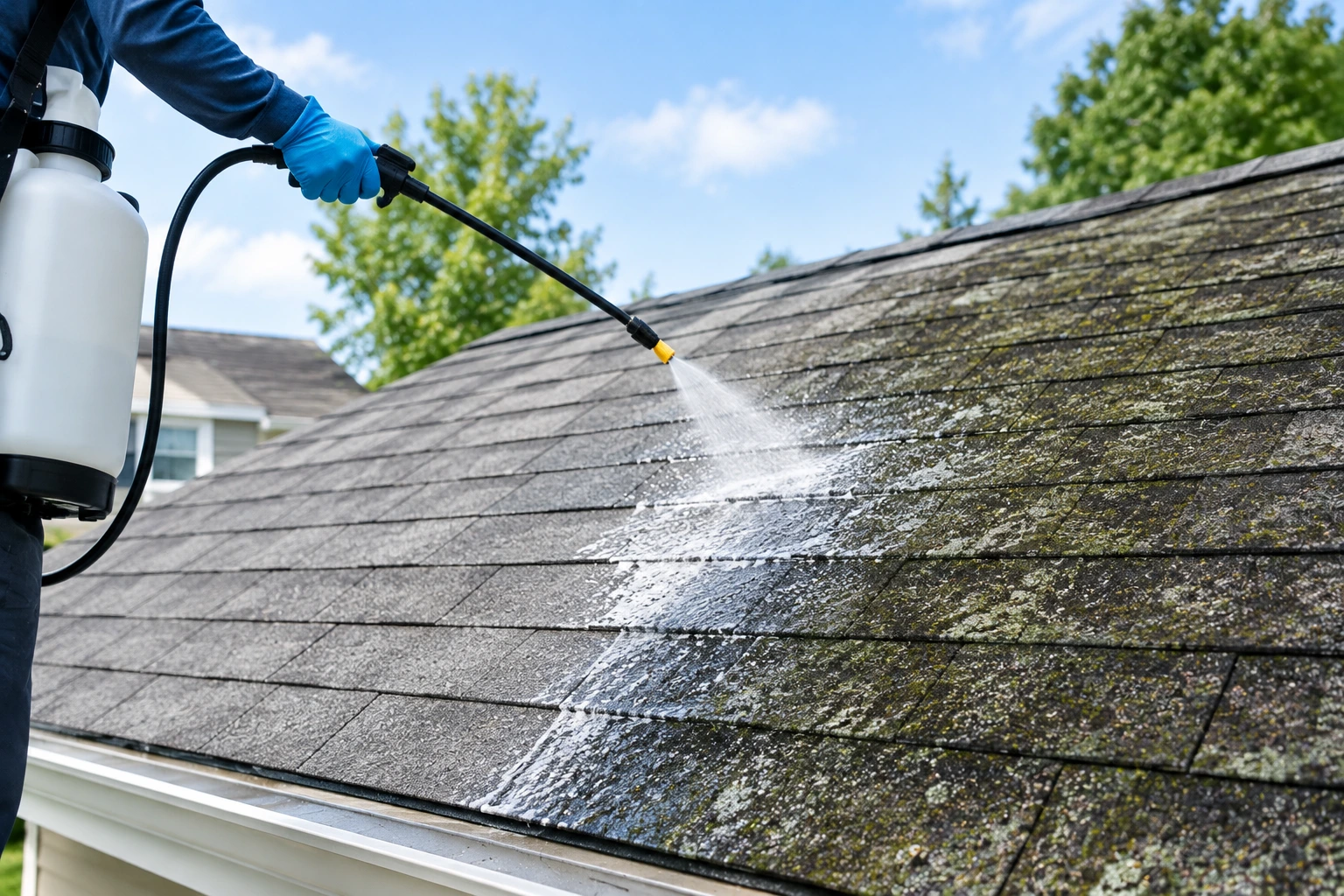
- A roof-safe cleaning solution may be applied to affected areas. The product and concentration should be selected according to the roofing material and manufacturer’s recommendations.
- The treated surface may then be rinsed carefully. Excessive water pressure can damage some roofing materials, so cleaning methods should be selected with care.
- After treatment, regular roof inspections, gutter maintenance, trimming of overhanging branches, and moisture control can help reduce the chance of recurring growth.
Is Mold on Roof Dangerous?
Many of you ask, Is mold on roof dangerous? Roof mold should not simply be ignored. Mold and other organic growth can indicate persistent moisture conditions, which may contribute to deterioration of roofing materials if the underlying issue remains unresolved.
If roof growth is extensive, has spread to other parts of the property, or is associated with leaks, it is sensible to have the area inspected. You should also avoid disturbing large amounts of mold or organic growth without appropriate precautions.
Why Roof Moisture Should Be Addressed?
Mildew thrives when surfaces remain wet. Therefore, controlling moisture is an important part of long-term roof maintenance.
- Check gutters and downspouts regularly to ensure water can move away from the roof properly.
- Leaves and other debris should be removed before they create blockages.
- Trees can also contribute to roof moisture by limiting sunlight and dropping organic material onto the surface.
- Carefully maintained vegetation can improve sunlight and airflow around the roof.
- If there is a roof leak, it should be repaired rather than simply cleaning the surrounding mildew. Otherwise, continued moisture may encourage the growth to return.
What Is the Best Time of Year to Remove Moss from Roof?
The best time of year to remove moss from roof depends on local weather conditions and the roof’s moisture level. In many areas, a dry period with moderate temperatures can make roof cleaning and maintenance easier.
- Avoid scheduling roof cleaning during heavy rain or immediately before severe weather.
- A dry period gives treated areas a better opportunity to remain undisturbed and allows inspection work to be completed more effectively.
- Seasonal roof maintenance can be particularly useful after periods of heavy rainfall.
- However, you should not wait for a specific season if moss or mildew is already causing a drainage or roofing problem.
- The best timing can depend on climate, roof orientation, roofing material, and the amount of organic growth present.
Moss, Mildew, and Algae: What Is the Difference?
Moss, mildew, and algae are often discussed together, but they are not the same.
Moss is a plant-like organism that can retain moisture and establish itself on damp roof surfaces.
Mildew is a type of fungal growth that commonly appears in moist environments and may create discoloration.
Algae can produce dark streaks or stains on roofing materials, particularly in humid conditions.
A roof can have more than one type of organic growth at the same time. Identifying the problem correctly can help determine the appropriate cleaning approach.
How to Prevent Mildew From Returning?
Cleaning is only one part of roof maintenance. Prevention is equally important.
- Blocked gutters can cause water to accumulate around roof edges and create damp conditions.
- Reducing excessive shade and falling debris can help the roof dry more quickly.
- Adequate ventilation can help regulate moisture and temperature within the roofing system.
- Even a small leak can create persistent dampness. Any signs of water intrusion should be investigated promptly.
- Regular inspections can identify early signs of mildew, moss, algae, damaged shingles, and drainage problems.
When Should You Call a Roof Repair Professional?
Professional assistance may be appropriate when mildew covers a large section of the roof, growth keeps returning, the roof is difficult to access, or there are signs of damage.
- Missing or damaged shingles
- Cracked roofing materials
- Water stains on ceilings
- Persistent roof leaks
- Sagging areas
- Damaged flashing
- Heavy moss or mildew growth
- Blocked roof drainage
- Organic growth returning shortly after cleaning
Frequently Asked Questions
What is the best way to remove mildew from a roof?
A roof-safe cleaning solution combined with gentle cleaning techniques can help remove mildew while reducing the risk of surface damage.
Can mildew on a roof cause damage?
While mildew may not immediately damage every roofing material, prolonged moisture and organic growth can contribute to deterioration, staining, and drainage issues.
How often should a roof be checked for mildew and moss?
A roof should be inspected at least once a year and after periods of severe weather. Roofs surrounded by trees or exposed to high humidity may require more frequent checks.
Can roof mildew come back after cleaning?
Mildew can return if the conditions that encourage growth remain, such as excessive moisture, shade, poor drainage, clogged gutters, or roof leaks.
Should I remove moss and mildew myself or hire a professional?
Small areas may be addressed with appropriate precautions, but extensive growth, steep roofs, fragile roofing materials, or suspected leaks are better evaluated by a roof repair professional.