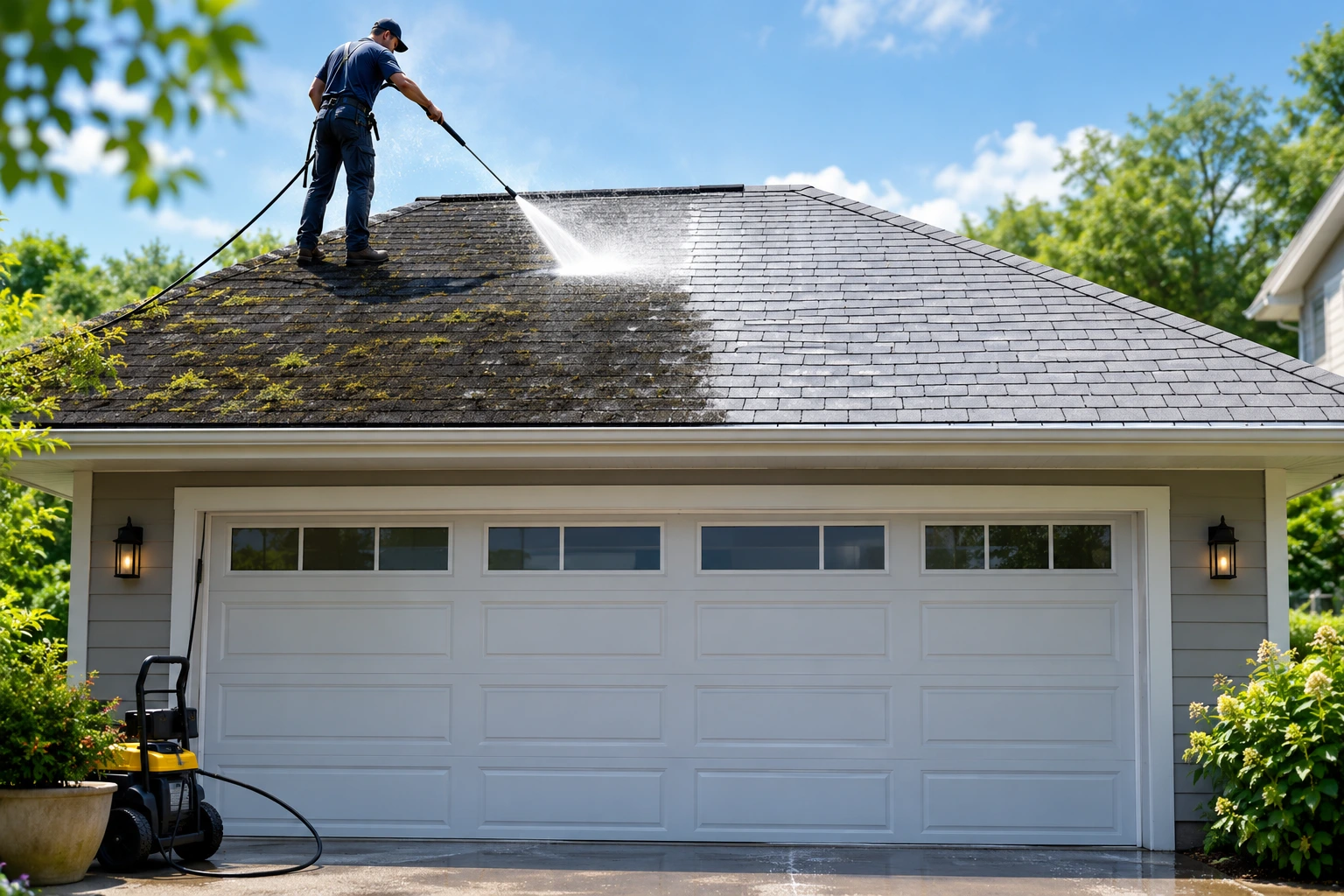
Moss on a garage roof may seem like a minor cosmetic issue, but allowing it to spread can create maintenance concerns. Moss tends to thrive in damp, shaded areas where moisture remains on the roofing surface. If you are wondering how to remove moss from a garage roof? The safest approach depends on the roofing material, amount of growth, roof pitch, and overall roof condition.
Why Does Moss Grow on Garage Roofs?
Moss develops where a roof receives limited sunlight and remains damp for extended periods. Overhanging trees can create shade and drop leaves or organic debris onto the roof, allowing moisture to remain trapped.
- Other contributing factors can include poor drainage, clogged gutters, high humidity, and limited airflow around the roof.
- Moss can begin as a small patch before gradually spreading across larger sections.
- Identifying why moss is growing is an important part of long-term roof maintenance.
- However, removing the visible growth without addressing persistent moisture or shade may allow it to return.
How to Remove Moss from a Garage Roof?
Learning how to remove moss from a garage roof starts with choosing a method that minimizes damage to the roofing materials.
Inspect the Roof First
Before attempting any cleaning, inspect the roof from a safe location. Look for moss coverage, damaged shingles, loose materials, cracks, exposed areas, and signs of moisture.
If the roof is steep, difficult to access, or visibly damaged, professional assistance may be safer than attempting the work yourself.
Remove Loose Debris
Leaves, branches, dirt, and other debris should be cleared carefully. Do not aggressively scrape the roof because shingles can be damaged or their protective granules can be loosened.
A soft brush or appropriate cleaning technique can help remove loose material without putting unnecessary pressure on the roofing surface.
Apply an Appropriate Moss Treatment
A suitable moss treatment can help weaken and remove established growth. The treatment should be compatible with the roofing material and applied according to its instructions.
Avoid using random household chemicals because some substances can damage roofing materials, landscaping, gutters, or nearby surfaces.
Allow the Treatment to Work
Moss treatments require time to loosen or kill the growth. Avoid immediately scrubbing the roof aggressively after application.
Weather conditions can also affect the treatment process. Following the product instructions and avoiding unsuitable weather can improve the results.
Rinse Carefully When Appropriate
If rinsing is required, use controlled, low-pressure water rather than a powerful pressure washer. High-pressure water can force moisture beneath shingles, remove protective granules, and cause unnecessary damage.
How to Choose a Roof Moss Remover?
A suitable roof moss remover should be selected according to the roofing material and severity of the growth. Different roof surfaces may respond differently to cleaning products.
- Before using any treatment, check its instructions carefully.
- Some products are specifically for particular roofing materials, while others may require precautions around plants, pets, gutters, or drainage areas.
- It is also important to remember that removing moss is only one part of roof maintenance.
- If the roof has damaged shingles or underlying moisture problems, those issues should also be addressed.
How Do You Deal with Moss on Your Roof?
If you are asking, How do you deal with moss on your roof? You can start by assessing the cause and extent of the problem rather than immediately trying to remove every patch.
For a small amount of moss, careful cleaning and an appropriate treatment may be sufficient. Extensive moss growth, however, can require a more controlled approach.
Our roof inspection can help determine if the moss is only a surface issue or whether moisture has contributed to roofing deterioration.
Can Pressure Washing Remove Moss?
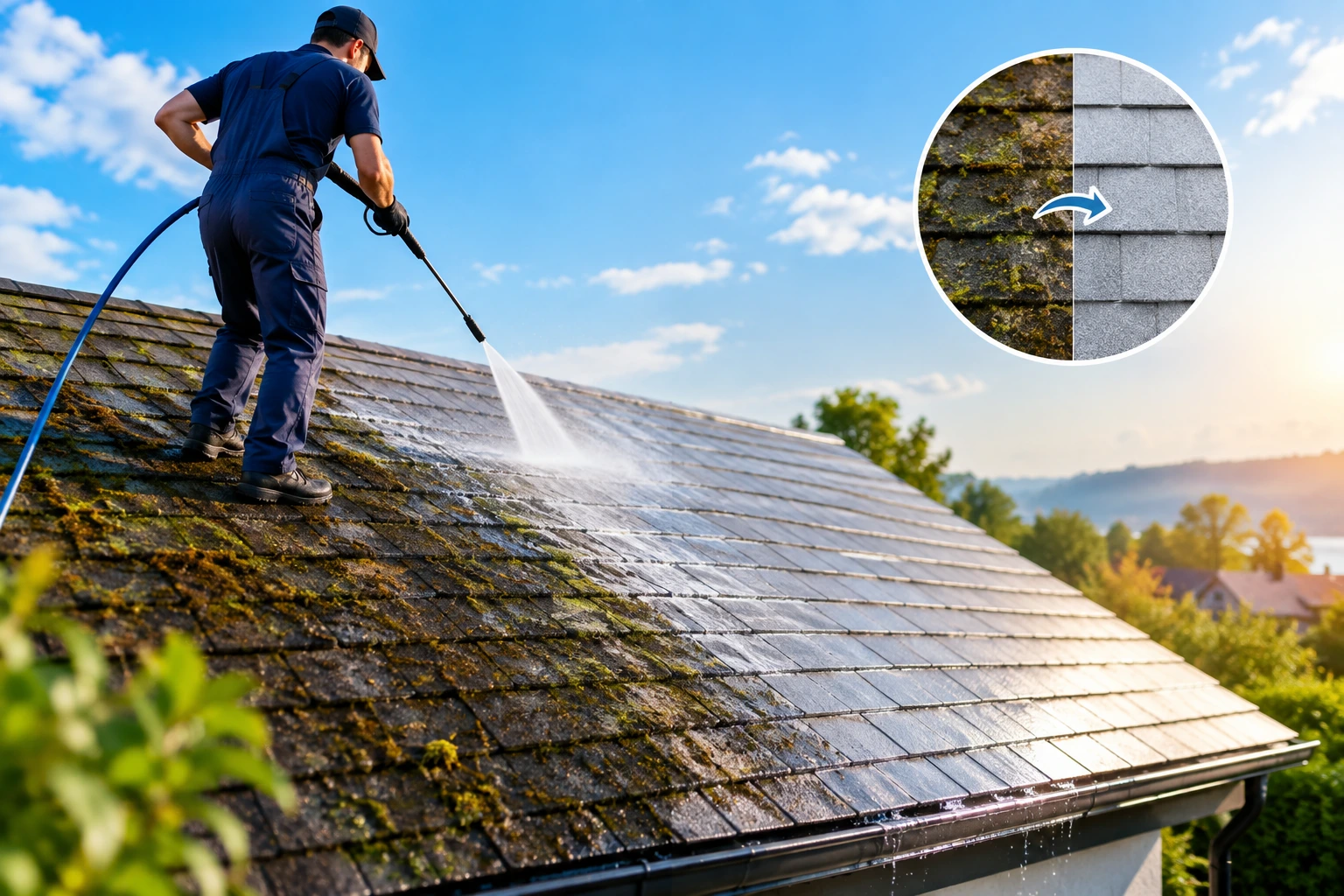
Pressure washing can physically remove moss, but it is not the preferred method for many residential roofing materials. Strong water pressure can damage shingles, strip protective granules, loosen roofing components, and force water into areas where it does not belong.
A low-pressure cleaning approach combined with an appropriate treatment is often more suitable for roofs.
How to Prevent Moss from Returning?
Meanwhile, removing existing moss is important, but prevention can help reduce future growth.
- Trees that block sunlight can create a damp environment. Carefully trimming suitable branches can improve sunlight and airflow around the roof.
- Blocked gutters can contribute to water accumulation around the roofline. Regular gutter cleaning helps maintain proper drainage.
- Leaves and organic debris can retain moisture. Removing accumulated debris can make the roof less favorable for moss growth.
- Where practical, adequate ventilation can help reduce persistent moisture in roofing areas and attic spaces.
- Routine inspections can identify small areas of moss before they become widespread. They can also reveal damaged shingles, flashing problems, or drainage issues that may contribute to moisture retention.
Is Moss on a Garage Roof a Serious Problem?
A small amount of moss does not automatically mean that the roof needs replacement.
- However, extensive or long-standing moss should not be ignored.
- Moss can retain moisture against roofing materials.
- Repeated exposure to moisture may contribute to deterioration over time, particularly when roofing materials are already aging or damaged.
- If moss is growing heavily around shingles, lifting roofing materials, or appearing alongside leaks, an inspection should be arranged.
Frequently Asked Questions
Is moss harmful to a garage roof?
Moss can retain moisture against roofing materials and may contribute to deterioration over time. Heavy growth can also lift or disturb shingles, making regular inspection and maintenance important.
Can I remove roof moss with a garden hose?
A gentle rinse may help remove loosened debris, but strong water pressure should be avoided. Excessive pressure can damage shingles, remove protective granules, or push water underneath roofing materials.
How can I stop moss from growing back on my garage roof?
Reducing shade, trimming overhanging branches, keeping gutters clear, removing leaves and debris, and improving airflow can help create conditions that are less favorable.
Is bleach safe for removing moss from shingles?
Bleach and other strong chemicals can damage roofing materials, plants, gutters, and surrounding surfaces. It is better to use a product for the particular roofing material and follow its application instructions.
When should I call a professional for roof moss removal?
Professional help is recommended when moss covers a large portion of the roof, the roof is steep or difficult to access, shingles appear damaged, or you notice leaks or moisture problems.