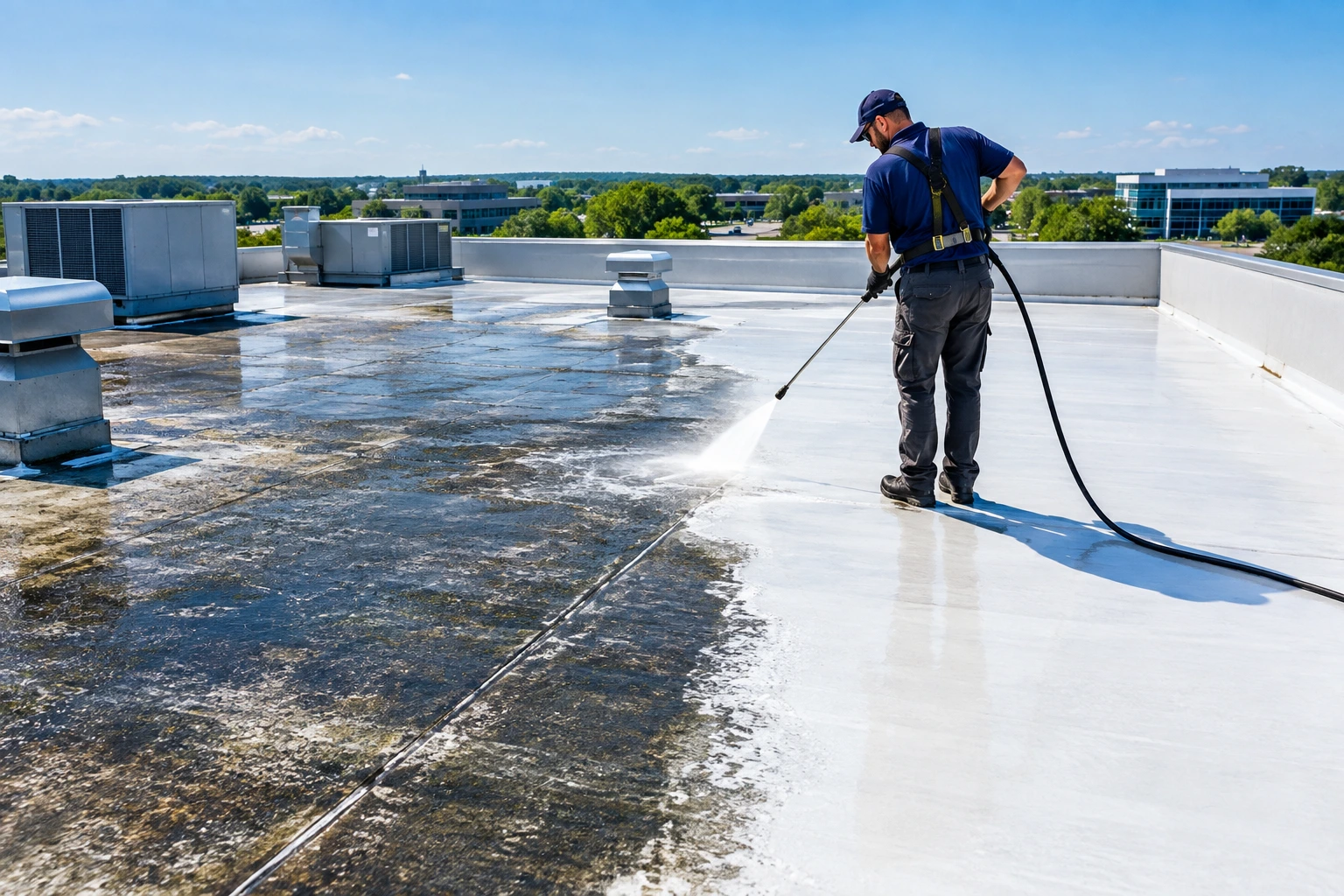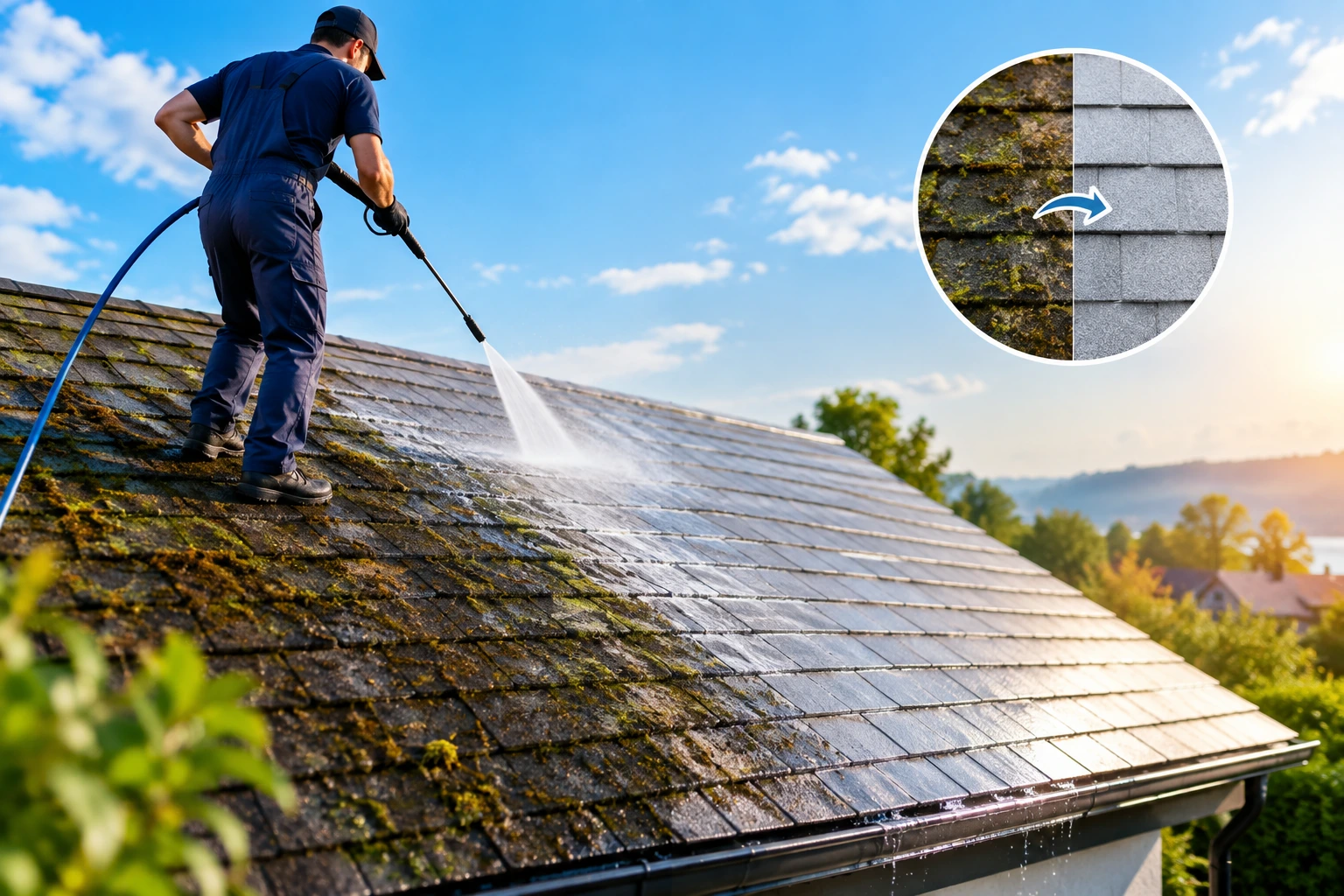
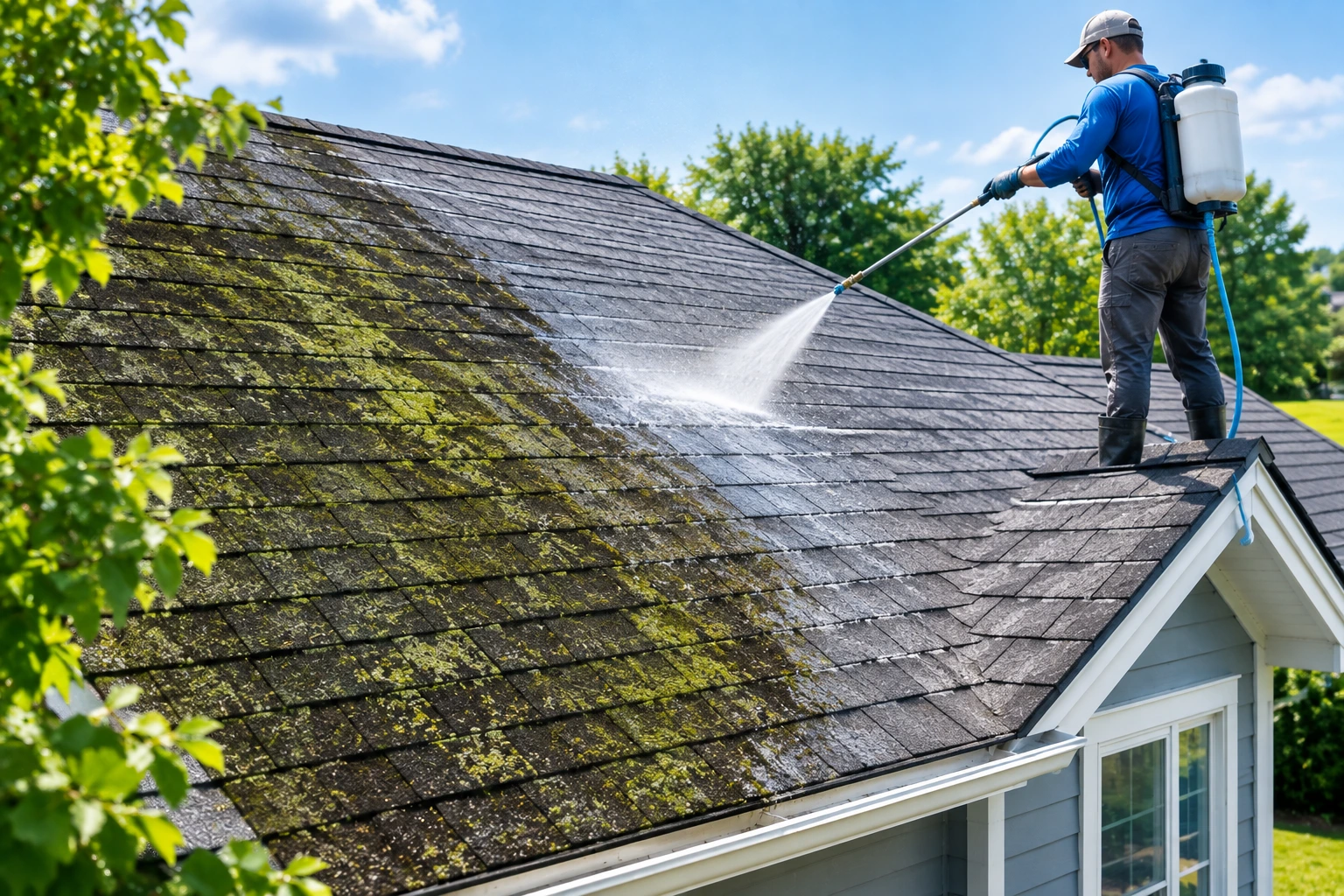
Roof cleaning is an important part of maintaining a safe, attractive, and durable home. Roofs can collect algae, moss, mold, mildew, dirt, and other organic growth. These contaminants can make roofing materials look old and neglected while contributing to moisture-related problems. If you are wondering, what is the process of roof soft washing? It includes inspecting the roof, preparing the surrounding area, applying a specialized cleaning solution, allowing it to work, and gently rinsing away the loosened buildup.
What is Roof Soft Washing?
Roof soft washing is a low-pressure cleaning technique used to treat biological growth and surface contaminants. However, soft washing relies on cleaning solutions rather than forceful water pressure.
- The method is useful for roofs where high pressure could damage shingles, loosen granules, affect flashing, or force water underneath roofing materials.
- A properly performed soft wash focuses on treating the contamination while minimizing unnecessary stress on the roof.
- The goal is not simply to make the roof look cleaner. Removing algae, moss, mold, and other organic buildup can also support better long-term roof maintenance.
What is the Process of Roof Soft Washing?
Understanding What is the process of roof soft washing? starts with knowing what happens before, during, and after the cleaning.
Roof Inspection
The first step is a careful inspection of the roof. A professional looks for algae, moss, mold, mildew, dirt, stains, damaged shingles, exposed areas, loose components, and other concerns.
Protecting Surrounding Areas
Before cleaning begins, areas around the home should be prepared and protected. Plants, landscaping, outdoor furniture, windows, walls, and other nearby surfaces may need appropriate protection.
Applying the Cleaning Solution
A suitable roof-cleaning solution is applied at low pressure. The solution is to break down organic growth and surface contaminants.
Rather than trying to blast stains away immediately, the treatment is allowed to work on the affected areas.
Allowing the Treatment to Work
The solution needs sufficient contact time to loosen algae, moss, mold, mildew, and accumulated grime. The appropriate dwell time depends on the condition of the roof, weather conditions, roofing material, and cleaning product being used.
Gentle Rinsing
After the treatment has done its work, the roof is rinsed using controlled, low pressure. The purpose is to remove loosened contaminants without unnecessarily disturbing the roofing surface.
Final Inspection
The roof is inspected again after cleaning. Remaining areas of buildup may require additional treatment. The surrounding property can also be checked to make sure the cleaning process has been completed properly.
How Long Does Soft Washing a Roof Last?
Roof exposure, climate, humidity, surrounding trees, shade, rainfall, roof material, and the amount of organic growth can all influence how quickly new buildup develops.
In many situations, a professionally treated roof can remain visibly cleaner for several years, but results vary from property to property. Areas with heavy shade and moisture may experience faster regrowth than roofs exposed to more sunlight and airflow.
Regular inspections can help you determine when another cleaning is appropriate. Waiting until thick moss or heavy staining develops may make maintenance more difficult.
What Is the Average Cost to Soft Wash a Roof?
The price can vary considerably, which depends on the property and the work required.
- Roof size
- Roof pitch and accessibility
- Roofing material
- Amount of algae, moss, or mold
- Level of staining
- Number of roof sections
- Property accessibility
- Required preparation
- Cleaning solution requirements
- Local labor costs
A small, easily accessible roof with light staining will generally require less work than a large, steep roof with extensive organic growth.
Are There Benefits of Soft Washing Your Roof?
Soft washing offers several potential benefits when performed correctly.
- Algae, moss, mold, and mildew can accumulate on roofing surfaces. Soft washing targets these contaminants instead of simply spraying the surface with high pressure.
- Dark streaks and biological stains can make a roof appear older than it is. Cleaning can restore a more uniform and attractive appearance.
- Because the cleaning process relies on chemical treatment rather than force, it can be gentler on many roofing surfaces than high-pressure methods.
- Regular roof cleaning can be part of a maintenance routine. It allows you to keep the roof free from excessive surface buildup while inspections can identify potential problems early.
When Should You Soft Wash Your Roof?
The ideal timing depends on the roof’s condition and the local environment. Signs that cleaning may be appropriate include dark streaks, green patches, moss growth, visible mold, mildew, or widespread dirt.
- You should not assume that every roof needs the same cleaning schedule.
- A roof with minimal organic growth may need less frequent attention, while a shaded roof surrounded by trees may require more regular monitoring.
- It is also important to address underlying roof problems separately.
- Soft washing cleans the surface, but it does not repair cracked shingles, damaged flashing, leaks, structural issues, or deteriorated roofing materials.
Frequently Asked Questions
Is soft washing safe for asphalt shingles?
When performed correctly, soft washing can be a suitable cleaning method for asphalt shingles. It uses low water pressure, reducing the risk of granule loss or surface damage that can occur with aggressive pressure washing.
Can soft washing remove black stains from a roof?
Soft washing can help remove or treat black streaks commonly associated with algae growth. The cleaning solution breaks down the organic material, allowing the stains to be removed more gently.
Will roof soft washing damage plants around my home?
Proper preparation and runoff management can help protect landscaping. Plants and sensitive surfaces should be protected before treatment, and the cleaning process should be carefully controlled.
Can soft washing prevent moss and algae from coming back?
Soft washing can remove existing organic growth and may slow its return, but it cannot permanently prevent regrowth. Shade, moisture, nearby trees, and local weather conditions can influence how quickly algae or moss returns.
Should I repair roof damage before soft washing?
If the roof has leaks, severely damaged shingles, exposed underlayment, or other defects, those issues should be assessed before cleaning. Cleaning should not be considered a substitute for necessary roof repairs.