A roof is constantly exposed to sunlight, rain, wind, dirt, leaves, moisture, and organic growth. These conditions can leave a roof looking stained or dirty. If you are considering a safer alternative to aggressive pressure washing, soft washing can be an effective approach. But what is the best way to clean a soft top roof? It depends on the roofing material, type of buildup, roof condition, and the cleaning method used.
What is Soft Washing?
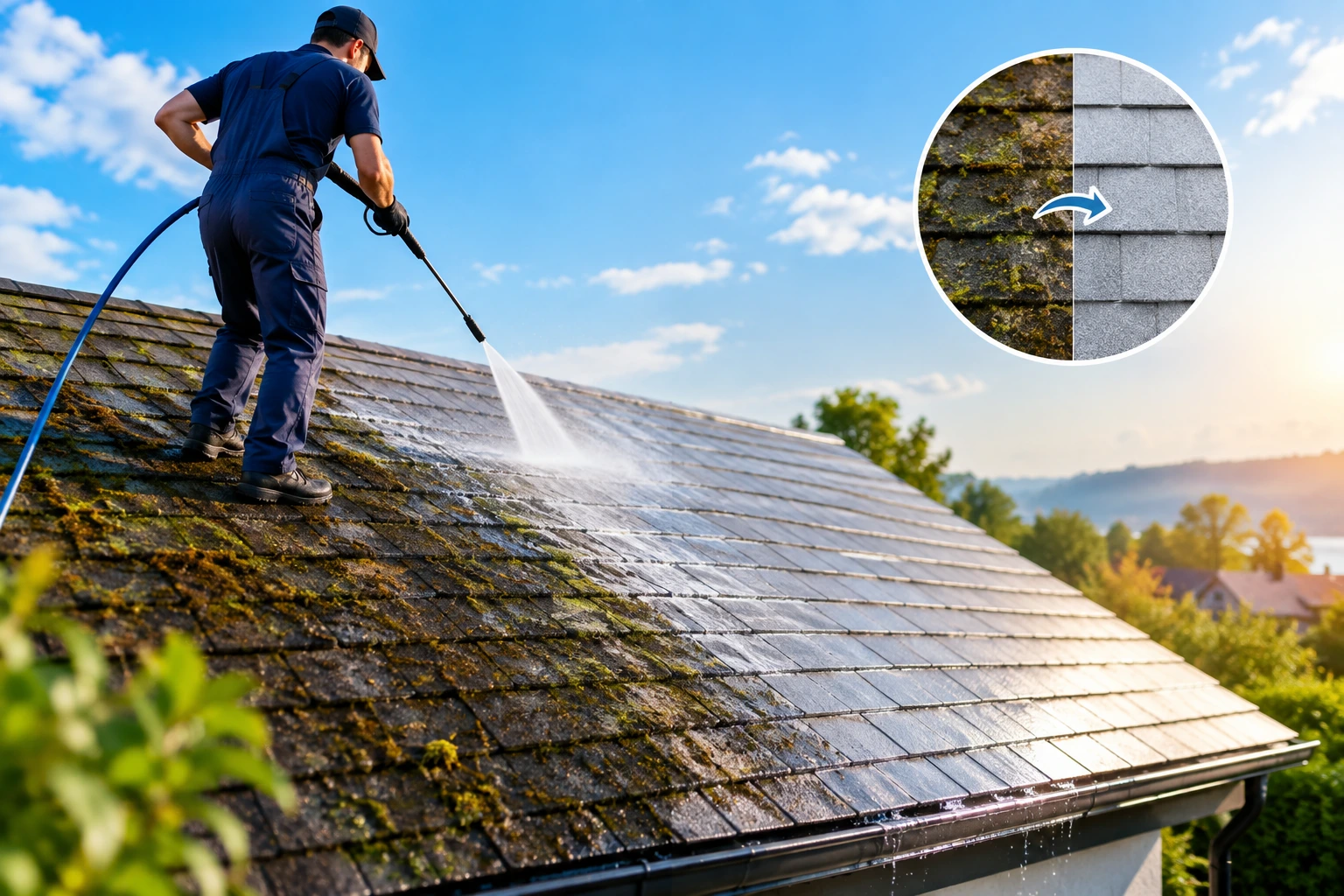
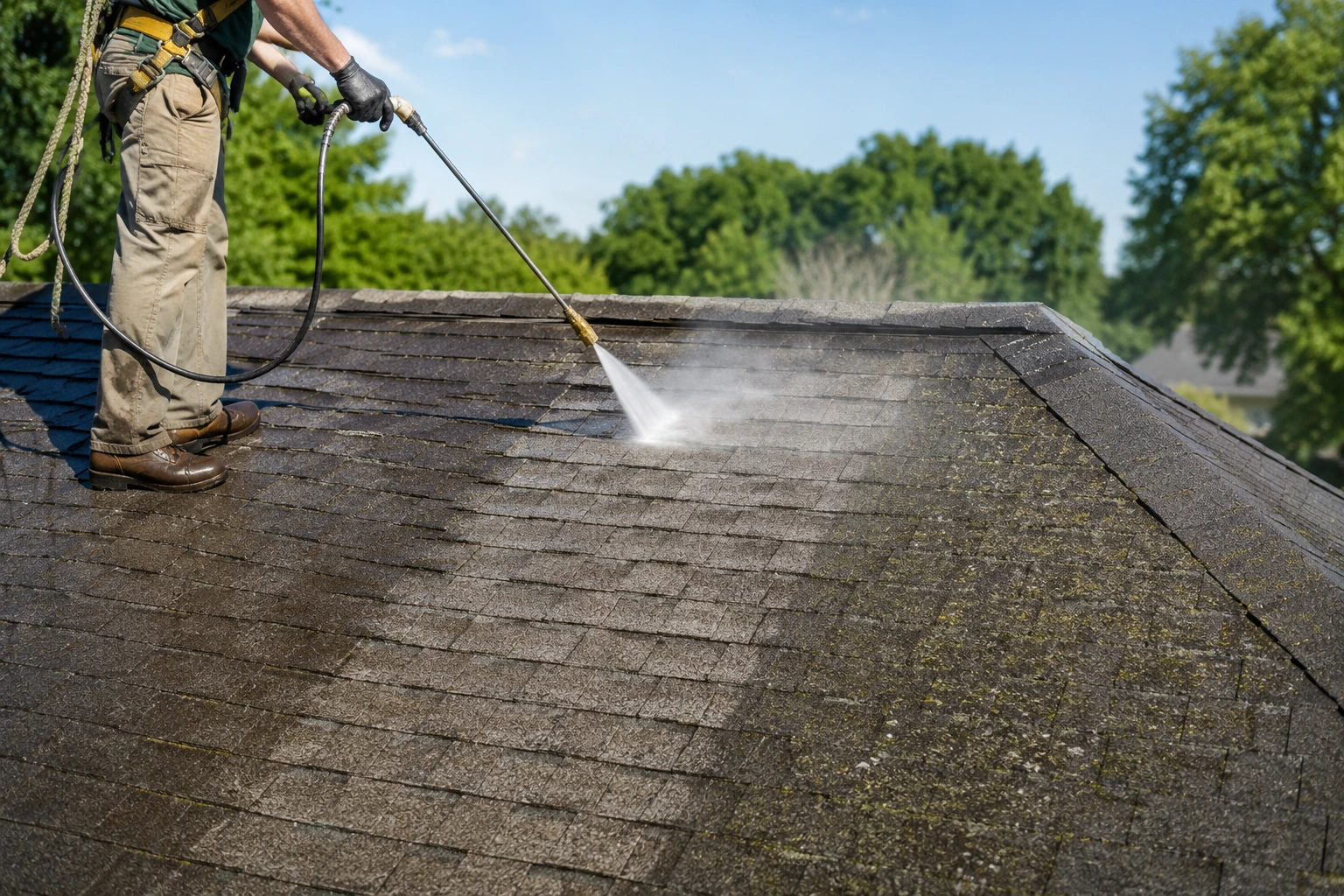
Soft washing is a low-pressure roof-cleaning method that uses a cleaning solution to loosen and break down algae, mold, moss, dirt, and other organic buildup. Instead of relying primarily on mechanical pressure, the cleaning solution does much of the work.
- Inspecting the roof
- Protecting nearby plants and property
- Removing loose debris
- Applying an appropriate cleaning solution
- Allowing the solution to work
- Rinsing when appropriate
- Inspecting the finished roof
What is the Best Way to Clean a Soft Top Roof?
So, what is the best way to clean a soft top roof? The best approach is a carefully controlled soft-washing process using a roof-appropriate cleaning solution and low-pressure application.
Before cleaning, the roof should be inspected for damaged shingles, loose flashing, exposed underlayment, deteriorated sealants, or other issues. Cleaning a damaged roof without addressing these problems can potentially make the situation worse.
The goal should be to remove organic growth without unnecessarily disturbing the roofing surface.
Why Avoid High-Pressure Roof Cleaning?
High-pressure washing can appear attractive because it quickly removes visible dirt. However, excessive pressure may damage certain roofing materials.
For asphalt shingles, aggressive pressure can loosen protective granules and potentially shorten the useful life of the roofing material.
Pressure can also force water into vulnerable areas around flashing, vents, seams, and other components.
Soft washing minimizes mechanical force and instead relies on a suitable cleaning treatment.
What is the Best Solution for Softwashing a Roof?
If you are wondering what is the best solution for softwashing a roof? There is no single solution suitable for every roof.
- Roofing material
- Type of organic growth
- Severity of staining
- Roof age
- Manufacturer recommendations
- Surrounding landscaping
- Environmental conditions
Our roof cleaners may use specially formulated solutions to address algae, mold, mildew, or moss. The solution should be mixed and applied according to its instructions.
Moreover, incorrect concentrations can damage roofing materials, surrounding vegetation, painted surfaces, and other property.
How to Properly Soft Wash a Roof?
Understanding how to properly soft wash a roof? It is important because incorrect application can cause unnecessary damage.
- Before applying any cleaning solution, inspect the roof for damage. Look for cracked or missing shingles, exposed areas, damaged flashing, loose gutters, and other vulnerabilities.
- Remove leaves, branches, and loose debris where practical. This allows the cleaning solution to reach the affected surface more effectively.
- Plants, outdoor furniture, siding, windows, vehicles, and other nearby surfaces should be protected from cleaning solutions and runoff.
- Use appropriate equipment to apply the solution evenly at low pressure. Avoid unnecessary overspray and carefully control runoff.
- The solution needs adequate contact time to loosen organic growth. The required time depends on the product and environmental conditions.
- Depending on the cleaning system and product instructions, the roof may be rinsed carefully or allowed to weather naturally.
- After cleaning, inspect the surface to determine if additional treatment is needed and whether any previously hidden damage is visible.
Do You Rinse the Roof After Soft Washing?
It depends on the cleaning product, roofing material, application method, and manufacturer’s instructions. Some roof-cleaning systems call for controlled rinsing, while others are designed to allow the solution and loosened organic growth to break down naturally over time.
If rinsing is required, it should be performed carefully and with appropriate pressure. Excessive pressure can cause the same type of roofing damage that soft washing is intended to prevent.
How Often Should a Roof Be Soft Washed?
There is no universal schedule for every roof. Cleaning frequency depends on climate, shade, humidity, surrounding trees, roof material, and the amount of organic growth.
A roof surrounded by trees and exposed to frequent moisture may develop algae or moss more quickly than a roof with good sunlight and airflow.
Instead of cleaning on a fixed schedule, you can monitor the roof and arrange an inspection when staining or organic growth becomes noticeable.
How to Prevent Roof Algae and Moss?
Cleaning can improve the appearance of a roof, but prevention can help extend the time between treatments.
- Trimming branches that create excessive shade
- Keeping gutters clear
- Removing leaves and debris
- Improving roof drainage
- Addressing leaks promptly
- Maintaining proper attic ventilation
- Monitoring areas that remain damp
When Should You Hire a Professional?
Roof cleaning involves working at height and handling cleaning solutions. Our assistance is valuable for steep roofs, large properties, extensive moss growth, or roofs with visible damage.
A professional can assess the roof before cleaning and select a method appropriate for its condition and material.
You should consider professional roof cleaning if you notice:
- Extensive algae streaks
- Thick moss growth
- Mold or mildew
- Persistent staining
- Damaged shingles
- Difficult-to-access roof areas
- Recurring organic growth
Frequently Asked Questions
How to clean a soft top roof?
The best way to clean a soft top roof is to use a controlled soft-washing method with a roof-appropriate cleaning solution and low water pressure.
What is the solution for softwashing a roof?
A properly formulated roof-cleaning solution should be selected according to the product instructions and roofing manufacturer’s recommendations.
How to properly soft wash a roof?
Start by inspecting the roof, protecting nearby plants, removing loose debris, applying a cleaning solution at low pressure, allowing contact time, and rinsing or allowing the treatment to dry.
Do you rinse the roof after soft washing?
It depends on the cleaning product and roofing material. Some treatments require controlled rinsing, while others are designed to break down naturally.
How often should a roof be soft washed?
Cleaning frequency depends on factors such as climate, shade, humidity, nearby trees, roof material, and organic growth. Regular inspections can help determine when cleaning is necessary.