Roof mold can become a serious maintenance concern when moisture remains trapped on shingles, underlayment, flashing, or other roofing materials. If you are asking, What is the best mold killer for roofs? It depends on the roofing material, severity of the growth, moisture source, and the cleaning method being used. A good roof treatment should address the visible growth while minimizing damage to shingles and surrounding roofing components.
What Causes Mold to Grow on a Roof?
Mold requires moisture, a suitable surface, and favorable environmental conditions. Roofs provide these conditions when water remains on or around roofing materials for extended periods.
- Poor roof ventilation
- Persistent humidity
- Leaking flashing
- Damaged shingles
- Clogged gutters
- Nearby trees creating shade
- Poor drainage
- Roof leaks
- Accumulated leaves and debris
- Condensation in the attic
However, shaded roofs can be susceptible because limited sunlight slows drying after rain. When moisture remains present, mold, algae, and other organic growth can become increasingly visible.
What Is the Best Mold Killer for Roofs?
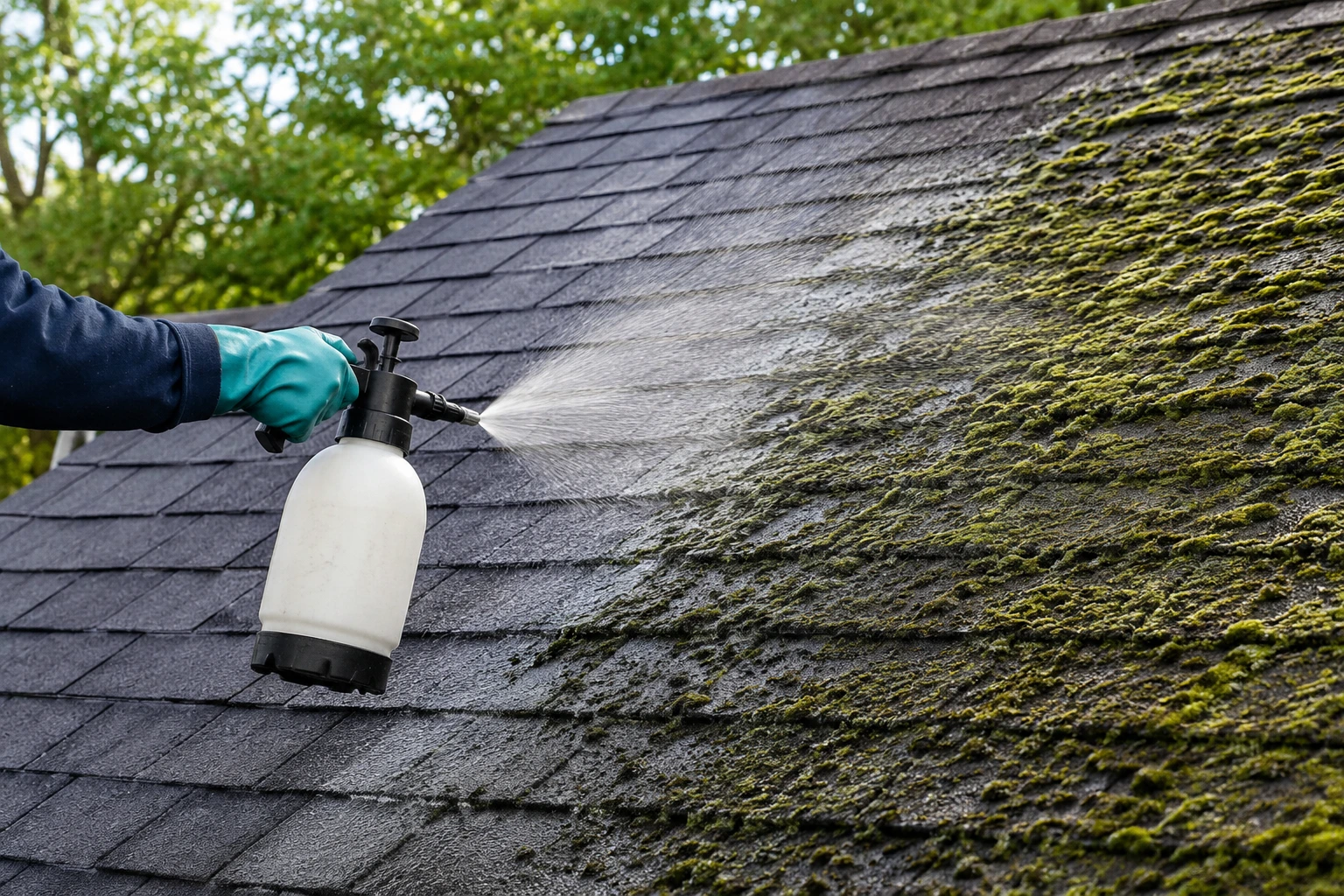
There is not one universal product that is ideal for every roof. The safest approach is to use a roof-appropriate cleaning or treatment solution that can eliminate organic growth without unnecessarily damaging roofing materials.
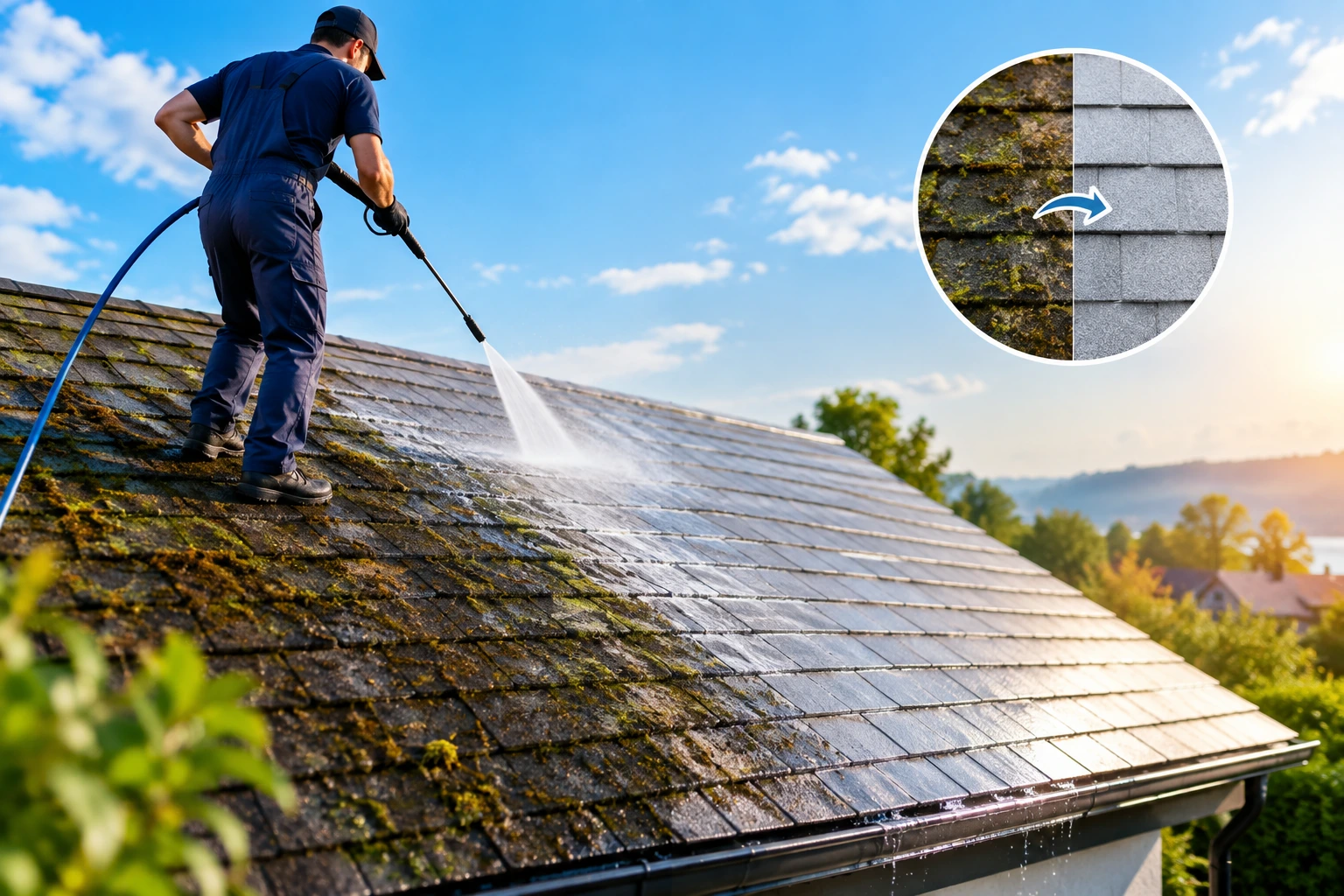
Roof-specific cleaning solutions can help break down mold, algae, and other organic growth. The concentration and application method should be appropriate for the roofing material.
Applying too much chemical solution can damage roofing components or vegetation around the home. Professionals control the amount and application area.
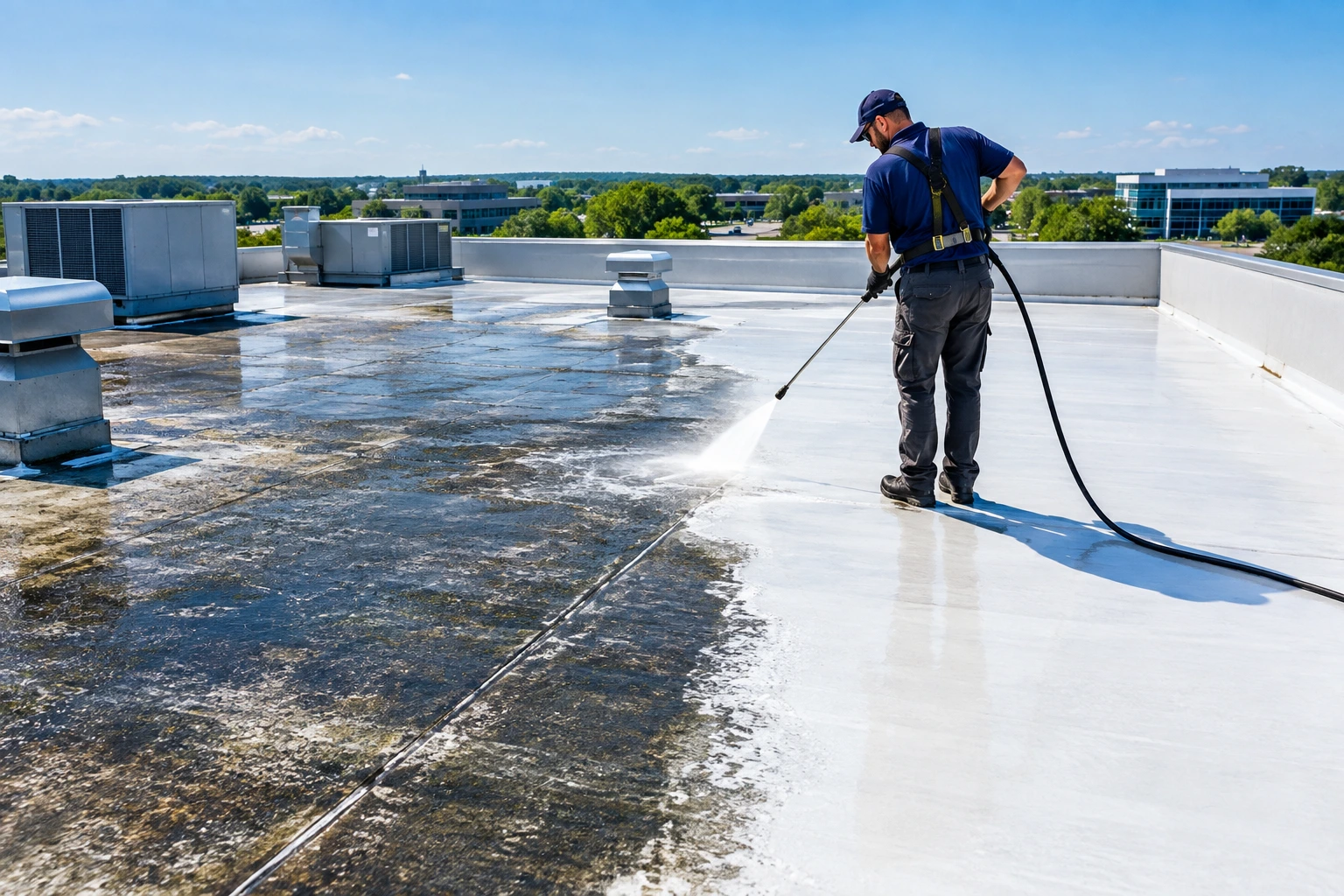
Aggressive pressure washing can damage asphalt shingles by removing protective granules. Roof cleaning should use appropriate low-pressure methods rather than treating the roof like a concrete driveway.
Killing existing mold without addressing the underlying moisture problem may only provide a temporary improvement. A roof inspection can help identify leaks, ventilation issues, drainage problems, or other contributing factors.
Can You Remove Roof Mold Yourself?
Minor surface growth may appear manageable as a DIY project, but roof work carries fall and material-damage risks. Walking directly on certain roofing materials can cause damage, while climbing onto a roof without proper equipment can result in serious injury.
If you decide to address minor growth yourself, avoid harsh cleaning methods and carefully follow the manufacturer’s recommendations for your roofing material.
For extensive mold, recurring growth, steep roofs, or visible signs of water damage, professional inspection and treatment are usually the safer option.
Difference Between Mold and Algae
Dark streaks on asphalt shingles are not necessarily mold. Roof discoloration can also be caused by algae or other organic growth.
Algae creates dark streaks or patches, while mold may appear in different colors and textures depending on environmental conditions.
Because the correct treatment can vary, identifying the type of growth is useful before applying a cleaning solution.
Our roof inspection can help determine whether the problem is mold, algae, moss, or another form of organic buildup.
How to Prevent Mold From Returning?
Removing existing growth is only part of the solution.
- Regular gutter maintenance helps direct rainwater away from the roof and foundation.
- If your attic has excessive humidity or condensation, ventilation should be evaluated.
- Strategic trimming can improve sunlight exposure and airflow.
- Damaged shingles, flashing, or seals should be inspected and repaired promptly.
- Early detection is particularly useful when mold is associated with moisture intrusion.
Are There Any Mold Laws in Delaware?
Another common question from you and property owners is, Are there any mold laws in Delaware?
Delaware does not have a broad state licensing or certification program specifically regulating mold assessment and remediation in the same way some states do.
However, mold-related issues can still include landlord-tenant responsibilities, housing standards, lease obligations, building conditions, and general property-maintenance requirements.
For rental properties, responsibility may depend on the cause of the moisture problem, the lease, applicable housing requirements, and the circumstances surrounding the mold.
Because laws and local requirements can change, property owners and tenants dealing with mold concerns should check current Delaware requirements and consider obtaining professional legal or housing guidance when necessary.
Is Mold Considered Uninhabitable?
The presence of mold does not necessarily mean that a property is legally classified as uninhabitable. If a home or rental unit is considered uninhabitable, it can depend on the severity of the problem, the underlying building condition, applicable housing standards, and whether the property has conditions that substantially interfere with safe or normal occupancy.
Minor surface mold in one location may be treated very differently from extensive moisture damage accompanied by significant mold growth throughout walls, ceilings, or other areas.
If mold is extensive or associated with an ongoing roof leak, water intrusion should be addressed as quickly as possible.
When Should You Call a Roof Repair Professional?
Professional assistance is recommended when mold keeps returning, the roof has visible damage, or moisture is entering the structure.
- Persistent dark staining
- Moss or organic growth spreading across shingles
- Damaged or missing shingles
- Water stains on ceilings
- Damp attic insulation
- Musty odors near the attic
- Peeling interior paint
- Recurring moisture
- Sagging roofing areas
Frequently Asked Questions
Is there a best mold killer for roofs?
The best mold killer depends on the roofing material and severity of the growth. A roof-safe cleaning solution applied correctly can help remove mold while reducing the risk of damage to shingles.
Can roof mold damage shingles?
Persistent mold and moisture can contribute to deterioration of roofing materials over time. The underlying moisture problem should also be identified and repaired to prevent recurring growth.
What are the mold laws in Delaware?
Delaware does not have a statewide mold-specific licensing program, but mold issues can involve landlord-tenant responsibilities, housing standards, leases, and property-maintenance requirements.
Is mold considered uninhabitable?
It depends on the severity of the mold, associated moisture damage, property conditions, and applicable housing standards. Extensive mold or serious water intrusion may raise habitability concerns.
How can I prevent mold from returning to my roof?
Keep gutters clean, improve roof and attic ventilation, trim overhanging branches, repair leaks promptly, remove debris, and schedule regular roof inspections.