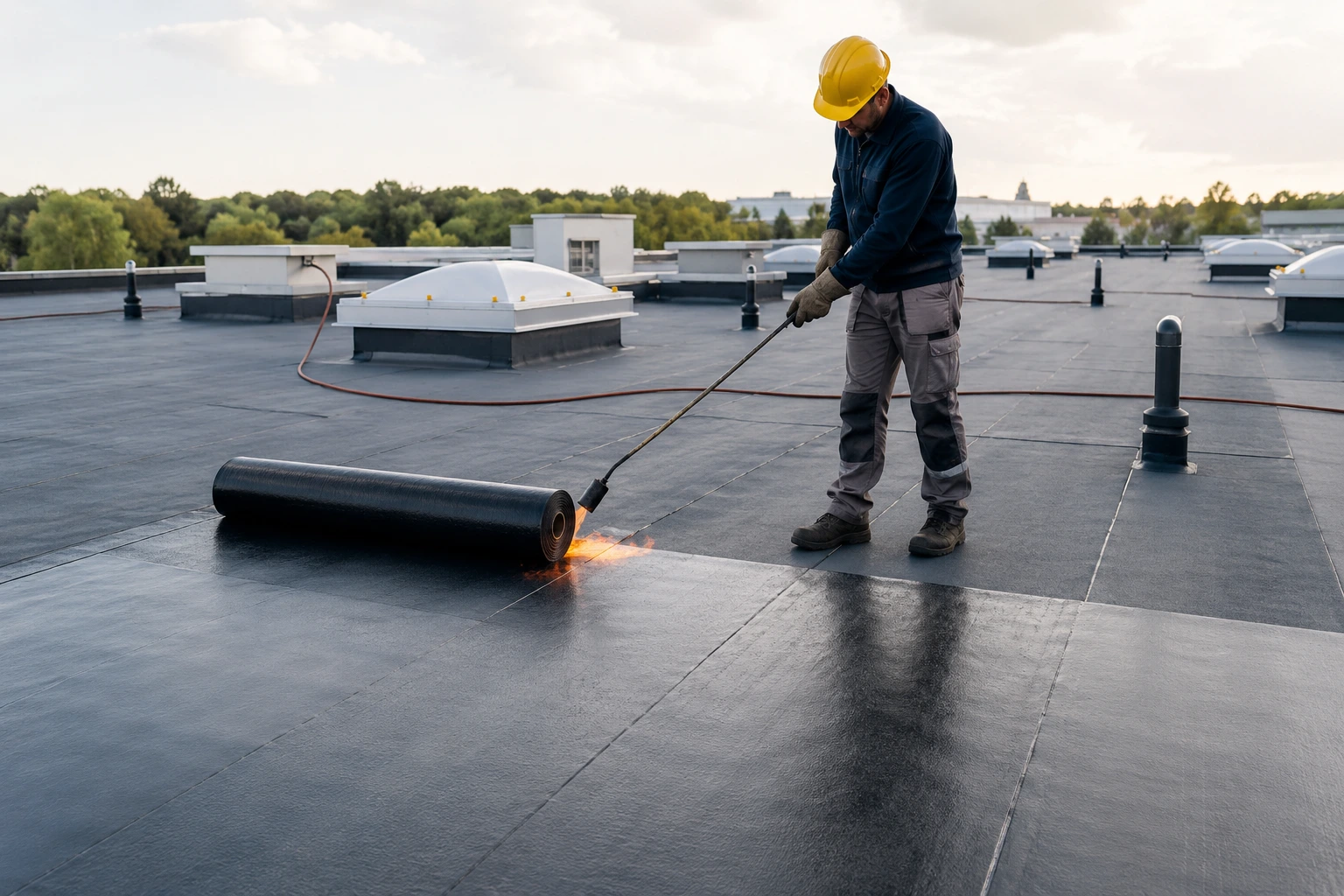
Commercial roofing protects businesses, warehouses, offices, retail buildings, industrial facilities, and other properties from rain, wind, heat, and changing weather conditions. Choosing the right roofing professional is important because commercial roofs are often larger and more complex than residential systems. Business owners frequently ask, What are the top commercial roofing companies in the US? We have experience with your roof type, understand local building requirements, provide detailed estimates, and offer dependable repair and maintenance services.
What Should You Look for in a Commercial Roofing Company?
Instead of choosing a contractor based only on advertising or price, consider several important factors. Our commercial roofers have relevant experience, proper licensing where required, insurance coverage, trained workers, and a clear approach to project management.
- Commercial roofing experience
- Available repair and maintenance services
- Roofing materials and systems handled
- Safety practices
- Written estimates
- Warranty information
- References and customer reviews
- Emergency repair availability
- Inspection procedures
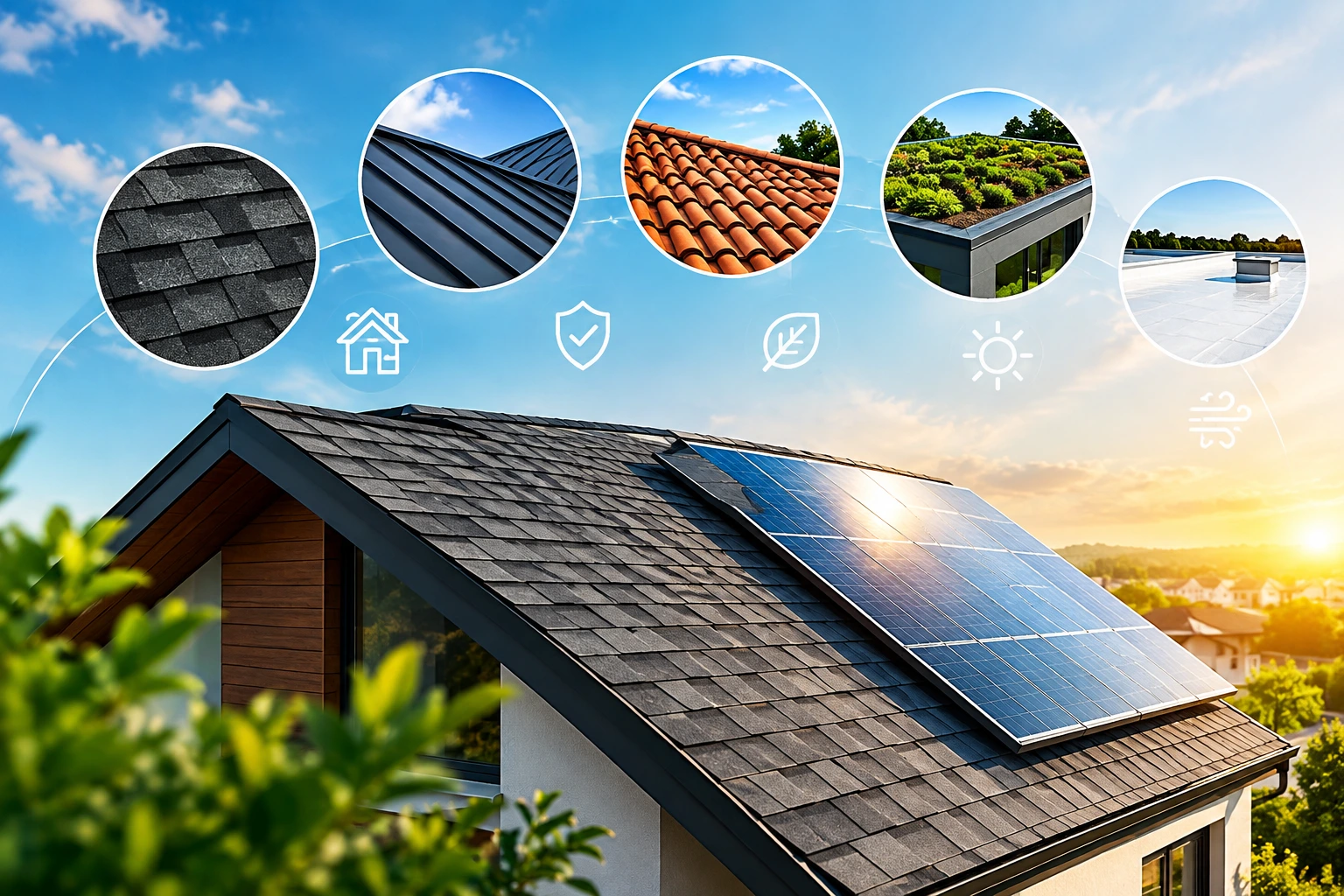
Different Types of Commercial Roofing Systems
Commercial buildings can have several different roofing systems. The appropriate repair or cleaning technique depends on the material and construction.
Flat Roofing
Flat and low-slope roofs are common on commercial properties. Systems may include single-ply membranes, modified bitumen, or built-up roofing.
Metal Roofing
Metal roofing can provide durability and long service life when properly installed and maintained. Corrosion, loose fasteners, damaged panels, and failed sealants should be addressed promptly.
TPO and PVC Roofing
These single-ply membrane systems are frequently used on commercial buildings. Their maintenance requirements depend on the specific membrane and installation.
Modified Bitumen Roofing
Modified bitumen systems are designed for low-slope applications and can require specialized repair techniques when leaks or membrane damage occur.
Built-Up Roofing
Built-up roofing consists of multiple layers and can provide a durable roofing surface when properly installed and maintained.
Why Commercial Roof Cleaning Matters?
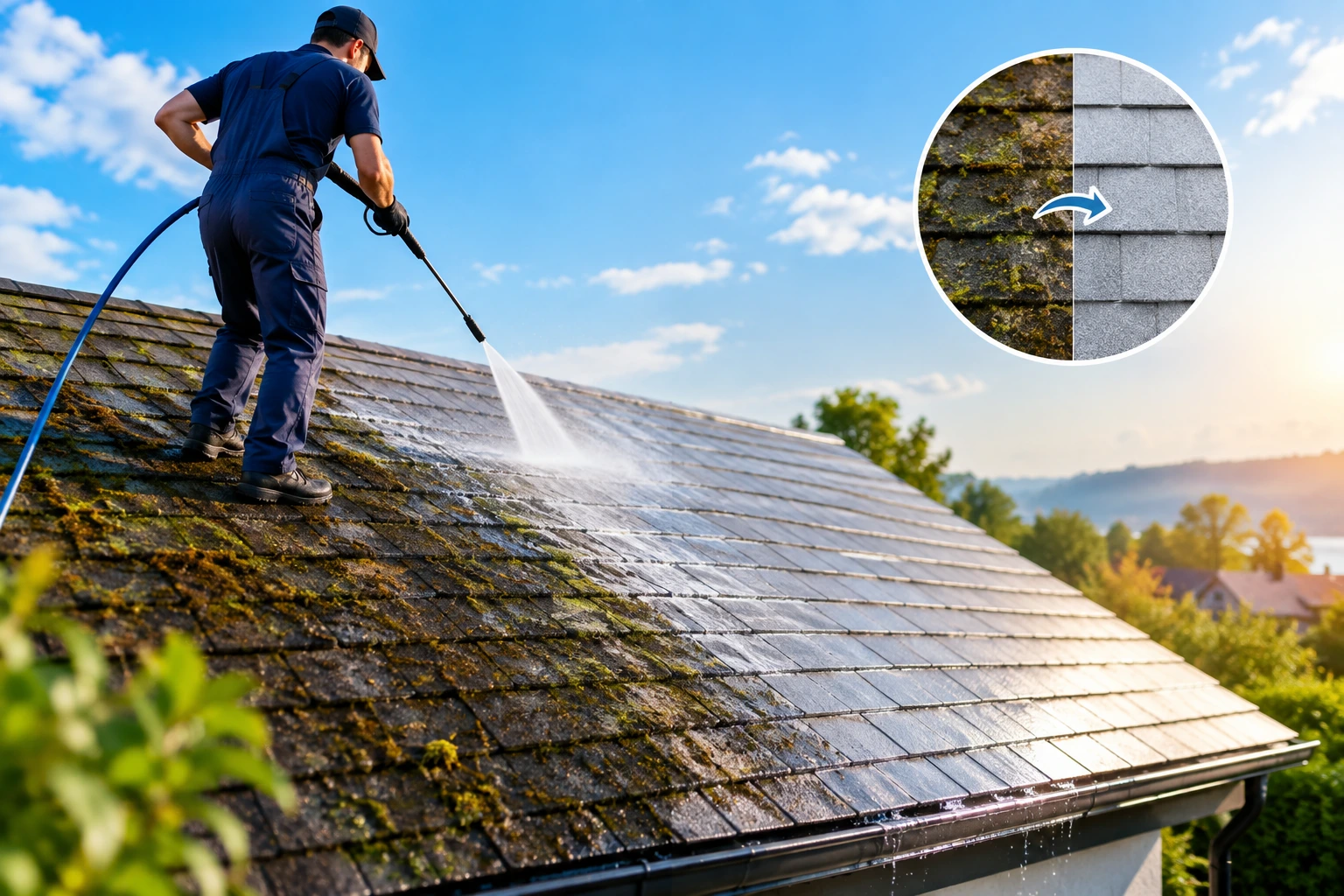
Dirt, leaves, algae, moss, and other organic debris can accumulate on a roof. If neglected, debris can block drainage pathways and retain moisture.
- Keep drainage areas clear.
- Reduce organic buildup
- Improve roof appearance
- Make roof inspections easier
- Identify developing damage
- Support preventive maintenance
Incorrect equipment, excessive pressure, or unsuitable chemicals can damage roofing membranes, coatings, shingles, or metal surfaces.
What Do Roofers Use to Clean Roofs?
A common question is, What do roofers use to clean roofs? It depends on the roofing material, type of contamination, roof condition, and manufacturer’s recommendations.
Our roofers may use soft-bristle brushes, low-pressure washing equipment, specialized cleaning solutions, scrapers for appropriate surfaces, and other tools for the specific roofing system.
For many roofs, aggressive pressure washing is avoided because excessive pressure can damage surfaces. Instead, professionals may use lower-pressure methods combined with an appropriate cleaning solution.
What Is the Best Cleaning Solution for a Roof?
Another frequently asked question is, What is the best cleaning solution for a roof? There is no universal solution that is suitable for every roof.
- Roofing material
- Type of buildup
- Severity of contamination
- Manufacturer requirements
- Environmental considerations
- Surrounding landscaping
- Drainage system
A cleaning product that is appropriate for one roofing system may damage another. For this reason, commercial roof cleaning should not be approached as a one-product-fits-all process.
We follow product instructions and roofing-system recommendations. Thus, we also take precautions to protect vegetation, building entrances, drainage systems, and other nearby areas during cleaning.
Why Is Professional Commercial Roof Cleaning Important?
Commercial roofs can be difficult and dangerous to access. Large buildings may have steep sections, rooftop equipment, skylights, vents, drainage systems, and other obstacles.
Our roofers have experience working around these features and can combine cleaning with a visual inspection.
- Cracked or damaged materials
- Loose flashing
- Open seams
- Ponding water
- Blocked drains
- Damaged coatings
- Deteriorated sealants
- Signs of moisture intrusion
How Often Should a Commercial Roof Be Cleaned?
There is no universal cleaning schedule for every commercial property. The ideal frequency depends on the building’s location, surrounding trees, climate, roof type, drainage, and amount of debris.
Properties surrounded by trees may accumulate leaves and organic material more quickly. Buildings in humid environments may also experience greater organic growth.
Instead of waiting until the roof looks heavily contaminated, consider incorporating roof inspections and cleaning into a preventive maintenance program.
What is Commercial Roof Repair and Maintenance?
Cleaning should be only one part of a broader roof maintenance strategy. Our regular inspections help identify problems before they result in leaks or interior damage.
- Routine roof inspections
- Drain and gutter cleaning
- Minor leak repairs
- Flashing inspections
- Sealant checks
- Membrane inspections
- Roof cleaning
- Documentation of roof conditions
How to Choose the Right Commercial Roofing Service?
When you need to evaluate commercial roofing services, ask for a detailed assessment rather than immediately requesting a replacement quote. Our contractor will explain if repair, maintenance, restoration, or replacement makes the most practical sense.
You should also confirm that the contractor understands your specific roofing system. Experience with residential roofs does not necessarily mean a contractor has the equipment or expertise required for large commercial roofing projects.
Frequently Asked Questions
What are the top roofing companies in the US?
The right commercial roofing company depends on your building type, roofing system, location, budget, and required services. Look for an experienced contractor that provides inspections, repairs, maintenance, cleaning, and replacement services.
What do roofers use to clean roofs?
Roofers may use soft-bristle brushes, low-pressure cleaning equipment, approved cleaning solutions, and specialized tools depending on the roofing material and type of buildup.
What is the best cleaning solution for a roof?
The appropriate solution depends on the roofing material and whether the buildup consists of algae, moss, dirt, or other organic matter. Always follow the manufacturer’s recommendations.
How often should a commercial roof be cleaned?
Cleaning frequency depends on the roof type, local climate, surrounding trees, debris accumulation, and organic growth. Regular inspections can help determine when cleaning is necessary and prevent buildup.
Can roof cleaning prevent commercial roof damage?
Regular cleaning can help remove debris and organic buildup that may retain moisture or block drainage areas. Routine inspections and timely repairs are also important for maintaining a commercial roofing system.